DOE Keeps Eddystone Power Plant Online Amid Data Center Demand Surge
The 760 MW Eddystone coal plant will remain online longer as PJM faces rising data center load, generator retirements, and delayed power resources.
Make your prediction
Will a major U.S. hyperscaler announce a direct power purchase agreement for new nuclear capacity by November 30, 2026?
Resolves by Nov 30, 2026
Your prediction
50% · 50/50 coin flip
NOYES
Get smart on it
The Department of Energy has ordered a coal-fired power plant in Pennsylvania to remain operational beyond its scheduled retirement date to help meet growing electricity demand, particularly from data centers expanding in the region. The grid operator faces a timing problem: data center projects can add hundreds of megawatts of demand quickly, while new power plants and transmission lines take years to build, creating a gap where existing generation capacity needs to stay online longer than planned. The decision reflects broader uncertainty about how much data center load will actually materialize and whether current forecasting methods can reliably predict demand years in advance. This emergency order raises questions about who ultimately pays for keeping retired plants available and whether the grid's traditional planning mechanisms are equipped to handle the unprecedented demand growth from large data center projects.
Related news

Liquid Cooling Options: RDHx, Direct-to-Chip, Immersion
AI workloads push data center rack densities beyond the limits of air cooling. Three liquid cooling approaches offer different trade-offs and benefits.
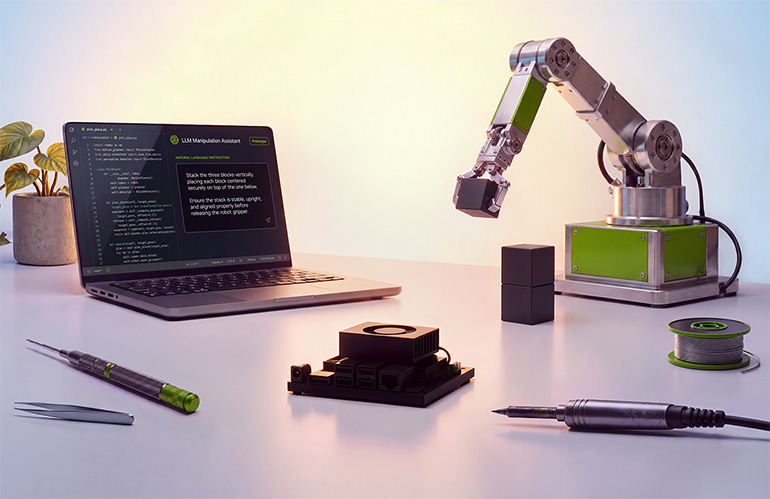
Jetson Orin Nano 2 doubles inference performance for robotics on the edge, says NVIDIA
Jetson Orin Nano 2 consumes less power at the same performance level of its predecessor. Source: NVIDIA As AI models become more efficient, more devices can become autonomous, but developers need compact, energy-efficient computers built for edge AI, asserted NVIDIA Corp. The company today introduced NVIDIA Jetson Orin Nano 2, a new entry-level computer for edge AI that it said enables millions of developers worldwide to build systems for physical AI applications. “Today’s small and medium front