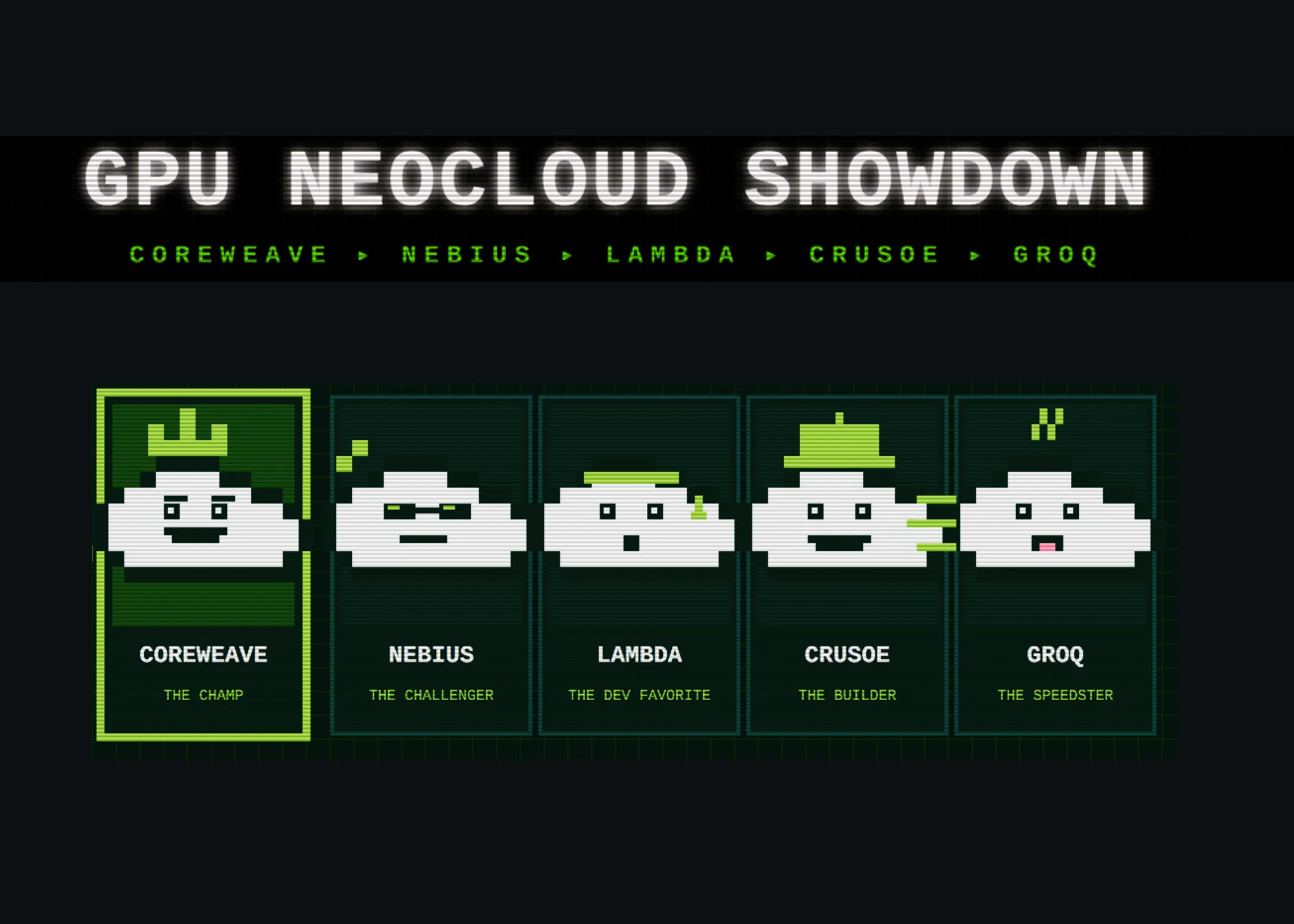
Best GPU Neoclouds 2026: CoreWeave, Nebius, Lambda, Crusoe, and Groq Ranked by Published Pricing and Contracted Power
The ‘neocloud’ label now covers five companies with very different business models. CoreWeave and Nebius are public companies that publish quarterly results and file reports with the SEC (CoreWeave on Form 10-Q, Nebius as a foreign private issuer on Form 6-K). Lambda and Crusoe are private and heading toward IPOs. Groq has run GroqCloud on its LPU architecture since 2024; after licensing that technology to NVIDIA in December 2025, the independent Groq refocused entirely on inference
Get smart on it
Five companies providing GPU cloud computing services, known as "neoclouds," are compared on pricing, power capacity, and business models. CoreWeave and Nebius are public companies filing SEC reports, while Lambda and Crusoe are private companies moving toward IPOs, and Groq shifted its focus to inference-cloud infrastructure after licensing technology to NVIDIA. The comparison matters because buyers need to evaluate these providers on published pricing, deployed and contracted power capacity, hardware roadmap, contract structure, and independent quality ratings to understand which service fits their needs.
Related news

DOE Keeps Eddystone Power Plant Online Amid Data Center Demand Surge
The 760 MW Eddystone coal plant will remain online longer as PJM faces rising data center load, generator retirements, and delayed power resources.

Liquid Cooling Options: RDHx, Direct-to-Chip, Immersion
AI workloads push data center rack densities beyond the limits of air cooling. Three liquid cooling approaches offer different trade-offs and benefits.