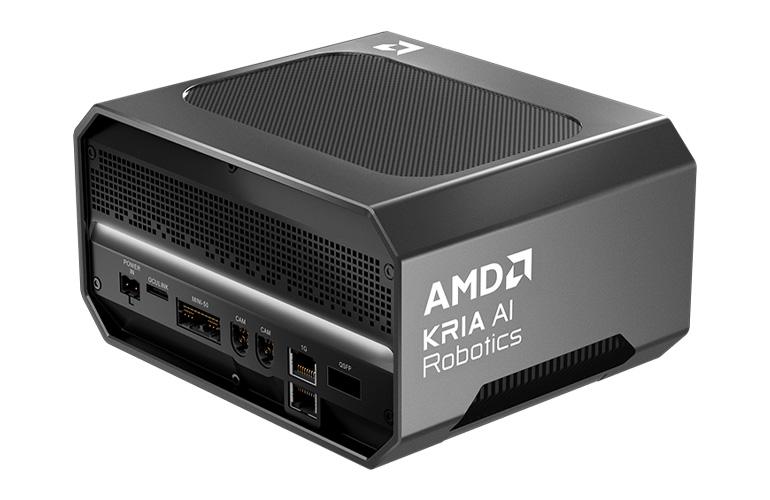
AMD unveils Kria module for real-time control, unified memory for robots
The Kria module is designed to deliver compute and AI workload processing for physical AI. | Credit: AMD Advanced Micro Devices Inc. is making a full-stack play for robotics with its new Ryzen AI Embedded X100 series and Kria AI Robotics platform. AMD today promised deterministic real-time control, unified CPU–GPU–NPU memory, and an open, non–vendor-locked software stack that it claimed can outperform NVIDIA Orin and Thor on system-level robotics workloads. Built on a unified memory architecture
Get smart on it
AMD has announced a new processor line and module designed specifically for robotics applications, featuring unified memory that allows the CPU, GPU, and processing unit to share data more efficiently. The platform promises real-time control capabilities and an open software approach not tied to a single vendor, which matters because NVIDIA currently dominates the robotics computing market. AMD claims its system delivers better performance than competing options on robotics workloads and includes development tools and partnerships to help companies build robots. Early adoption by robotics companies suggests this represents a meaningful alternative to existing dominant platforms in the physical AI market.
Related news
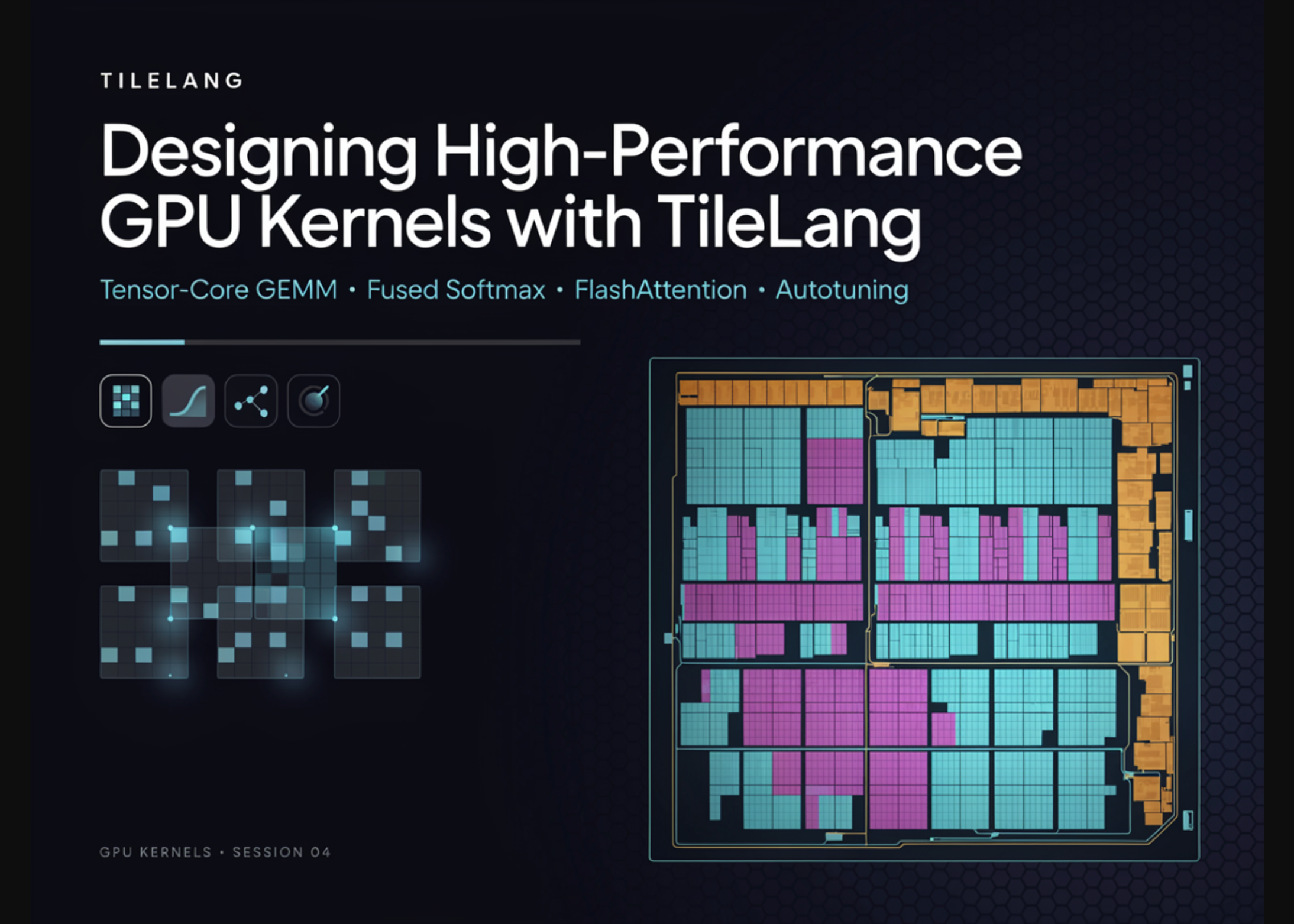
Designing High-Performance GPU Kernels with TileLang: Tensor-Core GEMM, Fused Softmax, FlashAttention, and Autotuning
In this tutorial, we explore TileLang as a high-level Python domain-specific language for designing and compiling performance-oriented GPU kernels through TVM. We begin by validating the CUDA environment and establishing reusable benchmarking and numerical-verification utilities, then progressively implement vector addition, tiled tensor-core matrix multiplication, schedule exploration, fused GEMM epilogues, row-wise softmax, and FlashAttention. Throughout the tutorial, we work directly with Ti

One fallen power line exposed a growing AI data center problem. Here’s how to fix it.
A close call in Northern Virginia revealed just how poorly data centers respond to grid disruptions. Here's how to fix the problem.

.jpg%3Fwidth%3D720%26quality%3D80%26disable%3Dupscale&s=kAmg5aaORKYzlMWL0upGuDAjzwWxVE-6xoVpfMYWKf4)