AMD takes on Nvidia with its Helios AI rack scale system
AMD is challenging its chipmaker rival with a new rack-scale system that will start shipping to customers later this year.
Make your prediction
Will AMD announce a major cloud hyperscaler partnership for the Helios system by October 2026?
Resolves by Oct 31, 2026
Your prediction
50% · 50/50 coin flip
NOYES
Get smart on it
AMD has launched Helios, a rack-scale system designed to train and run large AI models at massive scale for data centers. The system combines many processors into a single high-powered unit and competes directly with Nvidia's existing rack systems in a market historically dominated by Nvidia. Major companies including Microsoft, OpenAI, and Meta have already committed to deploying Helios. AMD's CEO stated that AI accelerator chips are expected to become a massive part of the computing market by 2030, with demand driven by the increasing computational requirements of advanced AI systems.
Related news
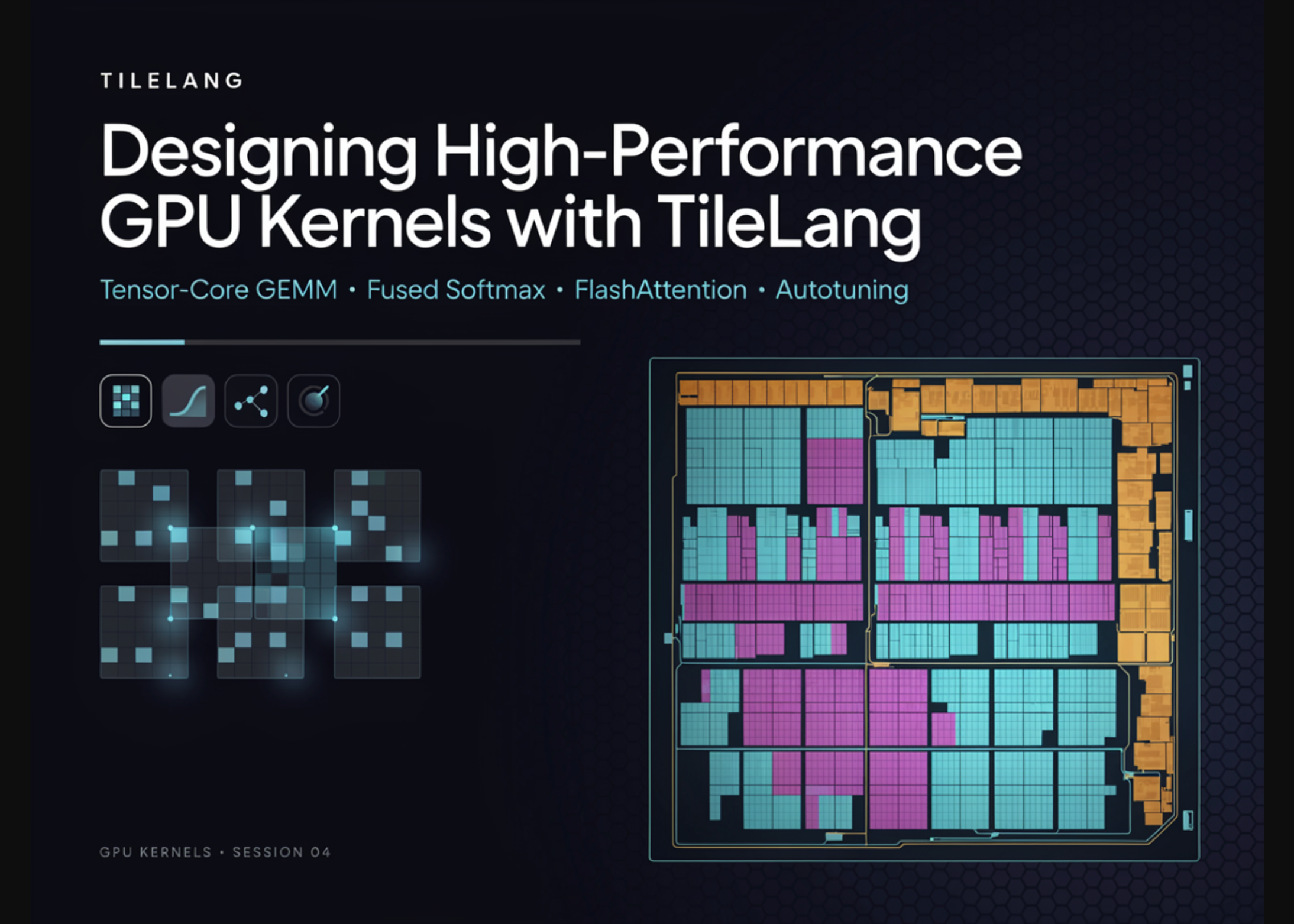
Designing High-Performance GPU Kernels with TileLang: Tensor-Core GEMM, Fused Softmax, FlashAttention, and Autotuning
In this tutorial, we explore TileLang as a high-level Python domain-specific language for designing and compiling performance-oriented GPU kernels through TVM. We begin by validating the CUDA environment and establishing reusable benchmarking and numerical-verification utilities, then progressively implement vector addition, tiled tensor-core matrix multiplication, schedule exploration, fused GEMM epilogues, row-wise softmax, and FlashAttention. Throughout the tutorial, we work directly with Ti

One fallen power line exposed a growing AI data center problem. Here’s how to fix it.
A close call in Northern Virginia revealed just how poorly data centers respond to grid disruptions. Here's how to fix the problem.

.jpg%3Fwidth%3D720%26quality%3D80%26disable%3Dupscale&s=kAmg5aaORKYzlMWL0upGuDAjzwWxVE-6xoVpfMYWKf4)