What Would Have to Be True for Agentic Coding to Replace Junior Engineers
I read every major model release. Most of them ship a coding number. The number goes up. The conclusion everyone draws is that junior engineers are finished. I think that conclusion is being reached the wrong way. People are reasoning from a benchmark score to a labor market outcome, skipping every step in between. So let me do it differently. Instead of asking “will agents replace juniors,” I want to ask what would have to be true for that to happen. Then check each condit
Get smart on it
The article outlines four conditions that would need to be true for AI coding agents to replace junior engineers, then evaluates the evidence for each. Three conditions are not yet met: agents remain unreliable on longer tasks that junior engineers actually perform, popular benchmarks used to measure progress contain flawed test cases and contamination, and the cost of verifying AI-generated code remains high because review requires experienced engineer time. The fourth condition, however, is already happening: firms are reducing hiring of young workers in software development while maintaining demand for experienced workers, effectively closing the apprenticeship pathway where juniors traditionally acquire knowledge through supervised work. This employment pattern is particularly significant because automating the foundational work that juniors do may break the traditional mechanism by which they develop the deeper skills needed for senior roles.
Related news

Surprise: Z.ai is the AI lab behind the mysterious Ox Alpha model
Z.ai confirms it is behind Ox Alpha, the mysterious open AI model topping benchmarks and leaderboards, and its weights are set to be released soon.
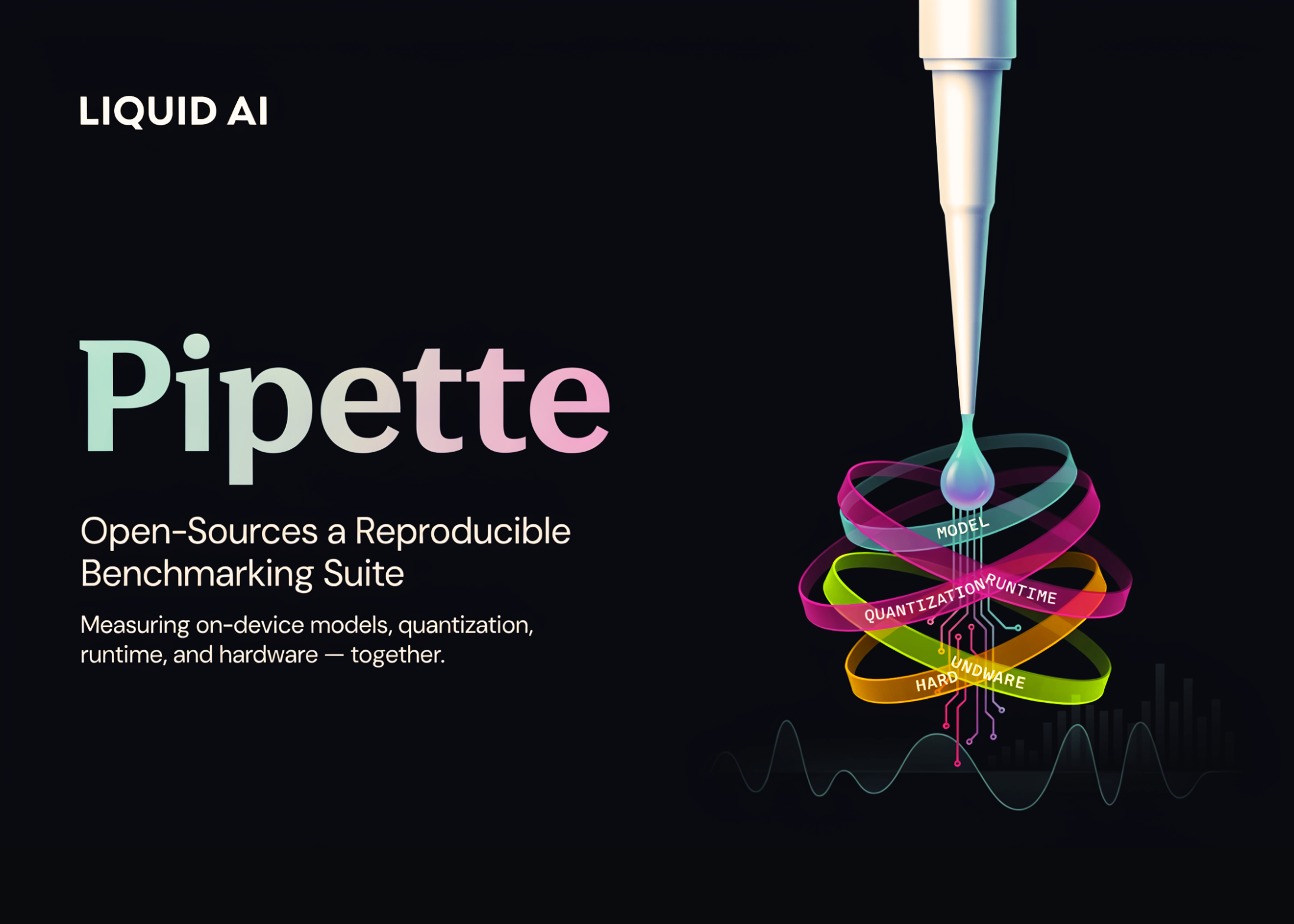
Liquid AI Open-Sources Pipette: A Reproducible Benchmarking Suite That Measures On-Device Models, Quantization, Runtime and Hardware Together
Model cards report quality under server-class, full-precision conditions. Those numbers rarely predict how the same model behaves on a phone. This week, Liquid AI released Pipette. It is an open-source platform for benchmarking foundation models on edge devices, built in partnership with Artificial Analysis as an independent methodology validator. Pipette treats on-device behavior as a property of the deployed system, not the model in isolation. Its unit of measurement is a full configuration: