Validating Distributed LLM Serving Benchmarks with NVIDIA srt-slurm, SLURM Recipes, Parameter Sweeps, and Pareto Analysis
In this tutorial, we explore NVIDIA’s srt-slurm framework and learn how we use srtctl to convert declarative YAML configurations into reproducible SLURM benchmark workflows for distributed LLM serving. We set up the project in Google Colab, inspect its internal architecture, define a cluster configuration, dry-run built-in and custom recipes, and model a disaggregated prefill-and-decode deployment for DeepSeek-R1. We also generate parameter sweeps, interact with the typed Python API, validate e
Get smart on it
NVIDIA's srt-slurm is a framework that converts configuration files into reproducible benchmark workflows for testing large language models distributed across multiple computers. The tool matters because it allows engineers to prepare and validate complex benchmark recipes in a development environment before running them on actual GPU clusters. The framework includes command-line tools for submitting jobs, a Python API for programmatic access, pre-built recipes for different hardware platforms, and analysis tools for examining performance tradeoffs between throughput and latency. Understanding this requires familiarity with SLURM (a job scheduler for computing clusters), YAML configuration files, and concepts like prefill-decode separation in language model serving.
Related news
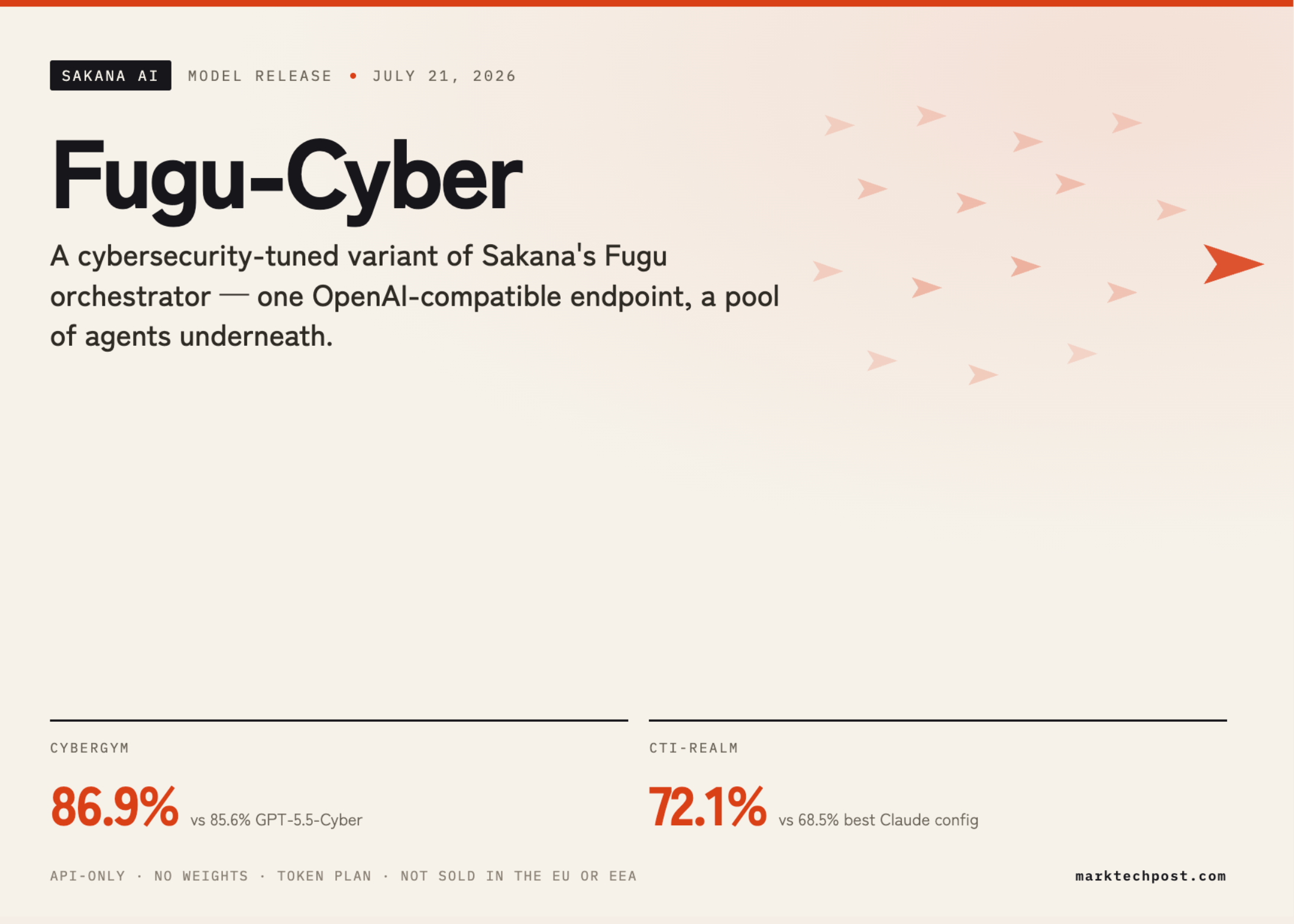
Sakana AI Releases Fugu-Cyber: An Orchestration Model Reporting 86.9% on CyberGym and 72.1% on CTI-REALM
Sakana AI has released Fugu-Cyber (model ID is fugu-cyber-v1.0), a cybersecurity-specialized addition to its Fugu orchestration family. It is not just a new frontier model. It is a third endpoint on the Fugu orchestrator, tuned for security reasoning. Sakana launched that orchestrator a month earlier. Sakana reports a success rate of 86.9% on CyberGym and 72.1% on CTI-REALM. It describes those results as comparable to cyber-focused frontier models such as GPT-5.5-Cyber and Claude Mythos Prev
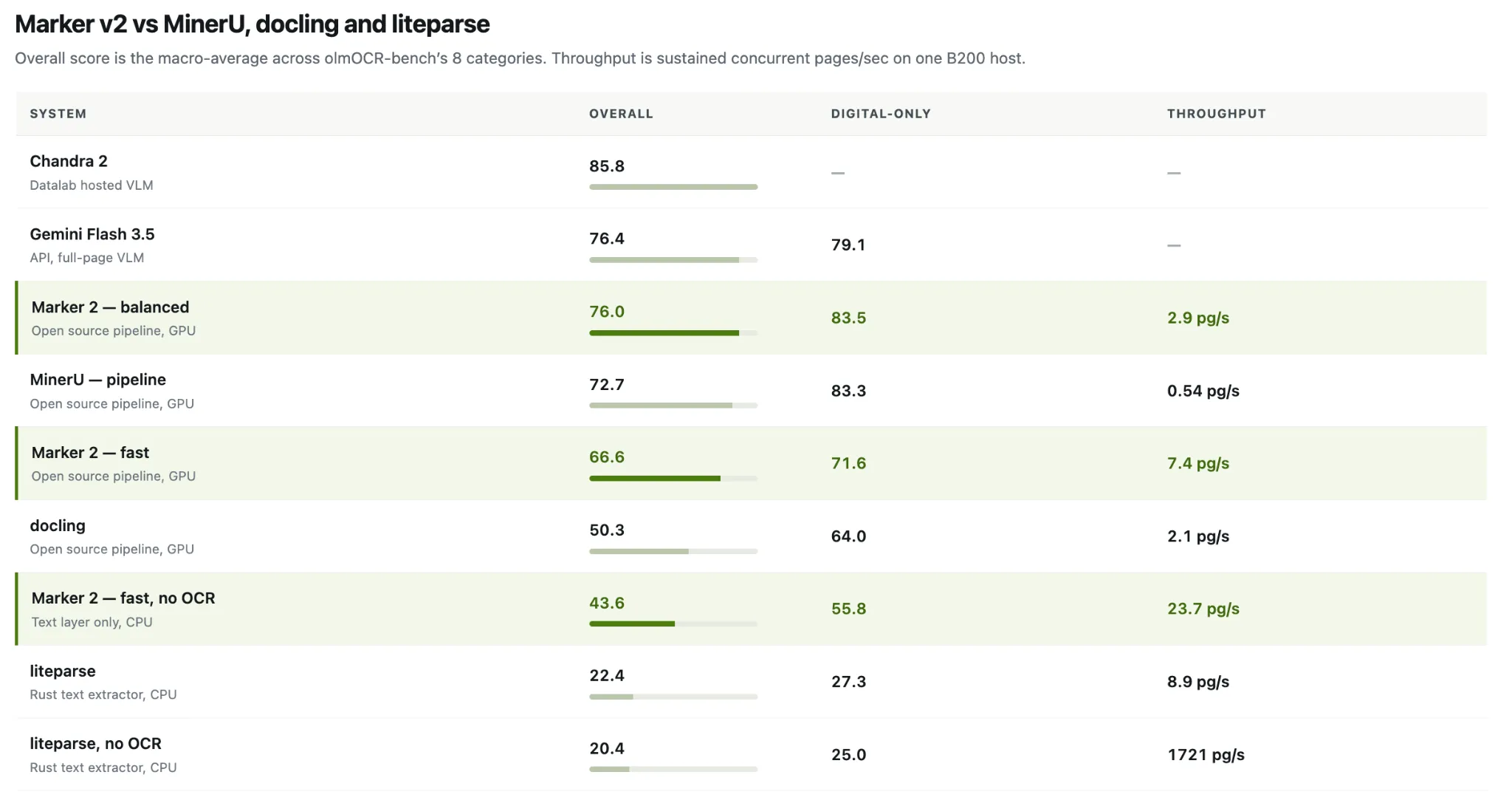
Datalab Marker v2 vs MinerU, Docling, and Liteparse: Benchmark Breakdown
Datalab has released Marker 2, a full rewrite of its open source document conversion pipeline. Marker converts PDF, image, PPTX, DOCX, XLSX, HTML, and EPUB files into markdown, JSON, HTML, or chunks. The Datalab team rebuilt it around three components shipped over the preceding months: Surya OCR 2, a 20M-param fast layout model, and a rebuilt pdftext that is 3× faster than the previous one. The main result comes from olmOCR-bench, a third-party benchmark from Allen AI. Marker 2’s balan