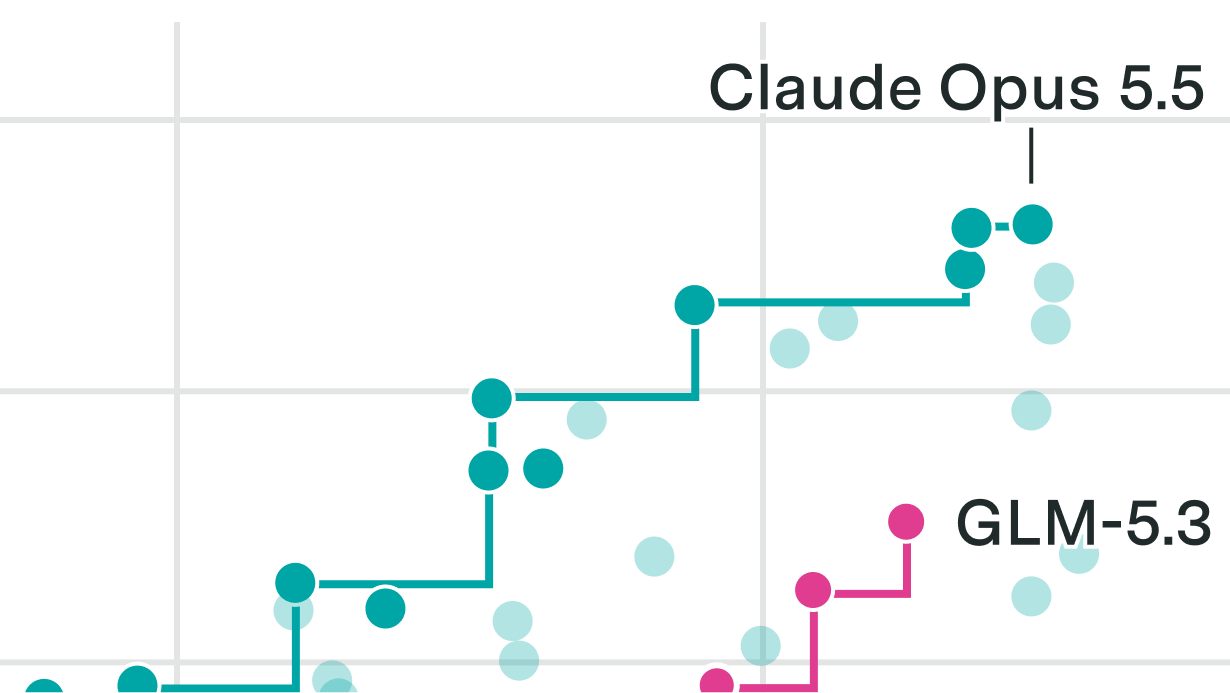
Open-weight models trail closed models in cyber capabilities by 6–7 months
Z.ai’s GLM-5.3 is the top open-weight model on Epoch’s Cyber ECI, scoring where the closed-weight frontier stood 6–7 months earlier.
Get smart on it
Open-weight models, which have publicly available code and weights, currently score lower on cybersecurity capabilities than closed-weight models from major AI companies. The highest-scoring open-weight model on the Cyber ECI, a cybersecurity-focused capability index, ranks approximately 6 to 7 months behind the leading closed-weight models in this domain. This gap matters because it shows a measurable capability difference between the two model types in a specific and important technical area. The comparison uses cybersecurity benchmarks to place different models on a common scale, allowing researchers to track how fast the open and closed frontiers are advancing relative to each other.
Explainer: GLM 5.2: How a 744B Open Model Is Closing the Gap With Claude Opus on Code
Relevant courses
Want to go deeper than the news? Explore live, cohort-based AI courses taught by practitioners.
Browse AI courses on MavenRelated news

Elorian’s first AI model wants to reason with images, not just about them
According to Elorian's evaluations, Glimpse outperforms even GPT-6 Astra on scientific chart reasoning and short-form video captioning, with competitive results on other visual reasoning tasks.
Google's Gemini 4 Argon is closer to the AI frontier than any Google model in months
Google Deepmind's Gemini 4 Argon scored 97.5 percent on the ARC-AGI-3 benchmark, making Google the second lab after OpenAI to cross the 95 percent mark. But the results swing wildly depending on the test setup: in the standard harness, the score drops to just 49.8 percent. Argon also trails rivals in math and software engineering. The article Google's Gemini 4 Argon is closer to the AI frontier than any Google model in months appeared first on The Decoder.
GPT-6-Astra solves 49 of 50 physics research problems at $2.40 apiece
On the TheoPhysEval benchmark, GPT-6-Astra solves 49 of 50 unpublished theoretical physics calculations as accurately as leading specialists. In some cases where the agent seemed to fail, the experts' own reference solutions turned out to contain errors. But the researchers say physics hasn't had a breakthrough like the ones in mathematics, because the agents lack "taste." They still think autonomous, top-level AI research could arrive soon. They already see consequences for how young p
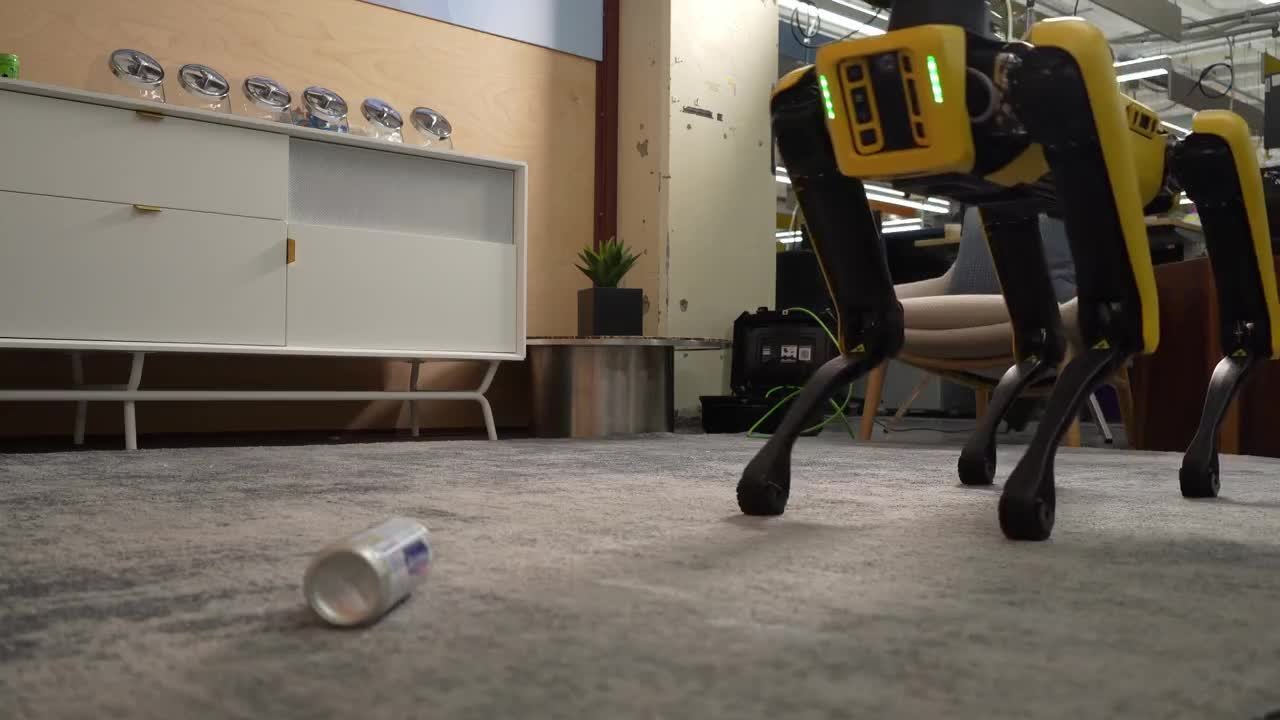
Google wants Gemini 4 Argon to be the only AI model robots need
Google's Gemini 4 Argon controls robots, generates simulations from photos or sketches, and evaluates training videos. On Google's own ERQA benchmark, it scores 87 percent. But the published example prompts show that the demos still need a lot of human guidance. The article Google wants Gemini 4 Argon to be the only AI model robots need appeared first on The Decoder.

The AI race is back on
Last week, Anthropic and OpenAI looked like they had the AI race to themselves, pulling ahead with increasingly powerful models that left their rivals in the dust. Google seemed hopelessly far behind, while Meta, despite spending billions to revive its floundering AI ambitions, had yet to establish itself as a serious contender. Even the latest models coming out of China, impressive as they were, appeared to be playing catch-up. Then, in the space of a few days, everything chan
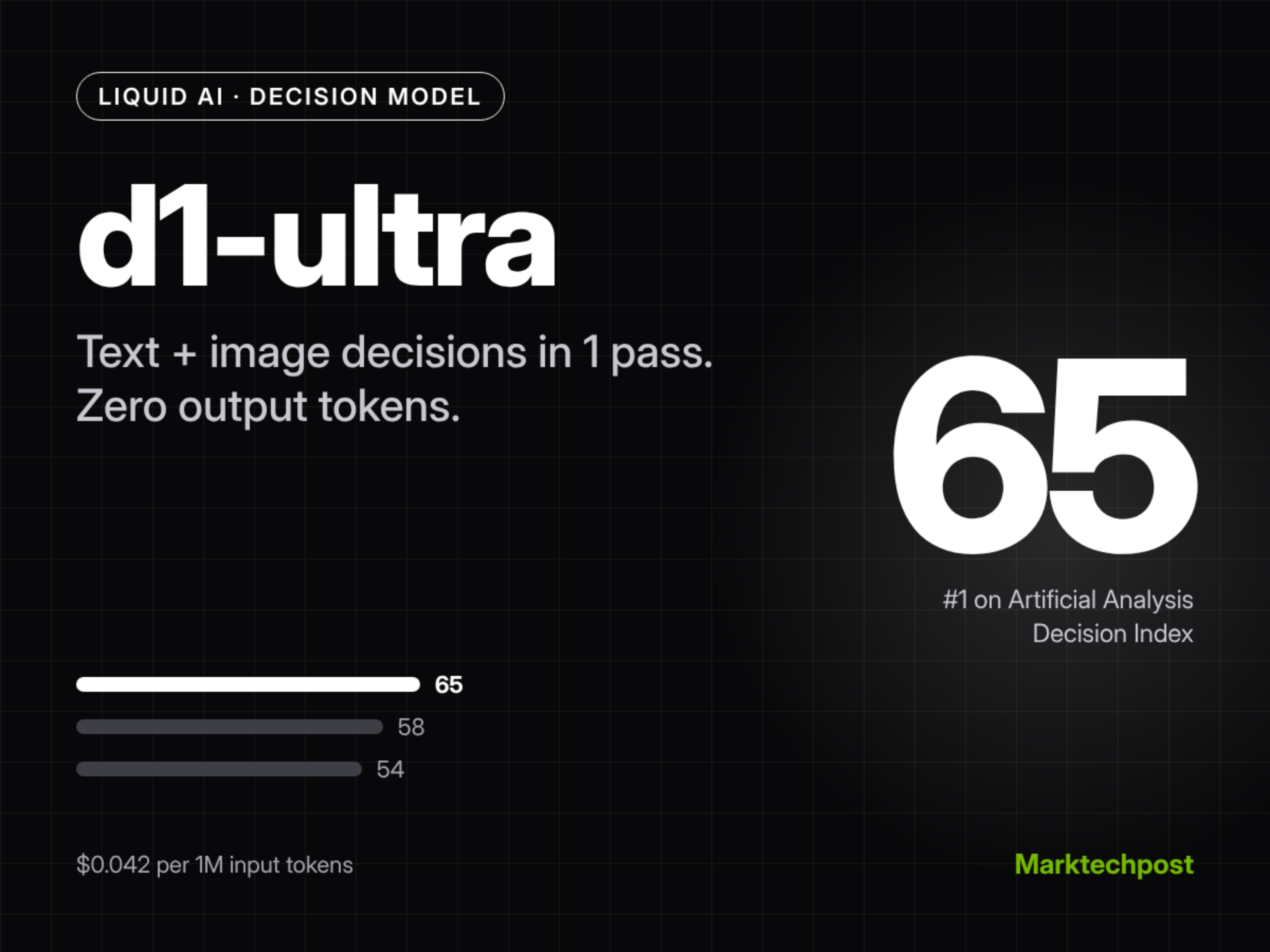
Liquid AI Releases d1-ultra: A Multimodal Decision Model That Scores 65 on the AA Decision Index
Liquid AI has released d1-ultra, its most capable decision model to date. The Liquid AI d1-ultra decision model reads text, images, or both. It answers typed questions with a probability for each possible answer. It does this in one forward pass and generates no output tokens. For developers, that means classification, routing and scoring calls without paying for generated text. It is available now on the Liquid API at $0.042 per million input tokens. TL;DR Size: Parameters and context l