Open-weight AI models are catching up to the frontier. The safety gap remains.
A new SaferAI report finds Z.ai's open-weight GLM-5.2 approaches frontier AI capabilities while lacking key safety mitigations, renewing concerns that powerful open models could outpace governance and safeguards.
Get smart on it
Open-weight AI models, which release their underlying code for anyone to download and run, are now approaching the performance level of frontier models created by leading AI companies. However, a significant safety gap has emerged: while frontier models include protections like refusal training and classifiers to prevent misuse on dangerous tasks like cyberattacks or biological engineering, open-weight models can be run without these safeguards once downloaded. This matters because once someone obtains the model weights, protections become unenforceable and can be removed or modified. The challenge for policymakers and developers is finding ways to limit dangerous capabilities in open-weight models while preserving their beneficial uses, since techniques like training data filtering work better for some domains than others.
Related news
Microsoft Open Sources code-testing-generator: a Polyglot Unit-Test Agent That Hits 92.1% Task Completion Versus 78.9% for Stock Copilot
Microsoft has open sourced code-testing-generator, a polyglot agent that writes unit tests and then proves they work. It ships in the dotnet-test plugin inside the MIT-licensed dotnet/skills repository. The agent targets a gap that coding assistants usually leave open. A prompt like ‘generate unit tests’ does not say which framework, file location or assertions to use. code-testing-generator settles those decisions by reading the repository before it writes anything. It then pla
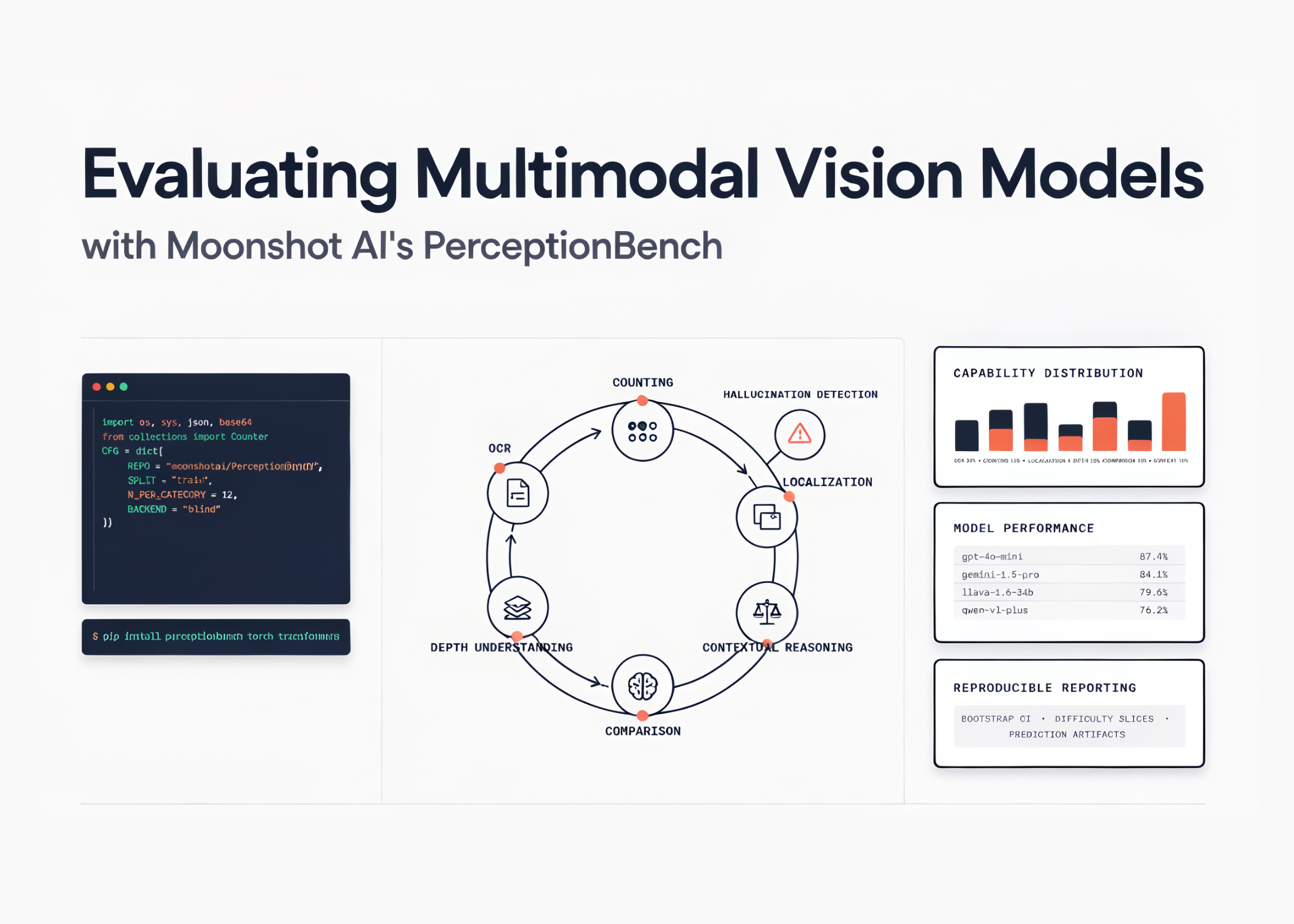
Evaluating Multimodal Vision Models with Moonshot PerceptionBench Using Robust Data Loading and Automated Judging
In this tutorial, we design an end-to-end evaluation workflow for PerceptionBench. This multimodal benchmark measures fine-grained visual perception capabilities across tasks such as OCR, counting, localization, contextual reasoning, comparison, depth understanding, and hallucination detection. We begin by configuring a Colab-compatible environment, installing the required libraries, and loading a balanced subset of the dataset through a robust multi-stage streaming and download strategy. We th