Mistral Vibe for Code vs Claude Code vs Cursor vs Codex: Four Agents Scored on One Scaffold-to-PR Task
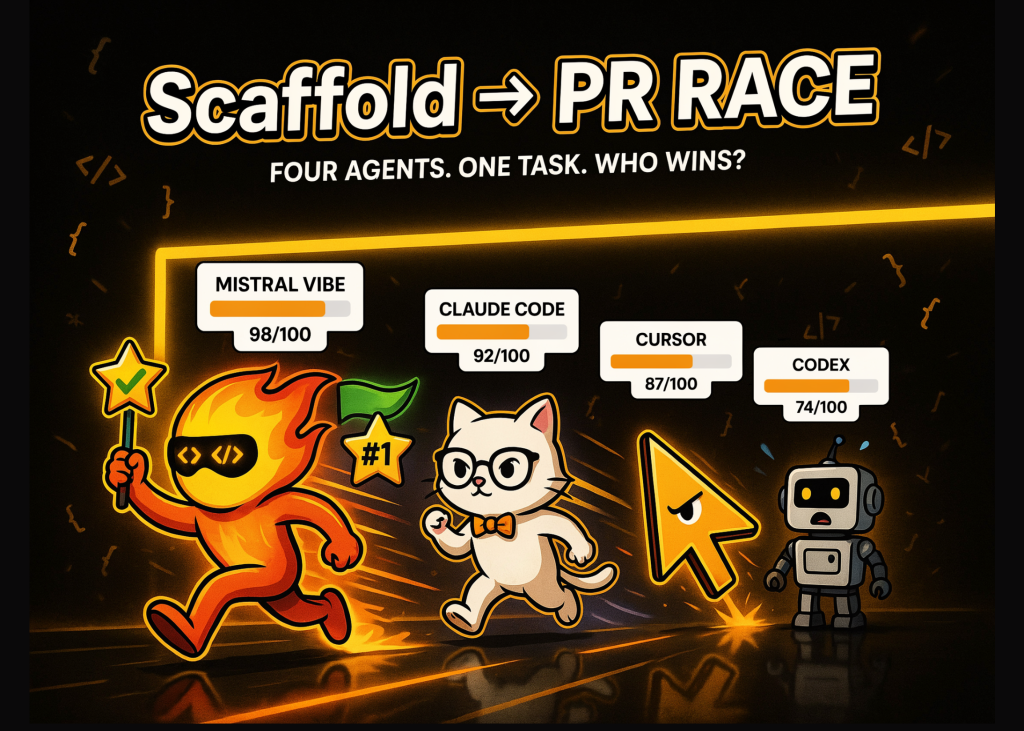
Coding agents are the most contested category in developer tooling right now. Four names dominate the shortlist: Mistral Vibe for Code, Claude Code, Cursor, and OpenAI Codex. Each claims to take a feature from prompt to pull request. This comparison runs all four against one practical workflow. Not a toy script. A real unit of engineering work: scaffold a feature across multiple files, generate and run tests, then open a pull request. The task Prompt: ‘In our existing Python/Fast
Make your prediction
Will Mistral release a major update to Vibe for Code by September 1?
Resolves by Sep 1, 2026
Your prediction
50% · 50/50 coin flip
NOYES
Get smart on it
Four coding agents were compared on their ability to complete a real engineering task: scaffolding a feature across multiple files, generating and running tests, and opening a pull request. The agents tested were Mistral Vibe for Code, Claude Code, OpenAI Codex, and Cursor, each scored across five dimensions including scaffolding capability, test generation, pull request workflow, surface coverage, and cost and control options. Mistral Vibe for Code ranked first with 22 out of 25 points, followed by Claude Code and OpenAI Codex tied at 21 points, and Cursor at 16 points. The comparison reflects documented features and vendor specifications rather than single-run performance tests, with the source noting that benchmark suites across products are not directly comparable and vendor claims should be verified independently.
Related news
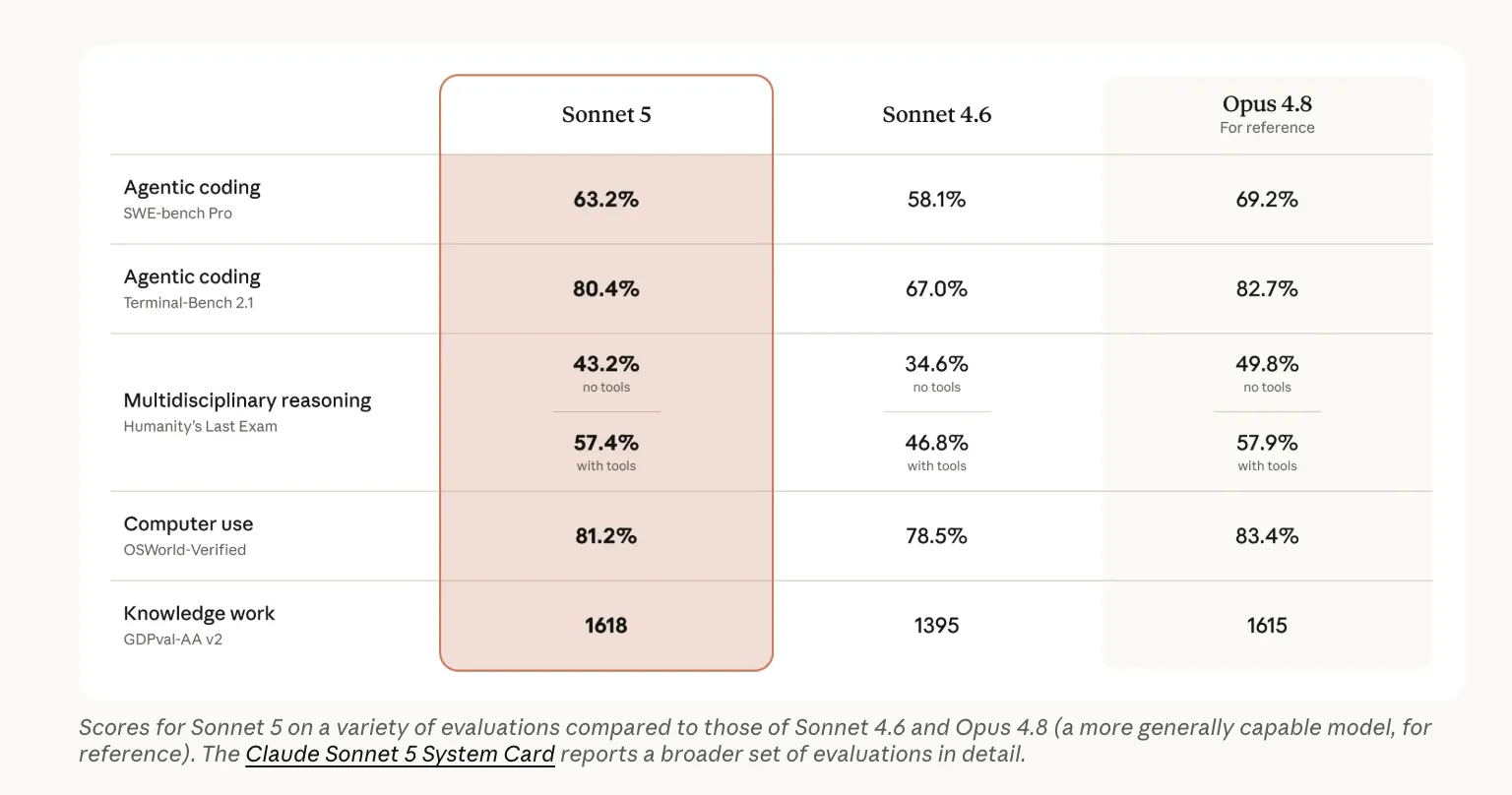
Anthropic Claude Sonnet 5 vs Sonnet 4.6 vs Opus 4.8: Agentic Coding Benchmarks, API Pricing, and Cost-Performance Tradeoffs Compared
Anthropic just shipped Claude Sonnet 5. They call it its most agentic Sonnet model yet. It plans, drives browsers and terminals, and runs autonomously across long tasks. Sonnet 5 is the default model for Free and Pro plans today. Max, Team, and Enterprise users can select it. It is also live in Claude Code and on the Claude Platform. TL;DR Sonnet 5 is Anthropic’s most agentic mid-tier model, closing much of the gap to Opus 4.8. Beats Sonnet 4.6 on every published benchmark: 6
Skyfall AI Releases MORPHEUS: A Persistent Enterprise Simulation Benchmark That Makes Continual Reinforcement Learning Necessary Under Structured Non-Stationarity
Most reinforcement learning benchmarks reset the world after every episode. Real operations never reset. Skyfall AI’s MORPHEUS targets that gap. It is a persistent enterprise simulation platform for continual reinforcement learning (CRL). What is MORPHEUS? MORPHEUS is grounded in the Big World Hypothesis (Javed & Sutton, 2024). It says the world’s complexity exceeds any agent’s representational capacity. As a result, the environment looks non-stationary even under fi