Microsoft Open Sources code-testing-generator: a Polyglot Unit-Test Agent That Hits 92.1% Task Completion Versus 78.9% for Stock Copilot
Microsoft has open sourced code-testing-generator, a polyglot agent that writes unit tests and then proves they work. It ships in the dotnet-test plugin inside the MIT-licensed dotnet/skills repository. The agent targets a gap that coding assistants usually leave open. A prompt like ‘generate unit tests’ does not say which framework, file location or assertions to use. code-testing-generator settles those decisions by reading the repository before it writes anything. It then pla
Get smart on it
Microsoft has open sourced an agent that automatically writes unit tests for code by first researching the repository to understand its structure, frameworks, and conventions before generating tests. The agent achieved a 92.1% task completion rate on an internal benchmark versus 78.9% for stock Copilot using the same underlying model, with improvements concentrated in vague prompts and diff-targeted requests rather than detailed specifications. The agent works through a Research-Plan-Implement pipeline that searches repositories, detects programming languages and test frameworks, plans test strategies, and then verifies tests through mutation testing and full workspace builds before reporting completion. The tool is deployed as an open source agent definition within existing coding environments rather than as a hosted service, making it applicable to regulated industries and teams managing legacy test debt across multiple programming languages.
Related news

Open-weight AI models are catching up to the frontier. The safety gap remains.
A new SaferAI report finds Z.ai's open-weight GLM-5.2 approaches frontier AI capabilities while lacking key safety mitigations, renewing concerns that powerful open models could outpace governance and safeguards.
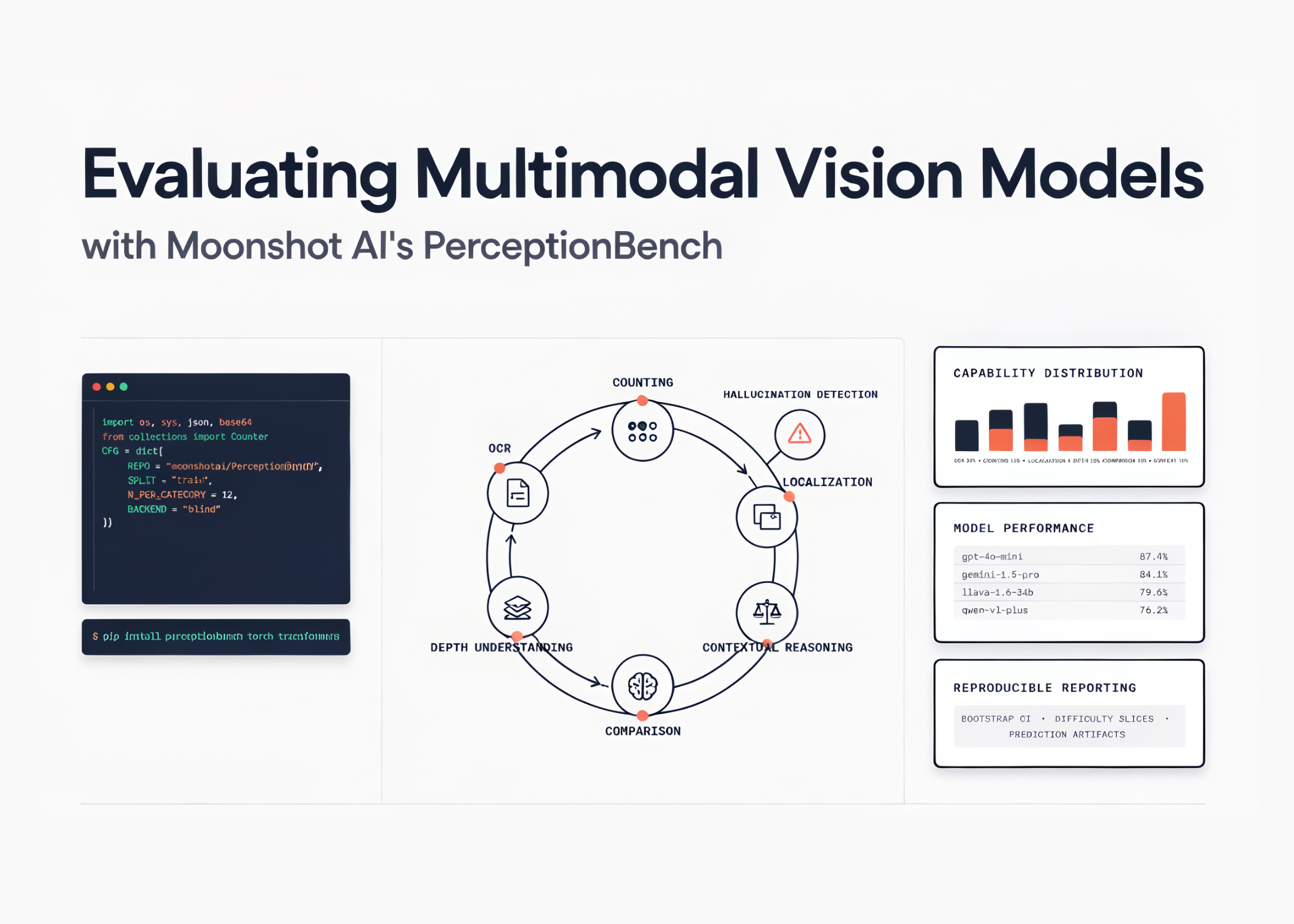
Evaluating Multimodal Vision Models with Moonshot PerceptionBench Using Robust Data Loading and Automated Judging
In this tutorial, we design an end-to-end evaluation workflow for PerceptionBench. This multimodal benchmark measures fine-grained visual perception capabilities across tasks such as OCR, counting, localization, contextual reasoning, comparison, depth understanding, and hallucination detection. We begin by configuring a Colab-compatible environment, installing the required libraries, and loading a balanced subset of the dataset through a robust multi-stage streaming and download strategy. We th