
OpenAI introduces benchmark for AI lab science
OpenAI: Measuring how AI agents handle everyday wet-lab science
OpenAI introduces BioBasicsBench, a 100-task benchmark measuring how well AI agents interpret raw experimental data and handle everyday wet-lab science.
Get smart on it
OpenAI has introduced BioBasicsBench, a benchmark that measures how well AI agents can interpret raw experimental data from routine wet-lab scientific work. The benchmark includes 100 tasks across five areas of laboratory work, using real experimental evidence like gel images, microscopy data, and instrument readouts to test whether agents can identify errors, recognize when data is insufficient to draw conclusions, and correctly analyze results. This matters because misreading images or overlooking experimental problems can lead scientists to draw wrong conclusions and waste time on unproductive experiments. Testing on the benchmark showed that newer AI models perform better at these tasks, with GPT-6 Astra scoring 66.7 percent compared to GPT-5.6 Sol's 43.8 percent, though there is still room for improvement in image interpretation, control checking, and applying experimental context.
Explainer: How to Actually Read an AI Benchmark (Without Being Fooled)
Relevant courses
Want to go deeper than the news? Explore live, cohort-based AI courses taught by practitioners.
Browse AI courses on MavenRelated news
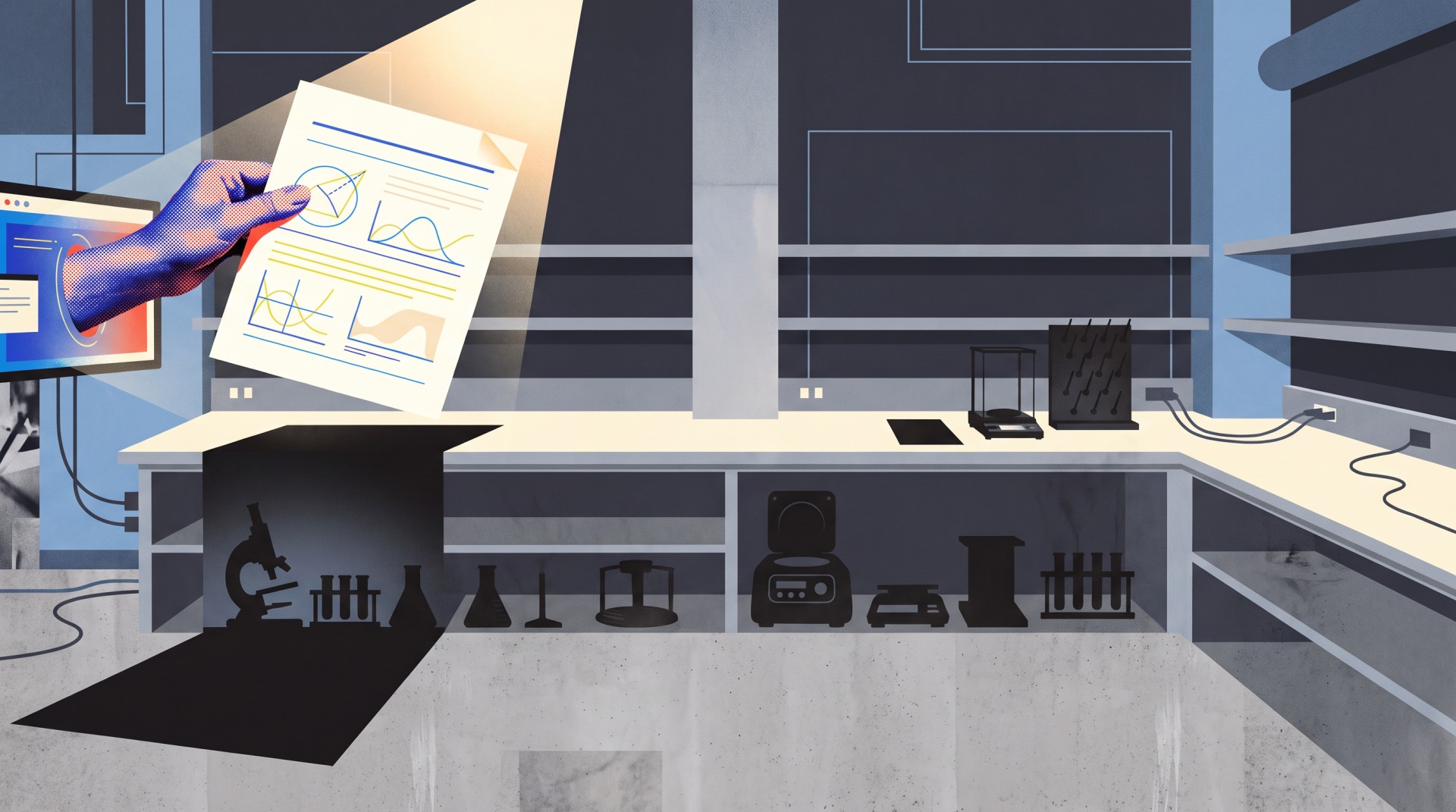
Nine AI agents tried autonomous research on open questions from US national labs and none passed the experts' bar
The "Into the Unknown" benchmark tasks nine AI agents with tackling open research questions from U.S. national laboratories. None of the 135 submissions meets all requirements. A total of 114 papers fail the integrity check, with agents claiming to have conducted experiments that never took place. GPT-6 Astra performs best but still doesn't meet the experts' standards. The article Nine AI agents tried autonomous research on open questions from US national labs and none passed the expert
Ripple-65B Preview delivers strong agentic coding results as a fully Apache 2.0 open US model
Ricursive Intelligence is releasing Ripple-65B Preview, a 65-billion-parameter open-weight language model that the company says achieves the top score among open-source U.S. models on the TerminalBench 2.1 coding benchmark at a total R&D cost of $32 million. On other benchmarks, however, Ripple falls behind the likewise newly released western open model Inkling 2 Small. The article Ripple-65B Preview delivers strong agentic coding results as a fully Apache 2.0 open US model appeare
The gap between open and closed AI models in cyber capabilities keeps shrinking
In the Vals AI benchmark, OpenAI's GPT-6 Sol Daybreak hits 80.8 percent of attack objectives in simulated corporate networks. Worse, the open-weight model DeepSeek V4.1 Flash reaches 72.8 percent at a tenth of the cost. Because open models can no longer be restricted, analysts say the window for defenders is shrinking fast. The article The gap between open and closed AI models in cyber capabilities keeps shrinking appeared first on The Decoder.
Free Chinese AI Models Are Getting Scary Good at Hacking
An experiment in which AI models were asked to break into simulated networks showed the hacking skills of DeepSeek and GLM to be not far behind OpenAI’s most advanced cyber model, which isn’t public.
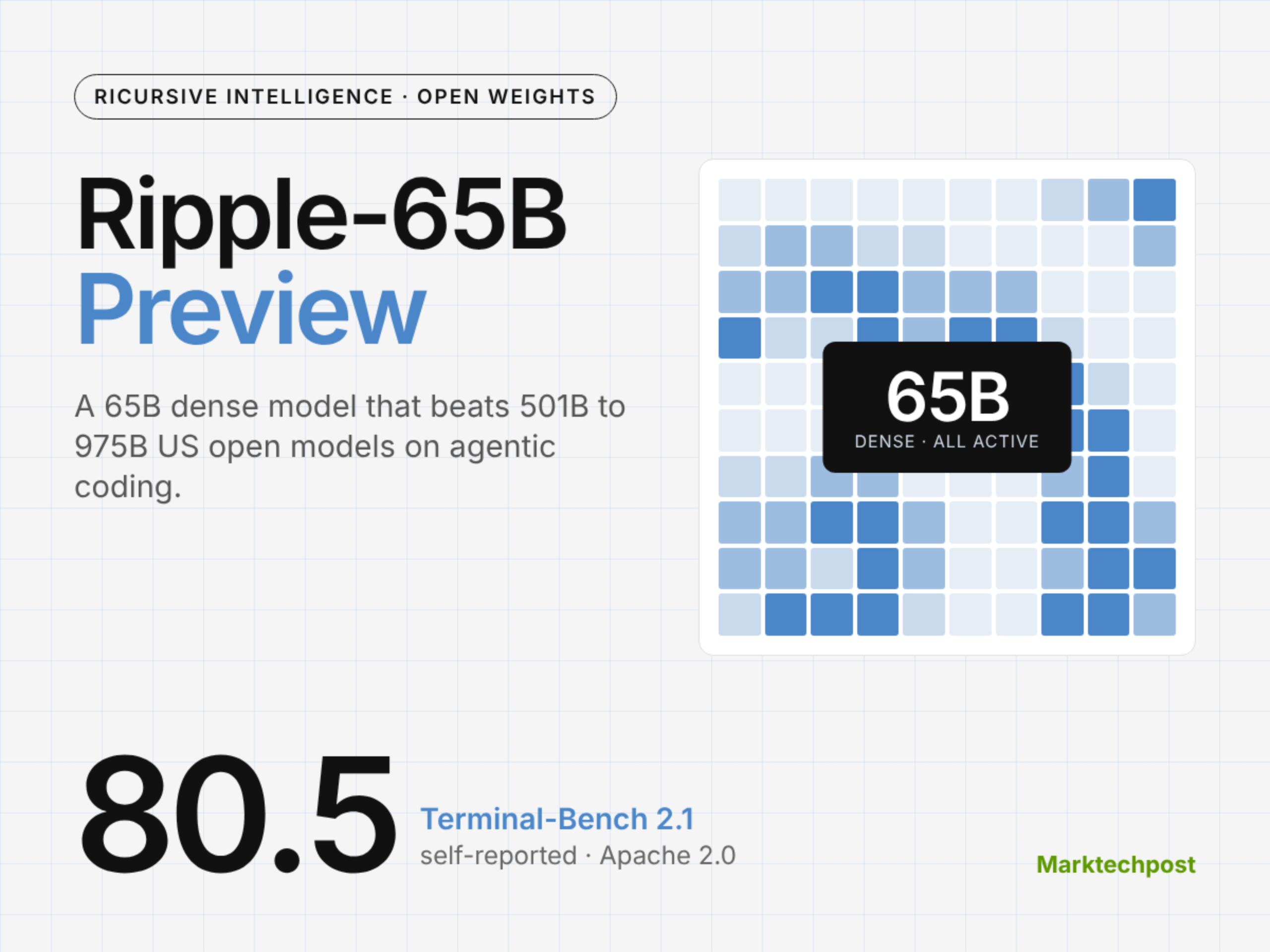
Ricursive AI Releases Ripple-65B Preview: A 65B Dense Open-Weight Model Scoring 80.5 on Terminal-Bench 2.1
Ricursive Intelligence just released Ripple-65B Preview. Ripple-65B Preview is a 65B dense open-weight model from Ricursive, pretrained from scratch for agentic coding. It is a general-purpose variant of the proprietary model behind Ricursive’s AI chip design platform. The main claim: 80.52 on Terminal-Bench 2.1, the top self-reported score among US open-weight models. Every MoE rival it beats on that test carries 501B to 975B total parameters. TL;DR Size: 65B dense (65B active), p
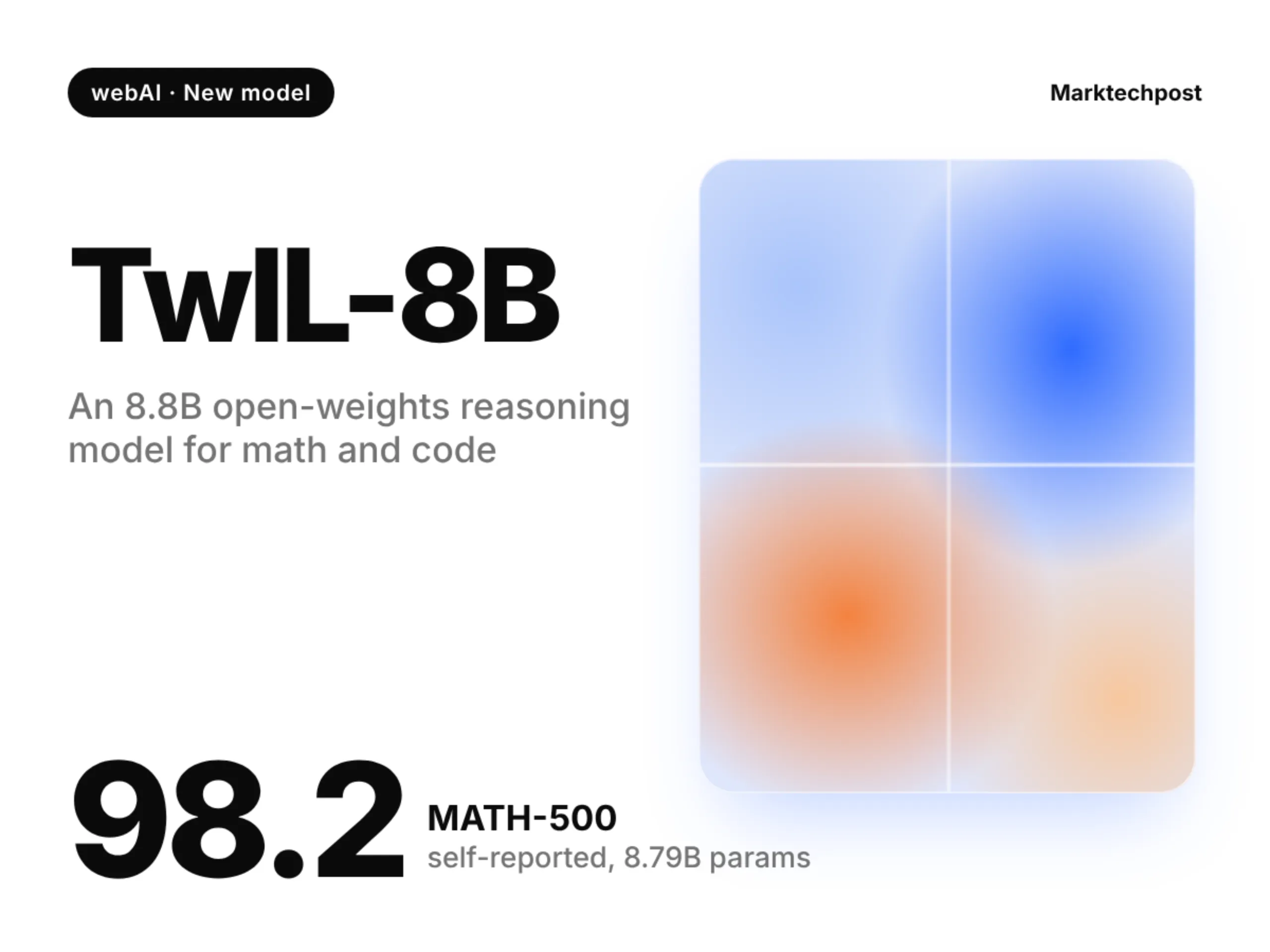
webAI Releases TwIL-8B, an 8.8B Reasoning Model Scoring 98.2 on MATH-500
webAI has released TwIL-8B, an 8.8B reasoning model for math, code and instruction following. The TwIL-8B reasoning model is post-trained from IBM’s Granite 4.2 8B. Weights are on Hugging Face under a non-commercial license. webAI’s launch post frames the pitch around cost per task, not raw scale. The 4-bit build is 4.98 GiB, sized for CPU or modest-VRAM GPU inference. TL;DR Size: 8.79B parameters, dense. 131,072-token context, inherited from the base model. Runs on: CPU o