
Grok Voice 3.0 outscores OpenAI and Google on speech tests
SiliconANGLE: Grok Voice 3.0 from SpaceXSI outscores OpenAI and Google on speech-to-speech index
Elon Musk’s artificial intelligence company SpaceXSI, formerly xAI, today released Grok Voice 3.0, a new version of the speech-to-speech model behind its Voice Agent API. SpaceXSI is pitching the model to businesses that handle customer support and sales calls with voice agents. Independent testing firm Artificial Analysis ranks it first among models of its type. Artificial […] The post Grok Voice 3.0 from SpaceXSI outscores OpenAI and Google on speech-to-speech index appeared first
Get smart on it
SpaceXSI released Grok Voice 3.0, a speech-to-speech model for voice agents that handle customer support and sales calls. According to independent testing by Artificial Analysis, it scored higher than competing models from OpenAI and Google on their Speech-to-Speech Index, measuring reasoning, task success, and listener votes in blind comparisons. The model also demonstrated faster response times and lower costs per task compared to competitors, and is already in production across Tesla vehicles and Starlink's customer service operations.
Relevant courses
Want to go deeper than the news? Explore live, cohort-based AI courses taught by practitioners.
Browse AI courses on MavenRelated news

The AI race is back on
Last week, Anthropic and OpenAI looked like they had the AI race to themselves, pulling ahead with increasingly powerful models that left their rivals in the dust. Google seemed hopelessly far behind, while Meta, despite spending billions to revive its floundering AI ambitions, had yet to establish itself as a serious contender. Even the latest models coming out of China, impressive as they were, appeared to be playing catch-up. Then, in the space of a few days, everything chan
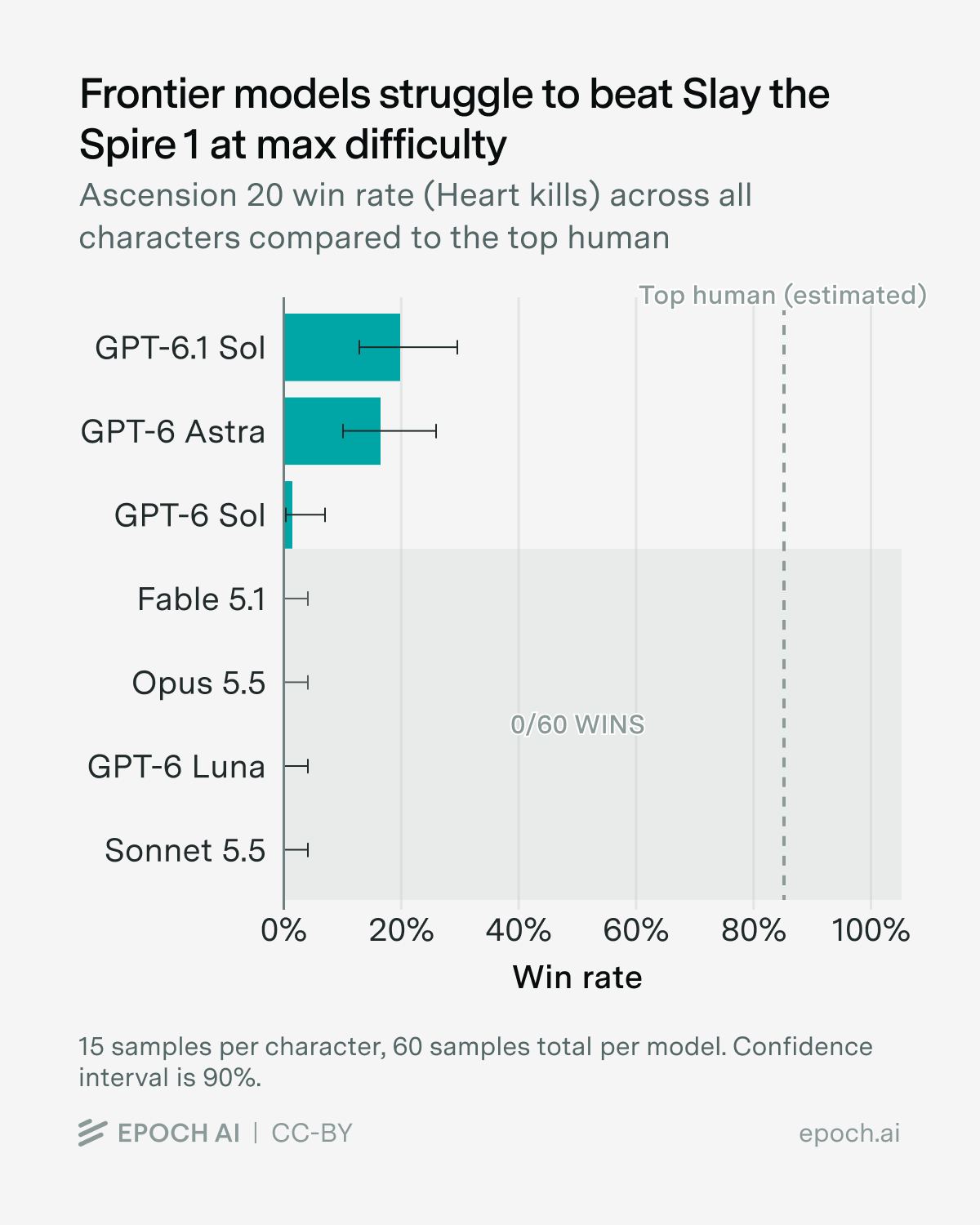
How well can AI play Slay the Spire?
Months ago, frontier models could barely beat Slay the Spire. Now they win 90%+ at the easiest setting and up to 20% at the hardest. Results from Epoch AI’s new SpireClimb benchmark.
Google Deepmind's AlphaProof Nexus solved dozens of open math problems and actually got peer reviewed
Google Deepmind's AlphaProof Nexus solved dozens of open math problems, including nine Erdős problems two of which were unsolved for 56 years, per a study in Science. The publication comes as OpenAI faces a boycott for dumping AI proofs on GitHub without peer review. Deepmind had its results reviewed before publishing. The article Google Deepmind's AlphaProof Nexus solved dozens of open math problems and actually got peer reviewed appeared first on The Decoder.

AI guardrails designed to stop hackers are now blocking defenders, and Orion-1 aims to fill the gap
Artemis Security's new Orion-1 model is purpose-built for cyber defense and beats Claude Opus 5.5 and GPT-6 Sol on the company's own benchmark. The model fills a growing gap as general-purpose frontier models lock down their cyber capabilities, blocking defenders in the process. The article AI guardrails designed to stop hackers are now blocking defenders, and Orion-1 aims to fill the gap appeared first on The Decoder.

‘Pure insanity’: Mathematicians will need years to make sense of OpenAI’s latest drop
"Staggering." "Overwhelming." "Unprecedented." "Surreal." "Pure insanity." Those were among the descriptions more than three dozen mathematicians reached for in conversations with The Verge as they tried to make sense of the flood of mathematical results OpenAI abruptly dropped on the field this week. Amid the awe, excitement, and uncertainty over the sheer scale of the deluge was a deep-seated anxiety over what it all means - and what comes next. For all their different react

Open, peer-reviewed measurement for today’s AI buyers: MLPerf in the EU’s AI Gigafactories tender, and Endpoints v1.0 opens for submissions
As AI adoption is growing across the economy, AI buyers are asking a more complex set of questions about AI systems than simply a chip’s speed. They want to know what performance a deployed service will deliver, what it will cost for given workloads, and how much energy it will use. MLPerf has been the standard-bearer for measuring AI system performance since 2018; it’s evolving to address these more complex questions for every AI buyer. First, out of Europe: MLPerf has been chos