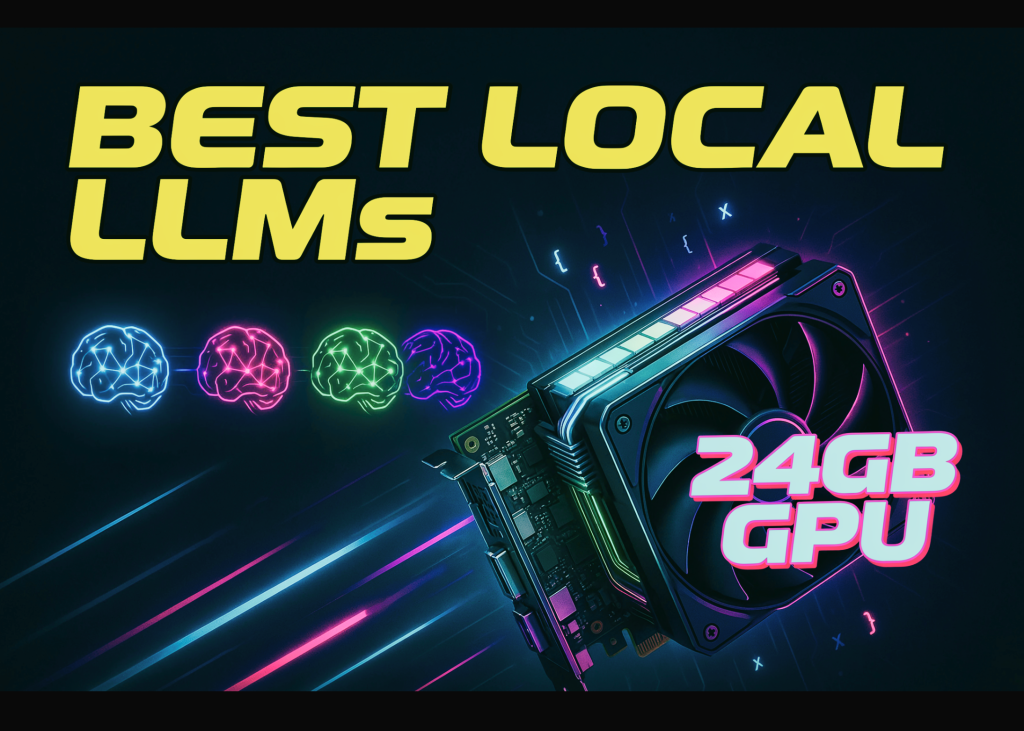
Best Local LLMs You Can Run on a Single 24GB GPU in 2026: Qwen, Gemma, Mistral, DeepSeek Compared
A single 24GB card is the practical floor for serious local inference. It is enough for genuinely capable models, and small enough to sit on one GPU. An RTX 3090 or RTX 4090 both land in this tier. The card you own matters less than the models you pick for it. The old hobbyist move was to squeeze the biggest 70B quant onto the card. That advice is now outdated. The stronger 2026 strategy uses modern 20B–35B-class models that fit cleanly. These leave room for context, and still respond fast e
Get smart on it
A 24GB GPU is the practical minimum for running capable AI language models locally on consumer hardware. Several modern language models in the 20B to 35B parameter range fit on this tier of GPU when compressed with standard quantization techniques, leaving room for processing longer text and maintaining reasonable response speeds. Memory during inference is consumed by three factors: the model weights themselves, the KV cache that grows with context length, and runtime overhead from the serving software. The article compares six specific open-weight models suited to this hardware tier, organized by their strengths in tasks like general chat, coding, reasoning, and multimodal input.
Related news
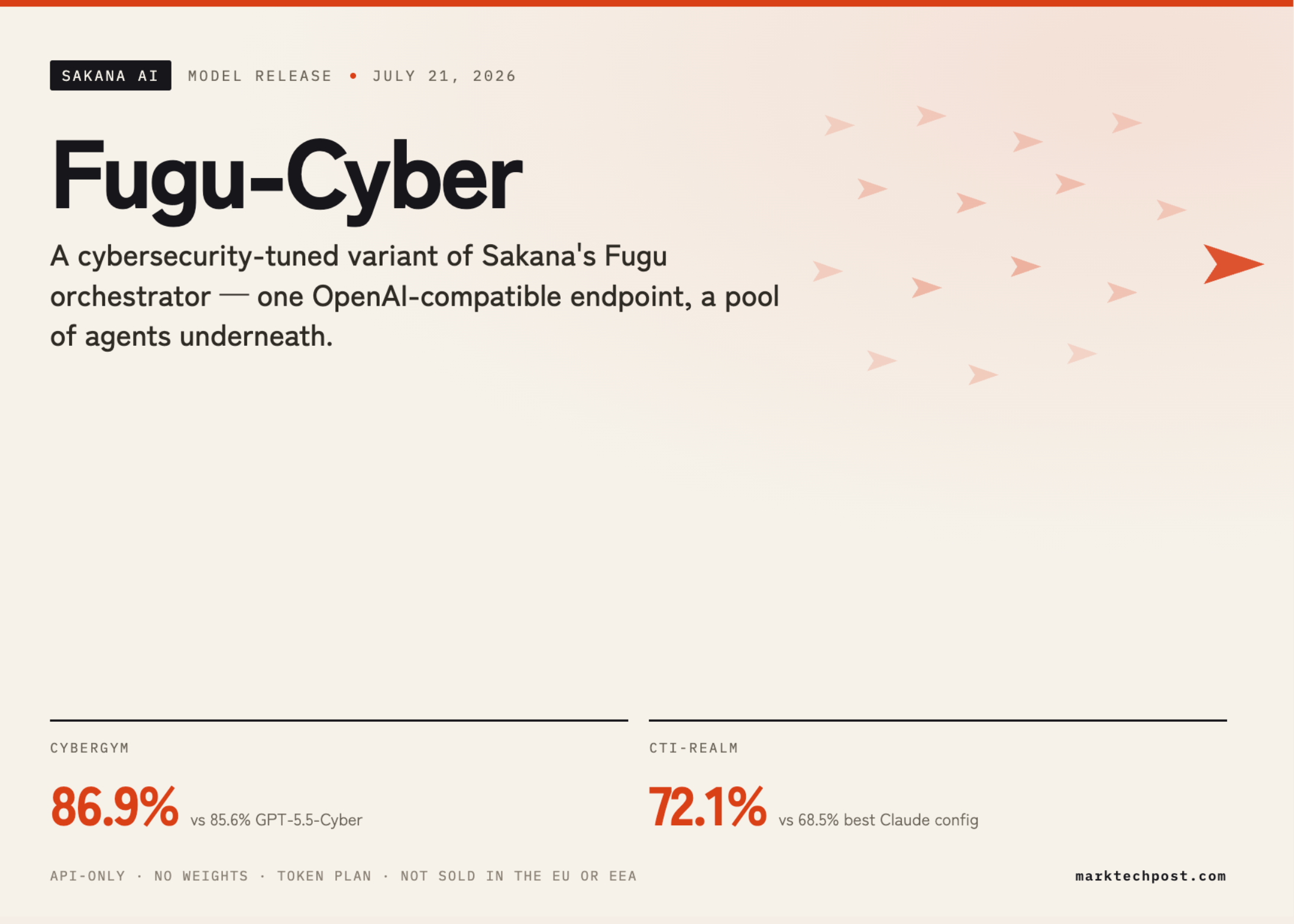
Sakana AI Releases Fugu-Cyber: An Orchestration Model Reporting 86.9% on CyberGym and 72.1% on CTI-REALM
Sakana AI has released Fugu-Cyber (model ID is fugu-cyber-v1.0), a cybersecurity-specialized addition to its Fugu orchestration family. It is not just a new frontier model. It is a third endpoint on the Fugu orchestrator, tuned for security reasoning. Sakana launched that orchestrator a month earlier. Sakana reports a success rate of 86.9% on CyberGym and 72.1% on CTI-REALM. It describes those results as comparable to cyber-focused frontier models such as GPT-5.5-Cyber and Claude Mythos Prev
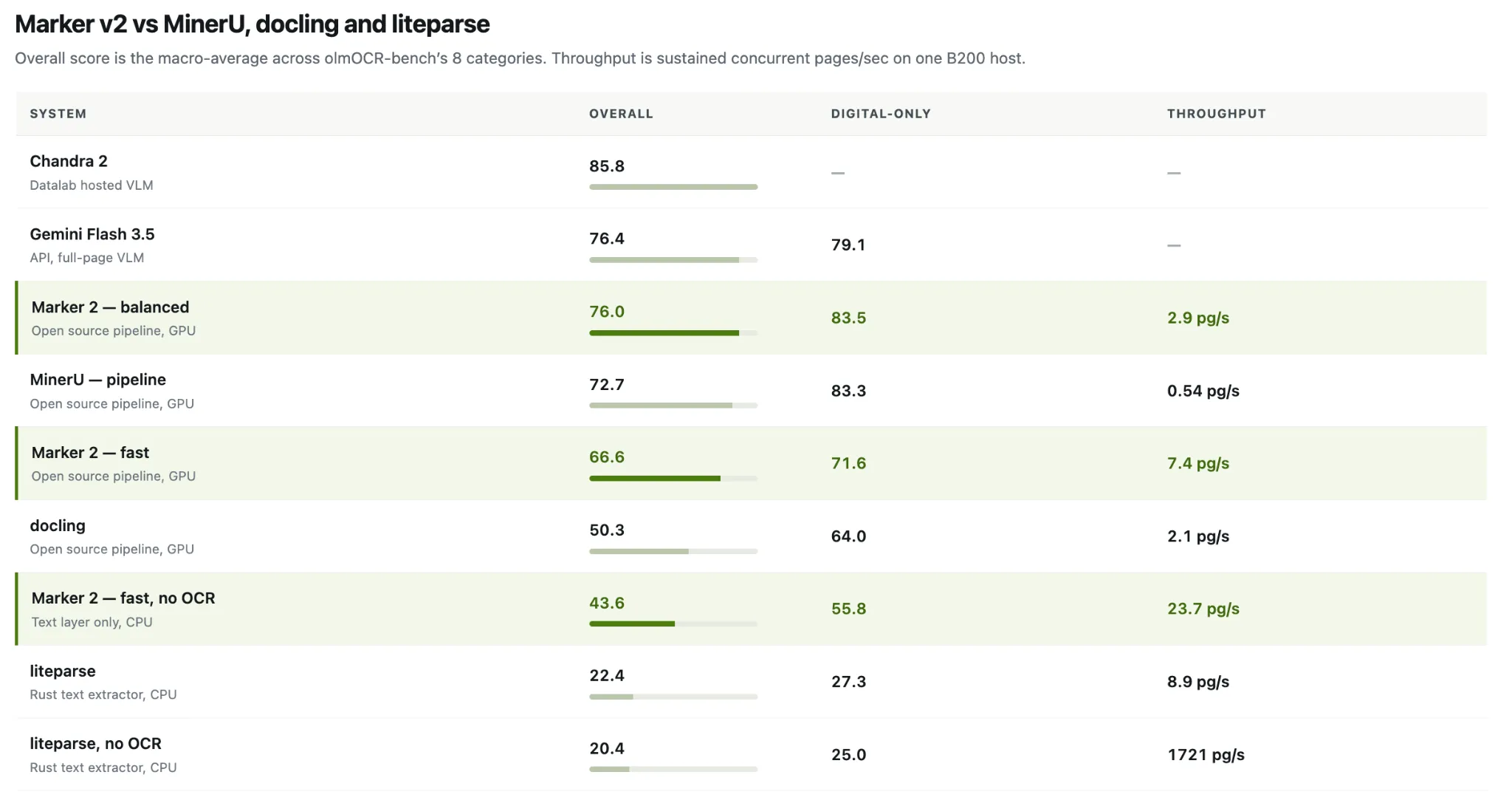
Datalab Marker v2 vs MinerU, Docling, and Liteparse: Benchmark Breakdown
Datalab has released Marker 2, a full rewrite of its open source document conversion pipeline. Marker converts PDF, image, PPTX, DOCX, XLSX, HTML, and EPUB files into markdown, JSON, HTML, or chunks. The Datalab team rebuilt it around three components shipped over the preceding months: Surya OCR 2, a 20M-param fast layout model, and a rebuilt pdftext that is 3× faster than the previous one. The main result comes from olmOCR-bench, a third-party benchmark from Allen AI. Marker 2’s balan