
SentinelOne cuts malware analysis from weeks to hours
With OpenAI Daybreak, SentinelOne cuts weeks of malware analysis to hours, creating capacity to investigate more threats.
Get smart on it
AI software now enables security researchers to complete malware reverse engineering in approximately eight hours, compared to the four to six weeks this work traditionally required. This acceleration allows security teams to investigate more malware samples and identify connections between threats that isolated investigations might have missed. Faster analysis also distributes cybersecurity expertise more broadly across organizations, enabling more team members to conduct security work rather than relying on a small group of specialists. The approach maintains human oversight for critical decisions, with researchers responsible for outcomes and particularly for decisions that fundamentally change software architecture.
Relevant courses
Want to go deeper than the news? Explore live, cohort-based AI courses taught by practitioners.
Browse AI courses on MavenRelated news

Apate sends AI agents undercover to get scammed so they can gather fraud intelligence
Most companies use AI agents to ship products faster or speed up workflows. Apate.ai sends them undercover to get scammed.
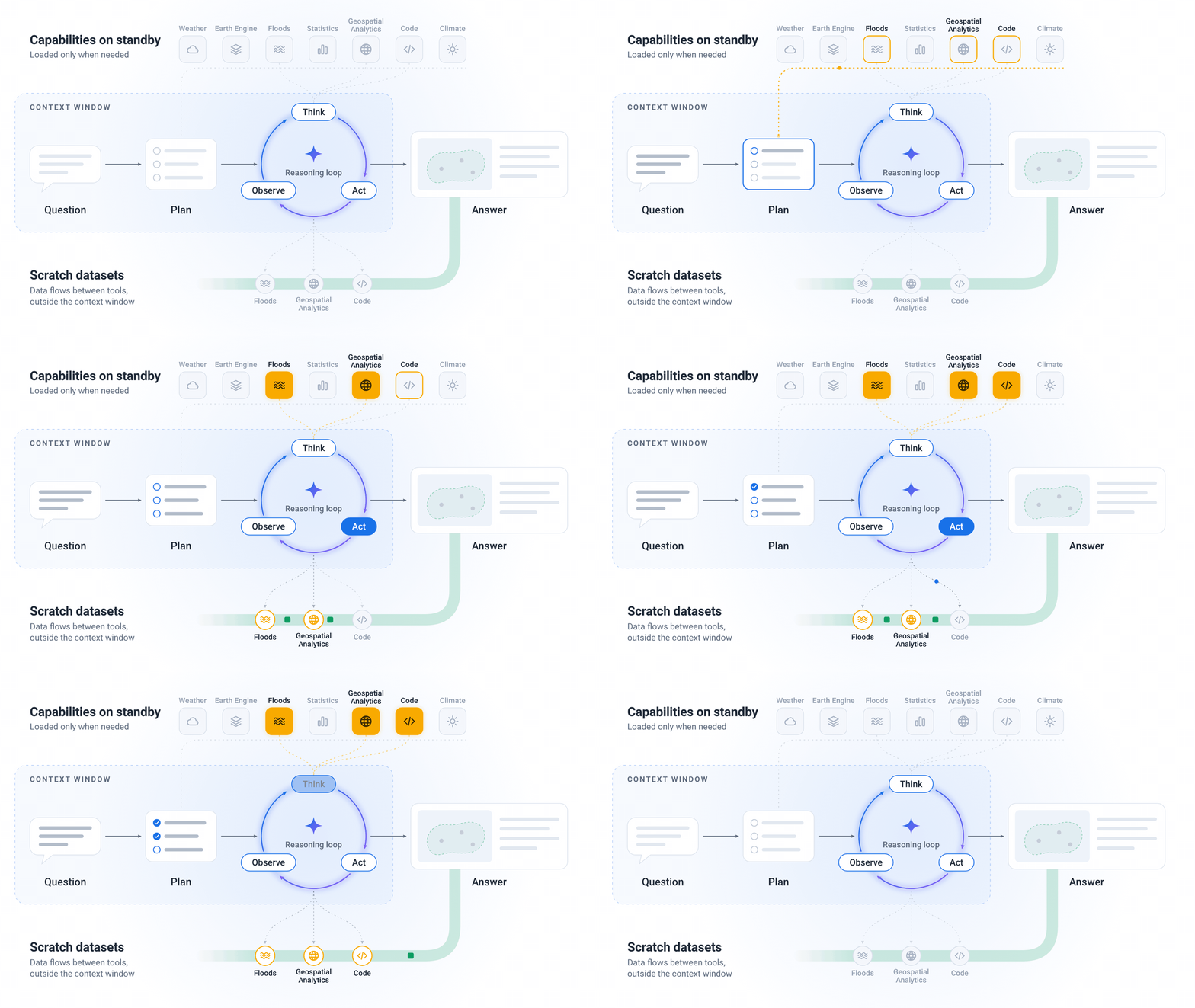
Putting Earth AI to work: Geospatial agents for our planet's biggest challenges
Earth AI

Amp puts AI agents to work beyond code with OpenAI models
See how Amp pushes the frontier of what agents can do with GPT-6 Astra, Ultrafast, GPT-Live-1, and Sign in with ChatGPT.

How Third Moment Research runs 10,000 agents for 36+ hours
With GPT-6 Astra and GPT-6.1 Sol, Codex, and Daybreak for cybersecurity, this AI lab builds agents that focus for days and improve with use.

SolarWinds’ Avior pairs AI agents with deterministic execution for enterprise IT
Observability and information technology management software company SolarWinds Worldwide LLC today unveiled Avior, a standalone agentic artificial intelligence system built to take on first-line operations work for enterprise IT teams. The launch goes after the reliability problem that comes with letting AI agents act on production systems. SolarWinds argues that an agent producing different outcomes […] The post SolarWinds’ Avior pairs AI agents with deterministic execution for ent

Google DeepMind and Singapore Government announce new AI tool to protect citizens against scams
Learn how Google DeepMind and GovTech Singapore uses lightweight on-device Gemma models to intercept conversational scams in private chats with zero cloud data egress.