Google will now disclose which ads are made with AI
While Google prohibits misleading and deceptive ads, an ad can still leverage AI to create some type of synthetic or digitally altered content. Until now, that's something Google only required election ads to disclose.
Get smart on it
Google is introducing a new disclosure feature in its ad system that will tell consumers when advertisements were created or edited using AI technology. The feature will appear in the "My Ad Center" panel accessible through Google Search, YouTube, and Google Discover, showing an option called "How this ad was made" to indicate AI involvement. This matters because AI makes it easier for businesses to create ads and save money on photography, but consumers may be misled if they don't realize they're viewing synthetic or digitally altered content rather than real product photos. When advertisers use Google's generative AI advertising tools, the disclosure will be automatically enabled, but advertisers using AI tools from elsewhere must manually indicate this, and Google will not verify their claims on its own.
Related news
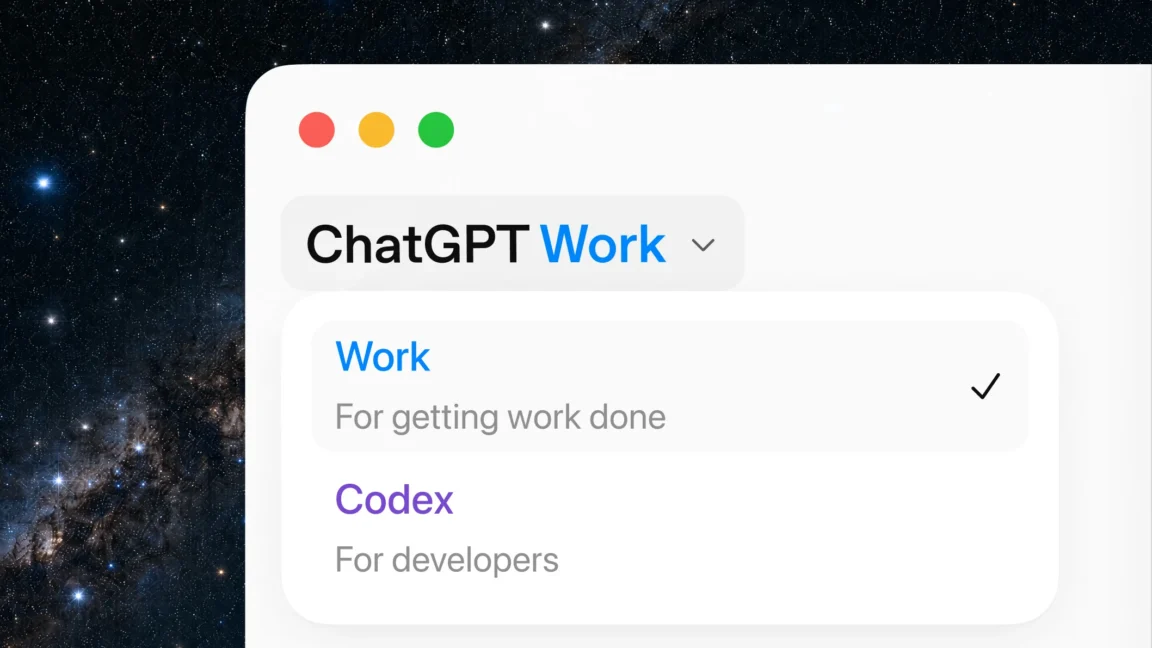
OpenAI wants its new tool to do your work for you and with you
Last year, when we tested out the "Agent Mode" in OpenAI's Atlas web browser, we complained that any automated tasks tended to stop after a few minutes, limiting its usefulness for ongoing or complex tasks. With today's release of ChatGPT Work, OpenAI says it has solved that problem with a new tool that can "stay with a project for hours if needed, and turn a goal into finished work." The company is challenging users to evaluate ChatGPT Work by "giv[ing] it a task you already know well," such as

An AI agent startup just let its agent run its $100M fundraise
Lyzr, a startup that builds AI agents for enterprises, used its own AI agent to raise a $100 million round — proof, evidently, that the product actually works.