Everything is spying on you and there’s no opting out
Mark Zuckerberg, chief executive officer of Meta Platforms Inc., wears a pair of Meta Ray-Ban Display AI glasses during the Meta Connect event in Menlo Park, California, US, on Wednesday, Sept. 17, 2025. | Bloomberg via Getty Images Earlier this month, Apple announced that its new Apple Watches will have the ability to continuously listen to every spoken word they detect and create summaries of whatever's going on around you. The privacy blowback was immediate and inevitable: Ex
Get smart on it
A new wave of consumer devices with AI capabilities can continuously listen to and record everything around them, including people who have not consented to being recorded. Companies making these devices argue they include privacy safeguards such as warning lights or chime sounds to alert nearby people that recording is happening, along with technical features like rolling buffers that only capture limited portions of speech. Critics contend that these supposed safeguards actually shift the burden of privacy protection away from companies and onto individual consumers and bystanders, and that the popularity of these devices risks normalizing constant surveillance in public spaces. The devices range from smartwatches with always-on listening features to smart glasses with cameras to AI-enabled pendants, reflecting a broader industry trend toward ambient surveillance technology.
Related news
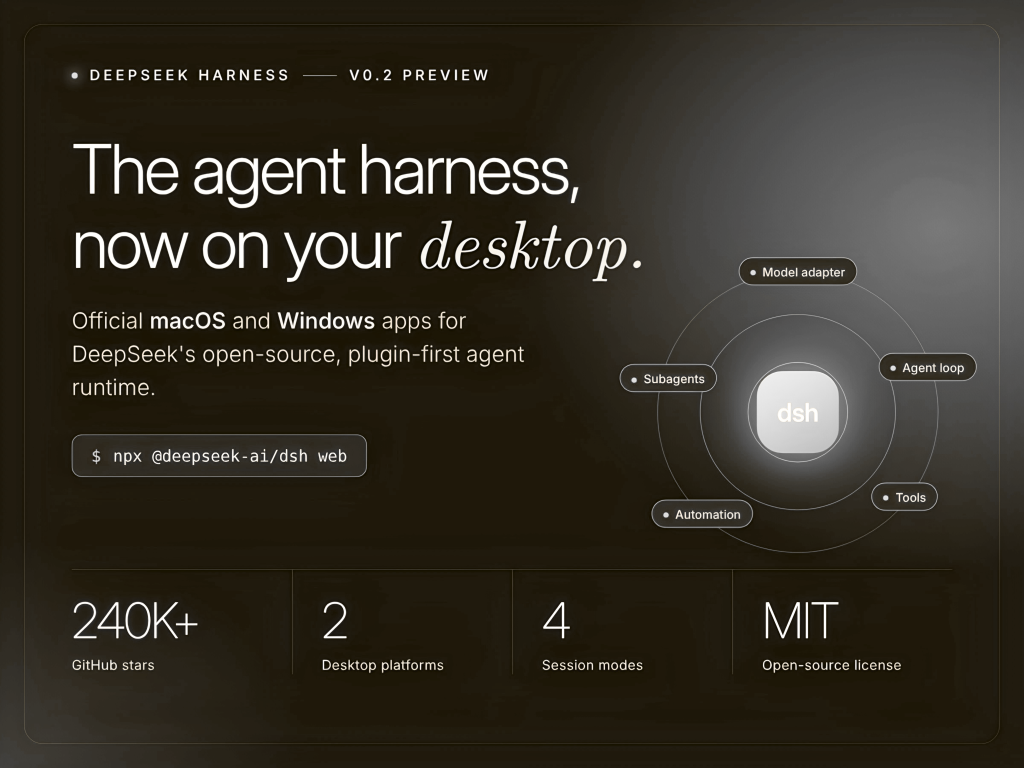
DeepSeek Harness v0.2 Brings Official Desktop Apps to Its Open-Source Agent Harness
DeepSeek has released an official desktop app for DeepSeek Harness (dsh), its open-source agent harness. The app ships with the v0.2 preview. Installers cover macOS (Apple silicon) and Windows (64-bit). Is it deployable? Yes, today, as a preview. Download it from deepseek.com/harness or run npx @deepseek-ai/dsh web. DeepSeek warns that compatibility-breaking changes will follow. What Shipped in v0.2 A harness is the runtime that turns a model into an agent. It reads files, runs command
The Agent Said It Was Done. The Database Disagreed.
When AI systems claim task completion without verification, downstream errors can cascade through dependent processes, exposing gaps in reliability for critical workflows.