Engram is a sampler that turns broken AI hallucinations into music
Music startup Thoughtful Things has just launched the Kickstarter campaign for its first instrument, Engram. It's a sampler and groovebox that uses AI to mangle incoming audio and even hallucinate completely new sounds. This isn't Suno in a box, though. This isn't a "push-button, get-song" device, aimed at creating something that sounds ready for top-40 radio. It's about creating experimental, uncanny sounds and pushing AI audio models beyond their limits. Engram isn't connecte
Get smart on it
Engram is a music sampler and groovebox developed by a startup that runs small AI models locally on the device to distort incoming audio and generate experimental sounds. Unlike AI music creation tools designed for mainstream radio, Engram is intended for exploring unusual and uncanny sounds by pushing AI audio models to their limits, drawing inspiration from circuit bending practices that intentionally break and modify electronics. The device uses AI models trained only on commercially licensed audio datasets and is designed to be open to customization, allowing users to modify its firmware or load their own trained models. The startup is launching the device through a crowdfunding campaign with an initial price of $675, with an expected retail price between higher amounts.
Related news
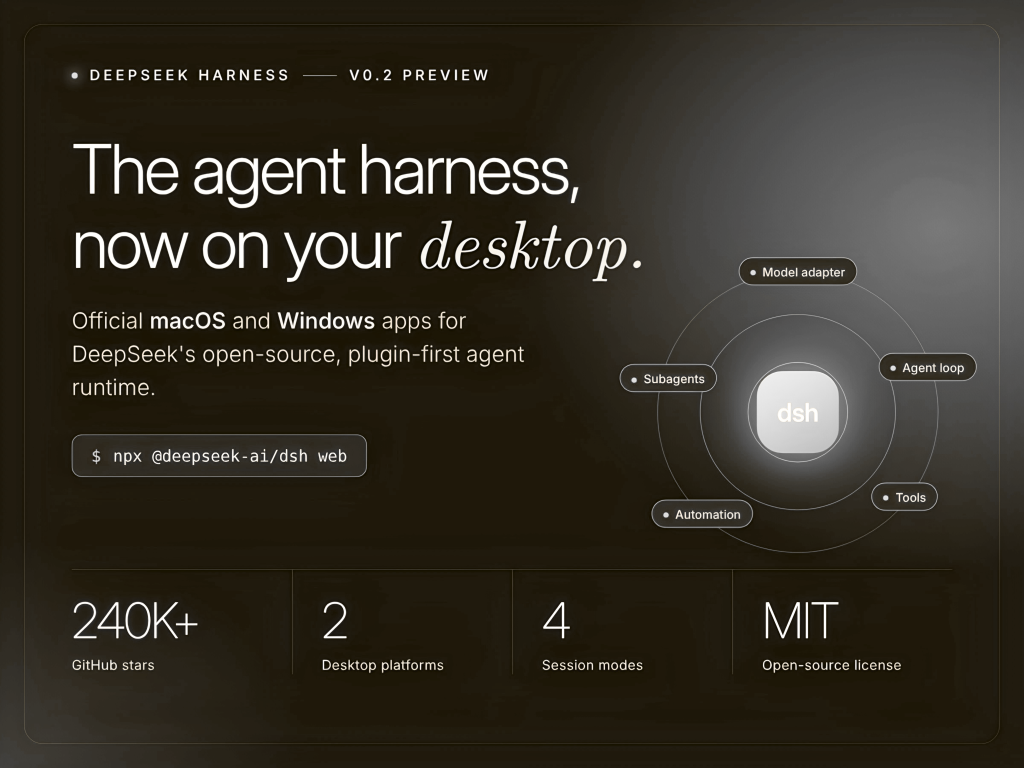
DeepSeek Harness v0.2 Brings Official Desktop Apps to Its Open-Source Agent Harness
DeepSeek has released an official desktop app for DeepSeek Harness (dsh), its open-source agent harness. The app ships with the v0.2 preview. Installers cover macOS (Apple silicon) and Windows (64-bit). Is it deployable? Yes, today, as a preview. Download it from deepseek.com/harness or run npx @deepseek-ai/dsh web. DeepSeek warns that compatibility-breaking changes will follow. What Shipped in v0.2 A harness is the runtime that turns a model into an agent. It reads files, runs command
The Agent Said It Was Done. The Database Disagreed.
When AI systems claim task completion without verification, downstream errors can cascade through dependent processes, exposing gaps in reliability for critical workflows.