
AI companies announce progress converting legacy code
The Verge: Can AI help solve the COBOL code crisis?
A computer running COBOL 73, an antiquated computer programming language, awaits taxpayer information entries at the Internal Revenue Service in Austin, Tx., on Friday, June 10, 2022. | Image: Getty Images What do the IRS, banks, airlines, and government infrastructure around the world have in common? They're all running on systems propped up by antique computer code that nobody dares touch, lest everything come crashing down. OpenAI thinks it may have a solution. On October 19t
Get smart on it
AI companies have announced improvements in their models' ability to convert old computer code written in legacy programming languages into modern code. This matters because critical infrastructure worldwide, including banking systems, government agencies, and airlines, still relies on decades-old programming languages that are difficult and risky to replace, with one estimate putting the annual cost of inefficiencies at around $105 billion to the US GDP. However, experts caution that while AI has made progress, converting code is fundamentally different from replacing entire complex systems that involve multiple programming languages, various data formats, integrations with other systems, and documentation that often no longer exists. The main challenge remains understanding how these ancient systems actually work rather than simply rewriting their code.
Relevant courses
Want to go deeper than the news? Explore live, cohort-based AI courses taught by practitioners.
Browse AI courses on MavenRelated news

OpenAI models are coming to Google Cloud
OpenAI and Google Cloud are bringing frontier models and Codex workflows to Gemini’s Model Garden, available through Google Cloud Marketplace.
Also reported by Ars Technica, The Decoder and SiliconANGLE

Anthropic says one AI agent beats many subagents now that models can handle complexity alone
Anthropic says companies should evaluate whether they can consolidate sub-agents into a single agent that loads context on demand. In one architecture comparison, the single-agent setup ran about twice as fast. Anthropic has published a migration kit on GitHub to help teams make the transition. The article Anthropic says one AI agent beats many subagents now that models can handle complexity alone appeared first on The Decoder.
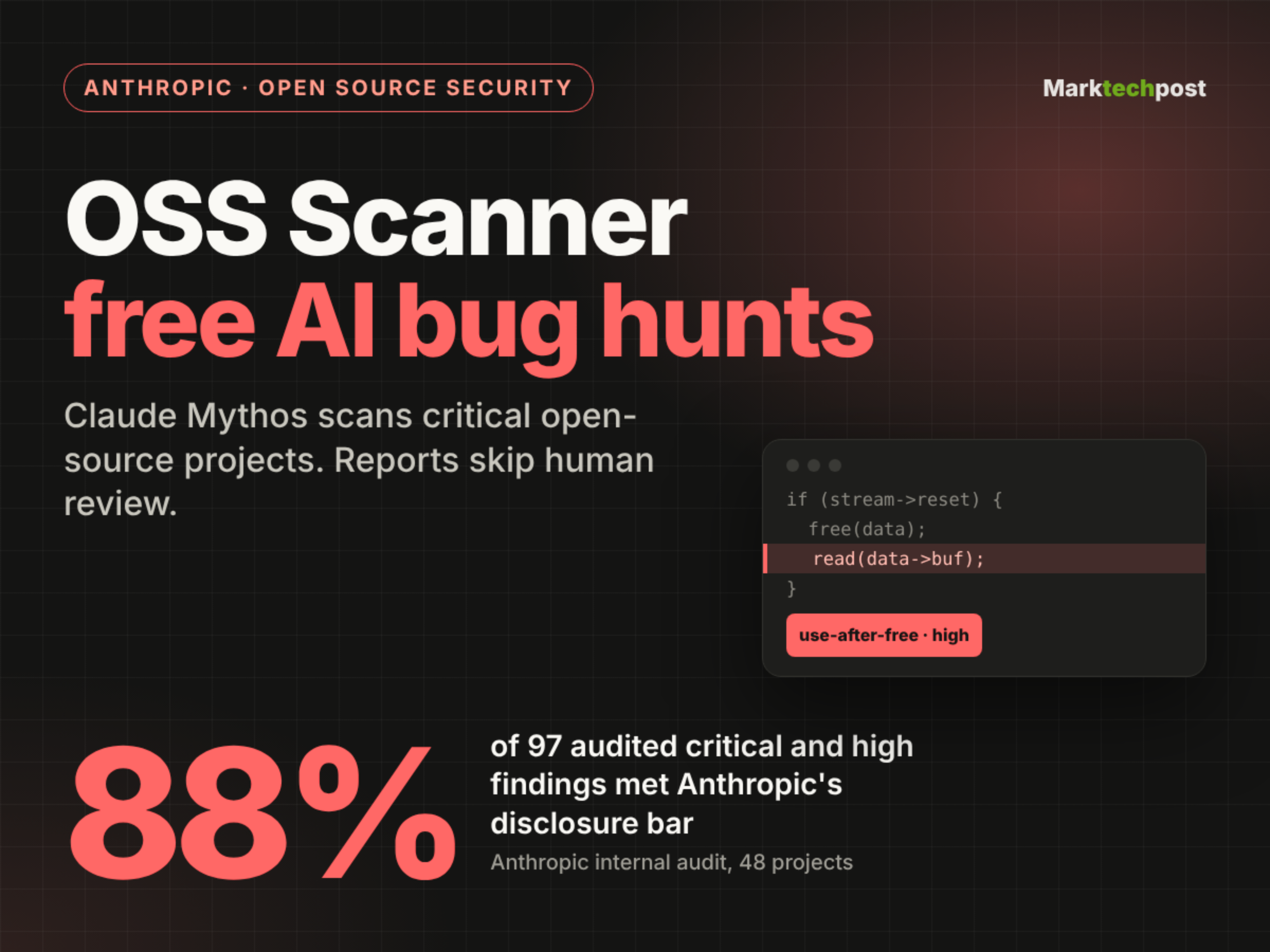
Anthropic Launches OSS Scanner, a Free AI Vulnerability Scanner
Anthropic has launched OSS Scanner, a free, opt-in vulnerability scanner for critical open-source projects. The Anthropic OSS Scanner runs the company’s strongest models, including Claude Mythos, against enrolled codebases. Reports go straight to maintainers without human review. That trade delivers faster findings, but shifts triage work onto project teams. 11 days after the October 8 launch, Anthropic reported 77 critical and 803 high model-rated findings. TL;DR Scale: 114 projec

Claude Duet app is Anthropic’s bet on agents
Claude Duet is available through waitlist for Pro and Max plan users
Also reported by The Verge and SiliconANGLE

OpenMobile-2 proves open-source smartphone agents can rival proprietary models
Smartphone agents don't get better by processing more data. They improve by training on as many different apps as possible. The researchers behind OpenMobile-2 built an open training environment with more than 110 applications, including 35 replicas of popular apps. On real Android devices, their model scores highest among open agents, the authors say. The article OpenMobile-2 proves open-source smartphone agents can rival proprietary models appeared first on The Decoder.
OpenAI offers discounts up to 90 percent to poach Anthropic's biggest customers
OpenAI is poaching Anthropic's customers with steep discounts. Companies like Rippling, Replit, and DataCamp say they've cut AI costs by up to 90 percent after switching. Anthropic's growth has slowed, but OpenAI is trading its own margins for market share. Chinese rivals like Deepseek are piling on more price pressure. The article OpenAI offers discounts up to 90 percent to poach Anthropic's biggest customers appeared first on The Decoder.