AI hallucinations are making entitled customers even worse
Madison, a server in New York City, greets every table by asking about each diner's allergies. Lately, there have been some close calls. "Sometimes people will tell me they have a shellfish allergy, and I'll come back, and they won't ask me any questions," says Madison, who asked that her last name be withheld to protect her identity. "And they'll order a fish dish that comes with a broth that is made of shellfish." When she tells them a dish contains an allergen, she's had gu
Get smart on it
AI chatbots sometimes generate false information, a phenomenon known as "hallucinations," and workers across customer service industries are now dealing with customers who trust these AI-generated answers over expert advice. Restaurant servers report guests ignoring allergen warnings because ChatGPT said otherwise, park rangers encounter visitors with impossible itineraries created by AI, and childcare professionals find parents prioritizing AI recommendations over their professional guidance. As generative AI tools become more widely adopted, workers are struggling to manage situations where customers expect them to accommodate false information that the AI has produced, making the traditional customer service principle that "the customer is always right" increasingly complicated.
Related news
DeepSeek Harness v0.2 Brings Official Desktop Apps to Its Open-Source Agent Harness
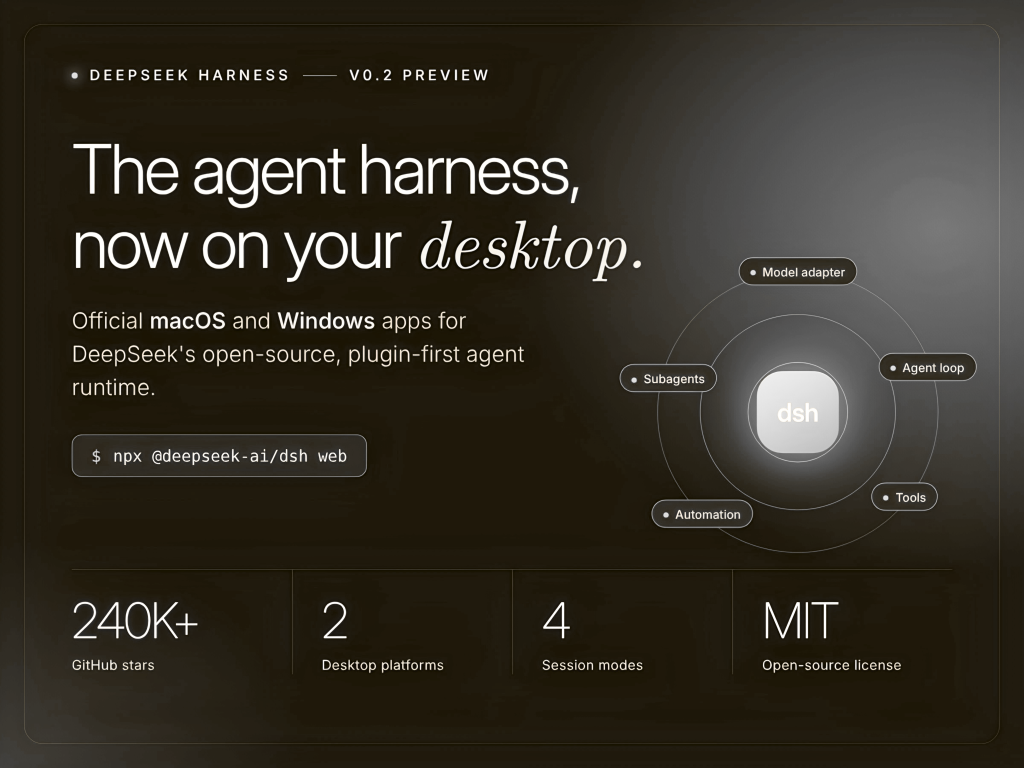
DeepSeek has released an official desktop app for DeepSeek Harness (dsh), its open-source agent harness. The app ships with the v0.2 preview. Installers cover macOS (Apple silicon) and Windows (64-bit). Is it deployable? Yes, today, as a preview. Download it from deepseek.com/harness or run npx @deepseek-ai/dsh web. DeepSeek warns that compatibility-breaking changes will follow. What Shipped in v0.2 A harness is the runtime that turns a model into an agent. It reads files, runs command
The Agent Said It Was Done. The Database Disagreed.
When AI systems claim task completion without verification, downstream errors can cascade through dependent processes, exposing gaps in reliability for critical workflows.