A New Experiential Gallery Just Might Change Your Mind About AI Art
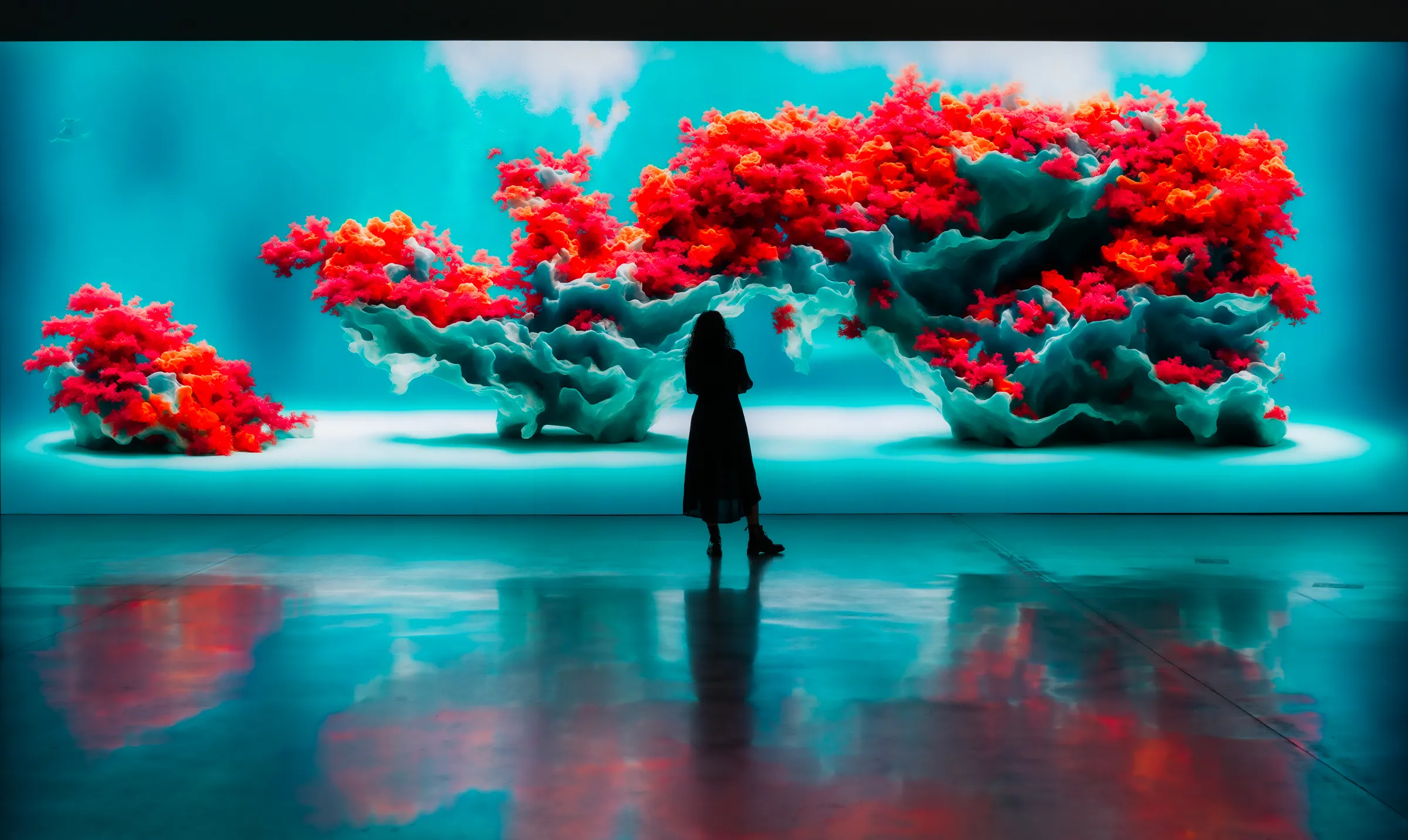
Billed as the “world’s first museum of AI arts,” Dataland uses wearables and troves of material from the Amazon to merge nature, biometrics, and art.
Get smart on it
A new gallery in downtown Los Angeles opened as the world's first museum of AI arts, featuring an immersive exhibition that uses wearable biosensor devices to track visitors' movements and biometric data, which then influence the digital images and soundscapes displayed around them. The artist behind it trained custom AI models using 5 petabytes of data collected from rainforests and natural science archives, including material from the Smithsonian, rather than using unlicensed content from the internet. The exhibition aims to demonstrate that AI art can go beyond simple prompt-based generation and instead create meaningful artistic experiences where artworks respond to viewers in real time. The gallery's approach emphasizes ethical data sourcing, environmental sustainability, and transparency about how AI models work, in contrast to widespread criticism of generative AI being used as extractive training material without creator consent.
Related news

Meta turns off the Instagram feature that let users make AI deepfakes of public accounts
Following significant backlash, Meta is turning off the feature it announced this week that let users generate AI images based on content from public Instagram accounts just by tagging them. The feature, as originally set up, meant that content from any public Instagram account could be used in AI creations without the account owner's permission. "Earlier this week, we announced that one way for people to generate images in Meta AI is by @-mentioning public Instagram accounts t

Meta removes controversial AI feature on Instagram after backlash
Meta told Dylan Byers, of Puck News, that it had nixed the feature after backlash from its user base.


