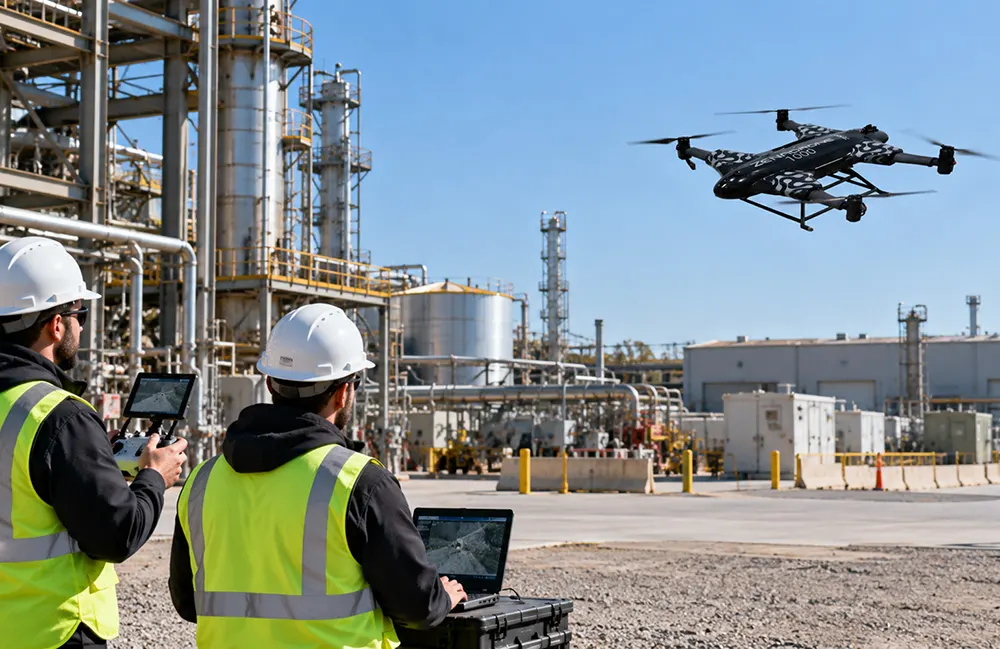
Industrial drones struggle with real-world autonomy
The Robot Report: What industrial drone deployments reveal about real-world autonomy challenges
Supervised autonomous UAV inspection at an industrial facility. | Source: ZenaDrone An autonomous drone can complete a carefully planned inspection route in a controlled environment and still struggle with the same route at an operating industrial facility. A steel structure may obstruct satellite signals, reflective equipment may distort depth measurements, and a wind gust may push the aircraft outside its planned trajectory. Each disturbance can be manageable in isolation. The difficulty emerg
Industrial drones designed to operate autonomously can complete inspection routes reliably in controlled lab settings but encounter multiple simultaneous challenges in real-world facilities, such as satellite signal obstruction from steel structures, sensor interference from reflective surfaces, and wind disturbances. The core challenge is that autonomous drone systems depend on interactions between subsystems like navigation, obstacle detection, and flight control, and these subsystems' performance assumptions are rarely independent of each other. Industrial environments introduce conditions difficult to replicate in testing, including metallic surfaces, repetitive structural patterns, narrow corridors, moving equipment, and changing lighting that can degrade multiple sensors at once. Reliable industrial drone deployment requires engineers to understand how uncertainty spreads through the entire system and ensure the drone can recognize when its estimates become unreliable rather than attempting uninterrupted autonomous operation under all conditions.
- Rockwell Automation acquiring mobile robot maker AGILOX · The Robot Report
- California DMV bars Waymo AVs from operating on the state’s freeways · The Robot Report
- Boston Dynamics’ Atlas humanoid lands first non-automotive trial · The Robot Report
- All of today’s AI news, biggest first →
One short email a day with the stories that matter. Free. Unsubscribe with one click.
Want to go deeper than the news? Explore live, cohort-based AI courses taught by practitioners.
Browse AI courses on Maven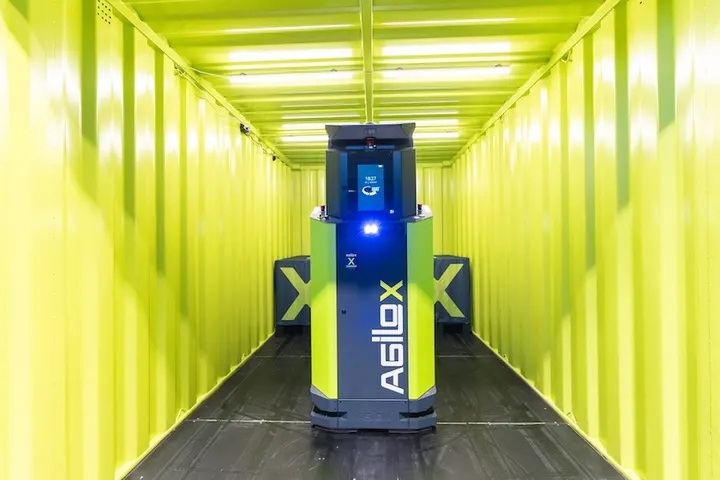
Rockwell Automation acquiring mobile robot maker AGILOX
An AGILOX mobile robot operating inside a container. | Credit: AGILOX Rockwell Automation has signed a definitive agreement to acquire AGILOX, an Austria-based developer of autonomous mobile robots (AMRs). Rockwell said the acquisition will more than double the size of its AMR business and complement its existing OTTO Motors portfolio. Financial terms of the acquisition were not disclosed. The deal is expected to close in the second quarter of Rockwell’s fiscal 2027, subject to regulatory
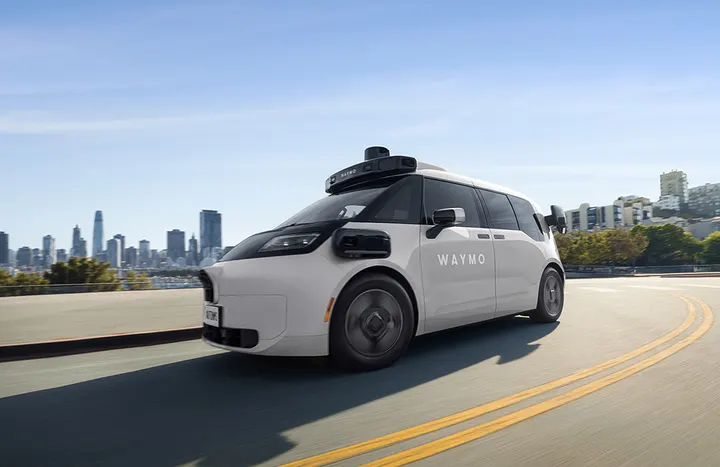
California DMV bars Waymo AVs from operating on the state’s freeways
Waymo said the DMV order only applies to freeways and will not affect its operations on city streets. | Source: Waymo The California Department of Motor Vehicles has barred Waymo autonomous vehicles (AVs) from operating on the state’s freeways. The DMV issued the order on Nov. 11, following a number of incidents in the state, it confirmed to The Robot Report. Waymo said it will restrict freeway operations across all of its operating areas, as part of its safety-first approach. The ban comes R
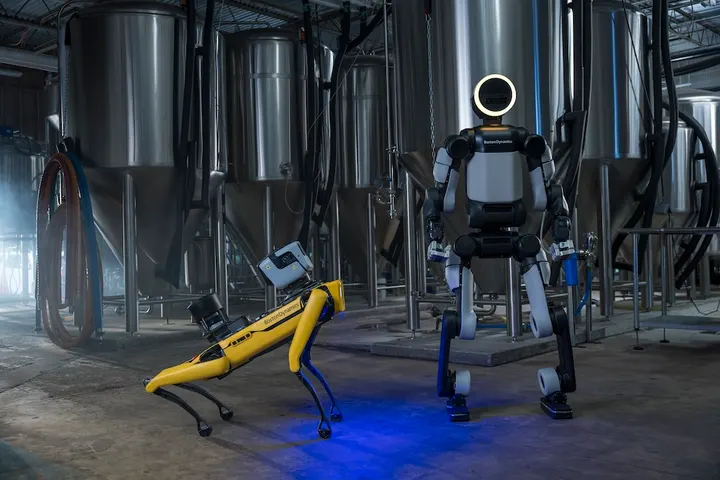
Boston Dynamics’ Atlas humanoid lands first non-automotive trial
GlobalFoundries will test Boston Dynamics’ Atlas humanoid (right) in semiconductor manufacturing tasks in 2027. | Credit: Boston Dynamics GlobalFoundries, a leading semiconductor manufacturer, will become the first customer outside of the automotive industry to test Boston Dynamics’ Atlas humanoid. Atlas testing will begin in early 2027, marking a key step in Boston Dynamics’ efforts to commercialize its humanoid. GlobalFoundries is already a customer of Boston Dynamics, having deplo
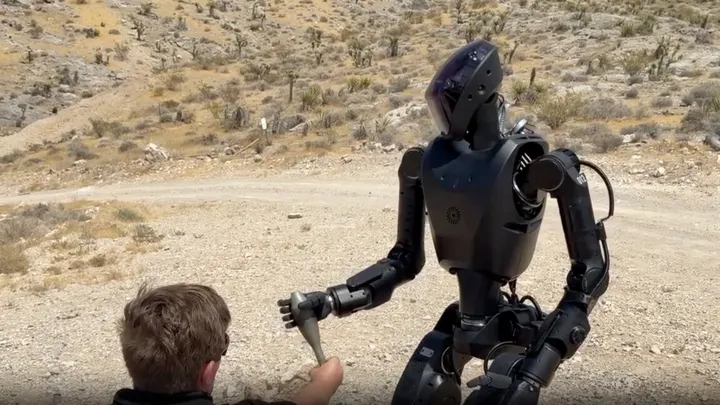
Robo-soldier startup backed by Eric Trump misses payroll, may collapse
A humanoid robotics company backed and advised by President Donald Trump’s son, Eric Trump, has reportedly missed payroll and may be on the brink of collapse after a funding shortfall. The Silicon Valley startup, Foundation Future Industries, claims it is developing and testing robots for military roles on battlefields from Ukraine to Gaza. Foundation failed to pay employees for the payroll period ending on October 30, anonymous sources told CNBC. The startup’s staff is especially angry because
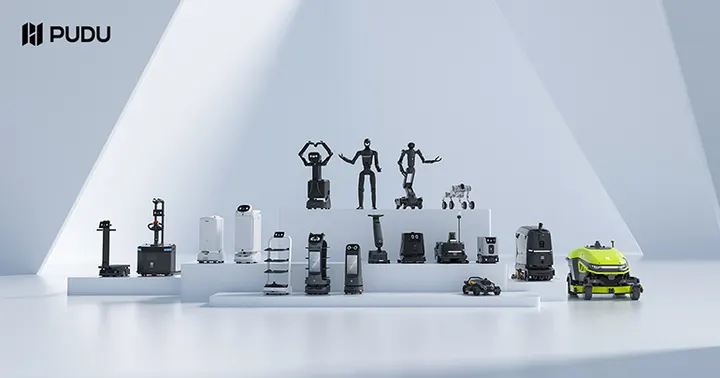
From Commercial Scale to Embodied Intelligence: The Next Challenge for Robotics
Robotics is advancing rapidly. New AI models and increasingly capable hardware are expanding what machines can perceive, understand and do, bringing more adaptable and general-purpose robots closer to practical use. But greater capability does not automatically translate into commercial readiness. In supermarkets, hotels, airports and other working environments, robots must navigate changing conditions, operate alongside people, integrate with existing workflows and perform reliably over time. T

Learn how AI is changing supply chain robotics
From left to right: Lior Elazary, the co-founder and CEO of inVia Robotics, Josip Cesic, the co-founder and CEO of Gideon, and Jeff Mahler, the co-founder and CTO of Ambi Robotics. Supply chain robotics is undergoing rapid transformation. Companies hope to address labor shortages, improve efficiency, and build resilience against disruptions. Increasingly, they’re turning to robotics to solve these challenges. Currently, available technologies include warehouse automation, picking and packi