The physical AI race will be won in the patent office
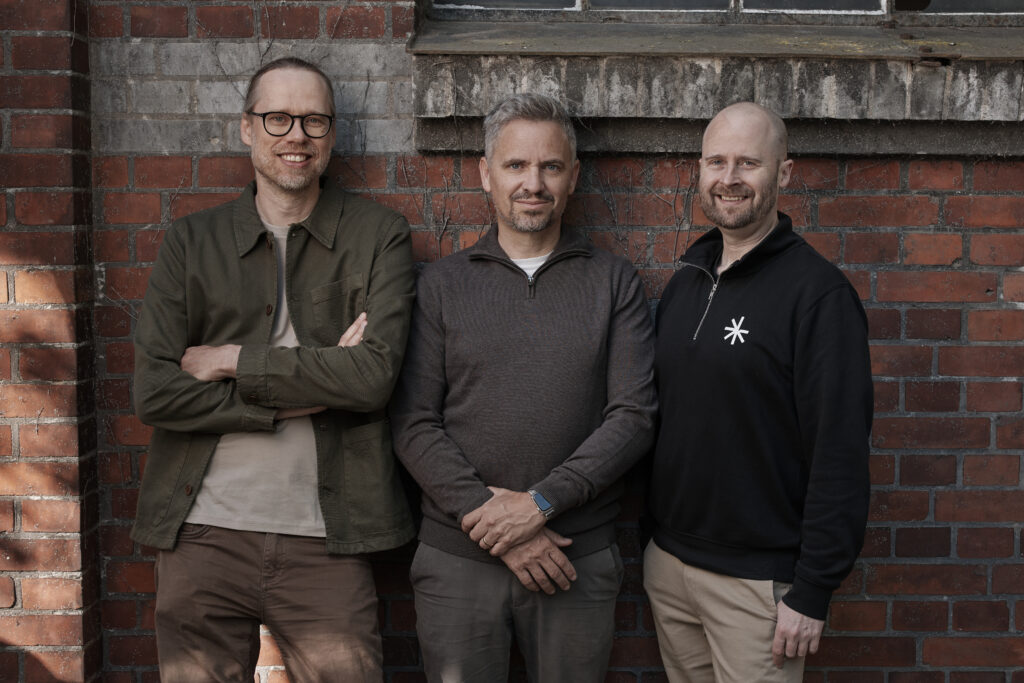
Lightbringer’s co-founders and board members, from left: CTO Markus Andreasson, CEO Dominic Davies, and CCO Ola Wassvik. Source: Lightbringer Developments in AI, machine learning, and automation have given robots capabilities that would have seemed extraordinary a decade ago. As competition intensifies, the physical AI race is becoming less likely to be won by whoever builds the best robot, and more likely to be won by whoever owns the technology that determines its behavior. This is a par
Get smart on it
Success in the physical AI race depends less on building the best robot and more on owning the technology that controls how it behaves, which can span hardware, software, AI models, and calibration methods. Robotics startups face a complex intellectual property landscape where they must decide early what to patent, what to keep secret, and how to protect core technologies before competitors do, as delaying this strategy can leave them locked out of their own mechanisms or blocked from the market. Rather than patenting every component, startups should identify one or two central innovations that are difficult for competitors to copy and then build a defensive ring of patents around them to make designing around the core invention too expensive to attempt. AI advancements now offer an opportunity to make quality patent protection more affordable for resource-constrained startups, addressing a significant barrier to implementing strong IP strategies from the outset.
Related news

Eli Lilly, Purdue to share field learnings on human robot interaction at RoboBusiness
https://www.therobotreport.com/wp-content/uploads/2026/10/lilly-physical-ai.mp4 Human-robot interaction is one of the biggest unlocks left in industrial automation to enable stronger safety, but most HRI research happens on university campuses that produces data that rarely survives contact with a live production floor. Running studies inside a working manufacturing site is logistically hard enough that most academia–industry partnerships never get past the first meeting. At RoboBusiness 2026, F

Inside Omron’s next-generation LD mobile robots
The Robot Report Podcast · Inside Omron’s Next-Generation LD Mobile Robots Miguel Garcés Moreno, PMM, mobile robots, OMRON In Episode 264 of The Robot Report Podcast, we interview Miguel Garcés Moreno, product marketing manager for Europe, the Middle East, and Africa (EMEA) for mobile robots at OMRON Industrial Automation Europe. He leads product strategy across autonomous mobile robots (AMRs), industrial automation, and force- and power-limited or collaborative robots. Backed by an industrial