ANYbotics opens the door for inspections with ANYmal robots
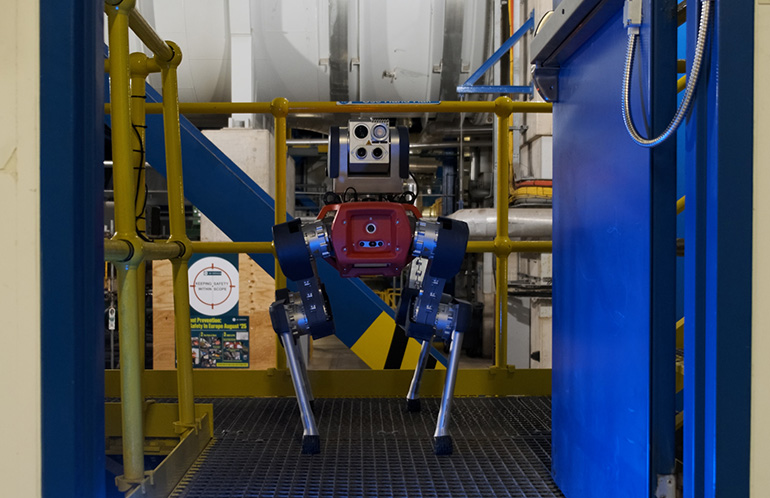
ANYmal can now inspect more of facilities in processing industries. Source: ANYbotics Closed doors have been a barrier for mobile inspection robots in processing industries such as energy, metals, mining, and chemicals. ANYbotics today said it has partnered with dormakaba and LEGIC Identsystems AG to add automated door-access capabilities to its ANYmal robot fleet. “Inspection only delivers value if the robot can reach the asset, and a closed door was the one obstacle that stopped our robo
Get smart on it
Inspection robots used in processing industries like energy and mining have been unable to pass through closed doors, limiting their ability to reach critical equipment. A partnership between three companies has added automated door-access capabilities to these robots by integrating secure digital credential technology with door automation systems, allowing robots to request and pass through both unlocked and locked doors without manual intervention. For unlocked doors, a radar sensor triggers an automatic door operator, while for secured areas, the robot carries a digital identity that electronically requests access from a door management system. The solution was tested at a live power plant facility and maintains existing security protocols by creating audit trails and treating robot access the same as authorized human access.
Related news
How robotics and physical AI can responsibly tackle key physical security challenges
Security sensors in Yogyakarta, Indonesia. Credit: Krisna Azie, Unsplash Robotics and artificial intelligence are deeply intertwined technologies. Where the former serves as the “body,” the latter provides the “brain,” with organizations continuing to develop the technology from traditionally rigid machinery into smart, adaptive agents designed to enhance productivity and operational efficiency. In particular, the evolving sector of physical security can benefit from the
Inside NVIDIA’s IsaacTeleop: From Hand and Controller Tracking to Robot Actions with the Graph-Based Retargeting Engine
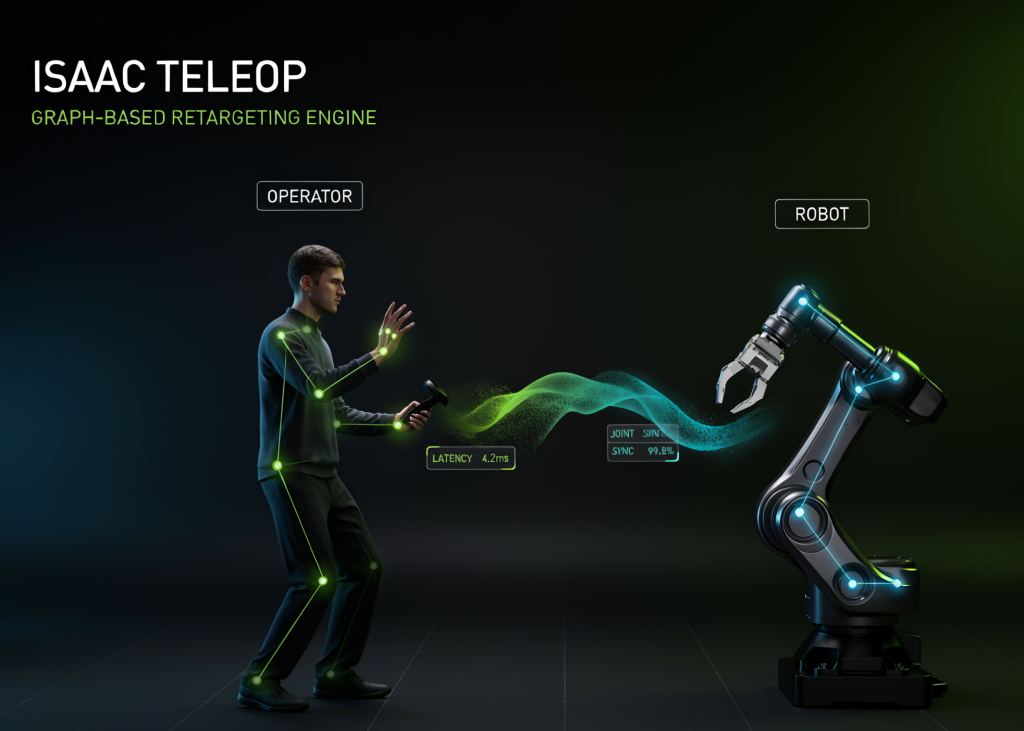
In this tutorial, we work through the retargeting engine at the core of NVIDIA IsaacTeleop, the framework that turns XR hand tracking and motion-controller input into commands for simulated and real robots. Rather than plugging in a headset, we build every input ourselves in NumPy, so each step runs on a plain Colab CPU and prints what it computes. We start with the type system every node speaks, generate synthetic hand and controller data, write our own retargeter with live-tunable parameters,