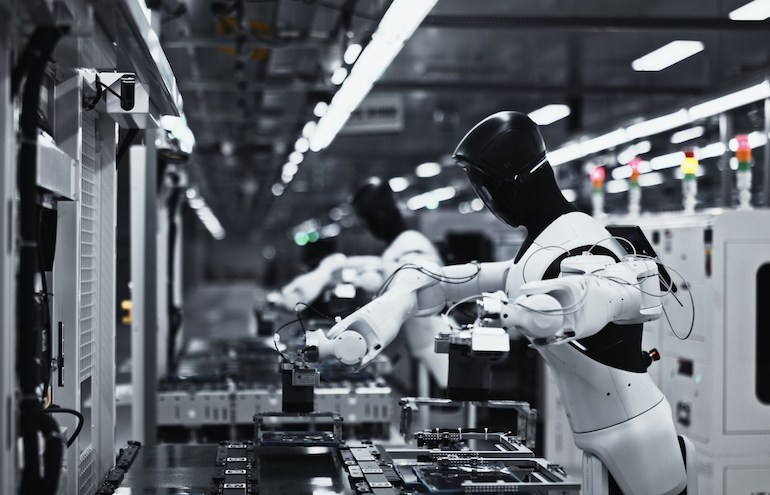
AGIBOT produces 15,000th robot, marking a milestone in embodied AI deployment
AGIBOT G2 robots work on Longcheer’s tablet production lines. Source: AGIBOT AGIBOT Innovation Technology Co. today said that the 15,000th robot has rolled off its production line. The company said this reflects its progress in moving embodied AI systems from product validation and batch production toward larger-scale deployment. “The rollout of our 15,000th robot is not only an important milestone in AGIBOT’s mass production and engineering delivery capabilities, but also a reflection of
Get smart on it
AGIBOT Innovation Technology Co. announced it has produced its 15,000th robot, representing a shift in the robotics industry from experimental prototypes toward large-scale manufacturing and real-world deployment of embodied AI systems. The company's production has accelerated significantly, with the time to manufacture each batch of 5,000 units decreasing from one year initially to three months more recently. AGIBOT's milestone unit was the G2, a wheeled mobile manipulator designed for industrial tasks that has been validated through factory operations including quality inspections. The achievement reflects broader industry progress in scaling production, supply chain management, manufacturing standardization, and field deployment capabilities needed to move embodied AI systems from proof-of-concept toward sustained commercial application.
Related news
We know how to build smarter robots. Now, we need to learn smarter ways to test them
Right now, today, you can spend $14,000 and buy a humanoid robot. There is no safety certification reviewed, no standardized test protocol verified. You get a machine capable of physical force and real-time autonomous decision-making. And the frameworks for validating its behavior are still catching up to what it can do. That’s not a criticism of the engineers building these systems. The intelligence side of robotics is advancing at a pace that genuinely deserves the excitement it gets: b
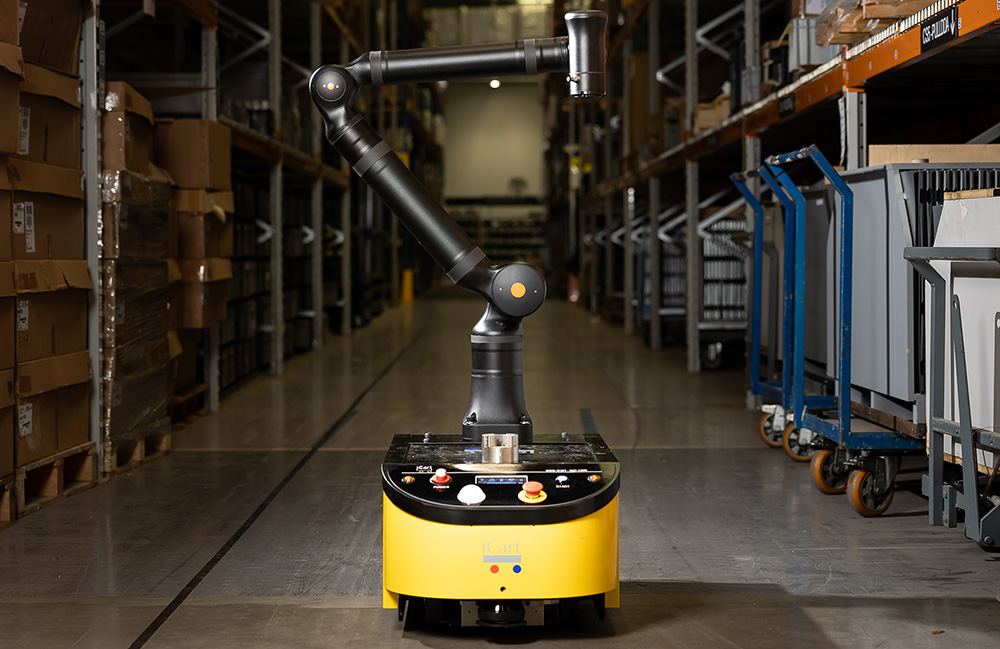
How compact cobot integration enhances autonomous mobile robot applications
Kassow said its cobots can reach difficult-to-access areas, handle heavier objects, and perform demanding tasks with accuracy. | Source: Kassow Robots The increasing automation of warehouse pick-and-place, palletizing, and machine-tending tasks has introduced new technologies. Robotics and automation have drastically changed operations as productivity needs and labor shortages impact the industry. Workers are interacting with autonomous mobile robots and collaborative robots, or cobots, integrat