How compact cobot integration enhances autonomous mobile robot applications
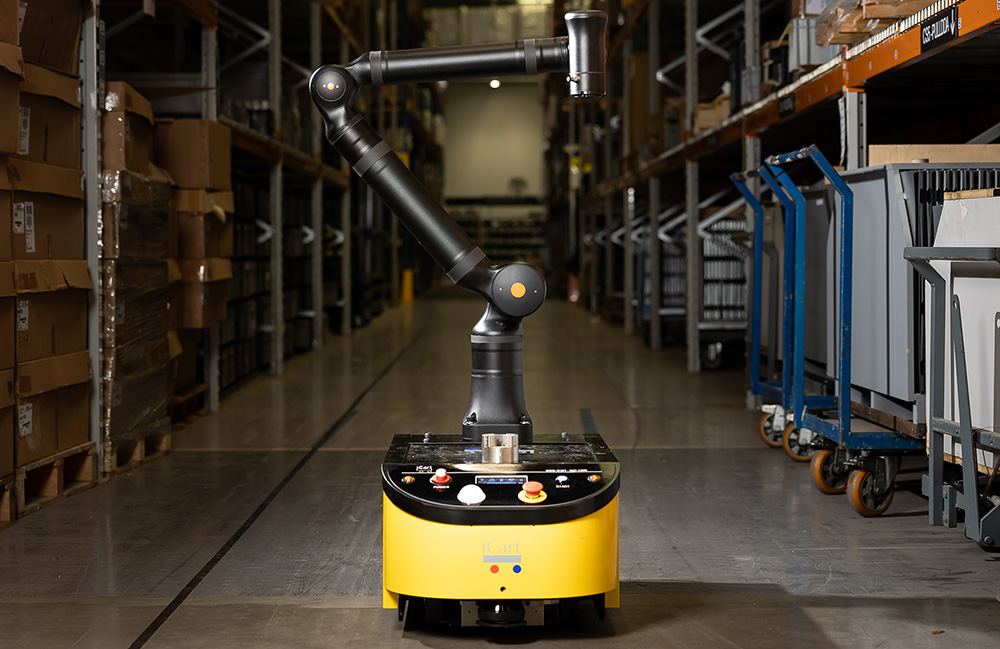
Kassow said its cobots can reach difficult-to-access areas, handle heavier objects, and perform demanding tasks with accuracy. | Source: Kassow Robots The increasing automation of warehouse pick-and-place, palletizing, and machine-tending tasks has introduced new technologies. Robotics and automation have drastically changed operations as productivity needs and labor shortages impact the industry. Workers are interacting with autonomous mobile robots and collaborative robots, or cobots, integrat
Get smart on it
Compact collaborative robots, or cobots, are being integrated onto autonomous mobile robots to automate warehouse tasks like picking, palletizing, and machine tending. Seven-axis cobot arms mounted on mobile robots offer greater range of motion and can access harder-to-reach areas compared to traditional six-axis arms, while controllers built into the arm itself eliminate the need for separate control cabinets. This integration reduces labor needs for repetitive tasks, allows workers to focus on more complex work, and improves job satisfaction by reducing physical strain. Unlike older automated systems, these mobile manipulators use built-in sensors for navigation rather than requiring physical infrastructure guides, making them more flexible and cost-effective solutions as warehouses face ongoing labor shortages.
Related news
We know how to build smarter robots. Now, we need to learn smarter ways to test them
Right now, today, you can spend $14,000 and buy a humanoid robot. There is no safety certification reviewed, no standardized test protocol verified. You get a machine capable of physical force and real-time autonomous decision-making. And the frameworks for validating its behavior are still catching up to what it can do. That’s not a criticism of the engineers building these systems. The intelligence side of robotics is advancing at a pace that genuinely deserves the excitement it gets: b
South Korea plans to train entire military as "drone warriors"
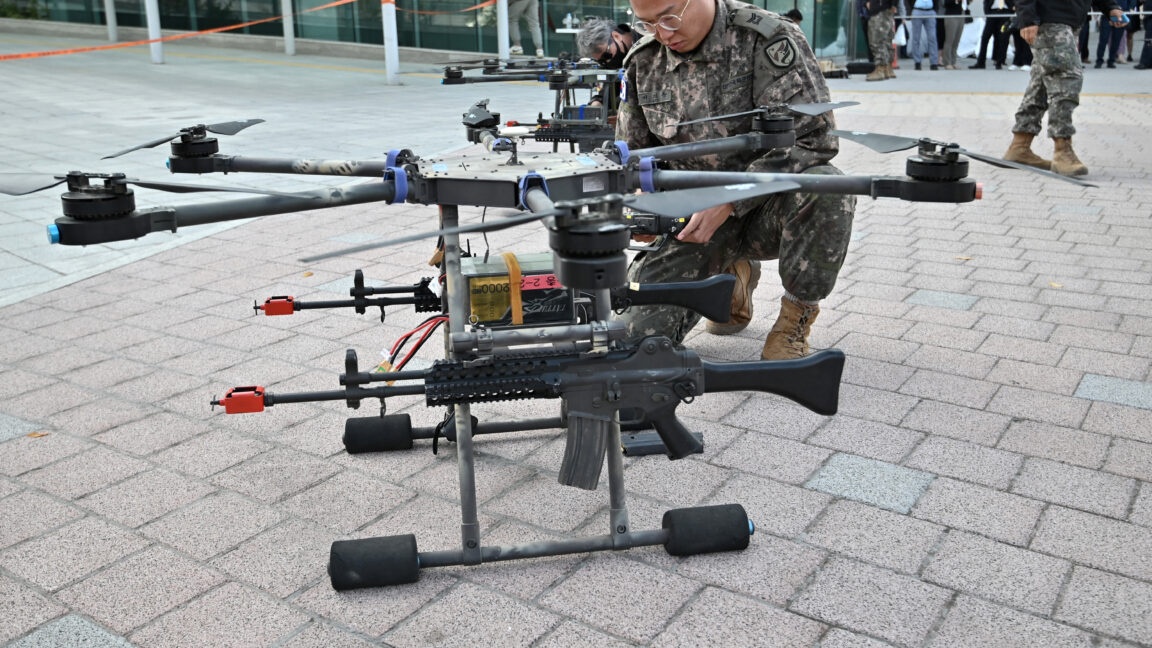
South Korea plans to train every single member of its nearly half-million-strong military to operate drones as easily as they handle personal firearms. That ambitious goal was announced as the South Korean military seeks to maintain a technological edge in its 70-year border standoff with the larger military of a hostile North Korea. The goal is to make drones a “universal combat tool” for all troops by training them to use drones like a “second personal weapon,” said Ahn Gyu-back, South Korea’s