5 million robots are now at work in factories worldwide, reports the IFR
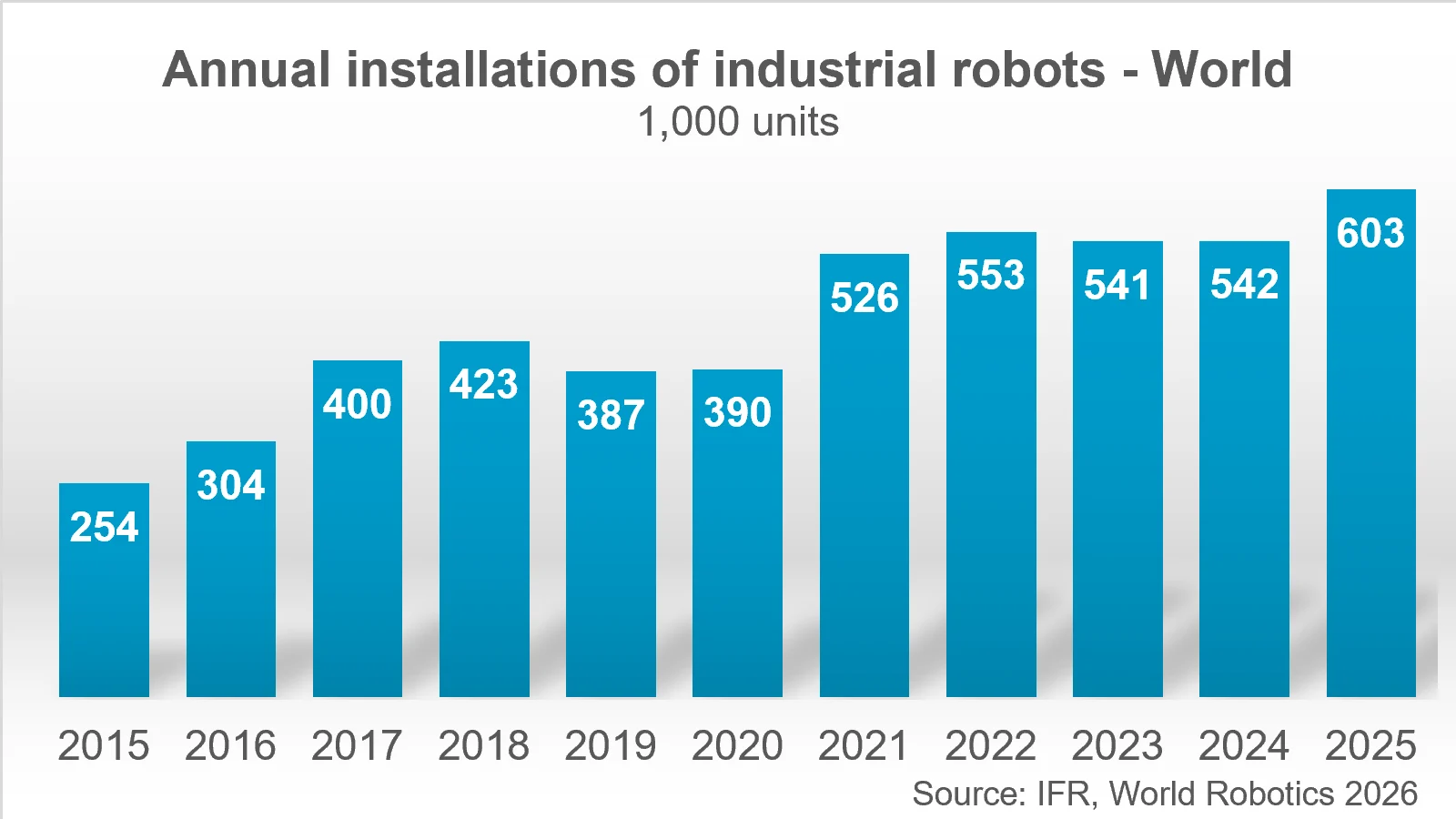
Adoption of robotics has continued to increase year over year. Source: International Federation of Robotics The global operational stock of industrial robots increased 9% to a record 5 million units in 2025, according to the International Federation of Robotics, or IFR. That increase was due to an 11% jump in annual installations, reported the organization, as factories worldwide installed more than 600,000 new units last year. “Industrial automation is progressing at high speed,” stated Jane He
Get smart on it
The global operational stock of industrial robots reached 5 million units in 2025, representing a 9% increase from the previous year driven by more than 600,000 new installations. Asia dominates robot adoption with China accounting for 59% of global deployments, while the U.S. recently surpassed Japan to become the second largest market. The growth is expected to continue, with forecasts predicting installations will reach 655,000 units in 2026 and 806,000 by 2029, driven by labor shortages, supply chain resilience needs, and advances in artificial intelligence and machine vision that are improving robot capabilities while reducing costs.
Related news
How robotics and physical AI can responsibly tackle key physical security challenges
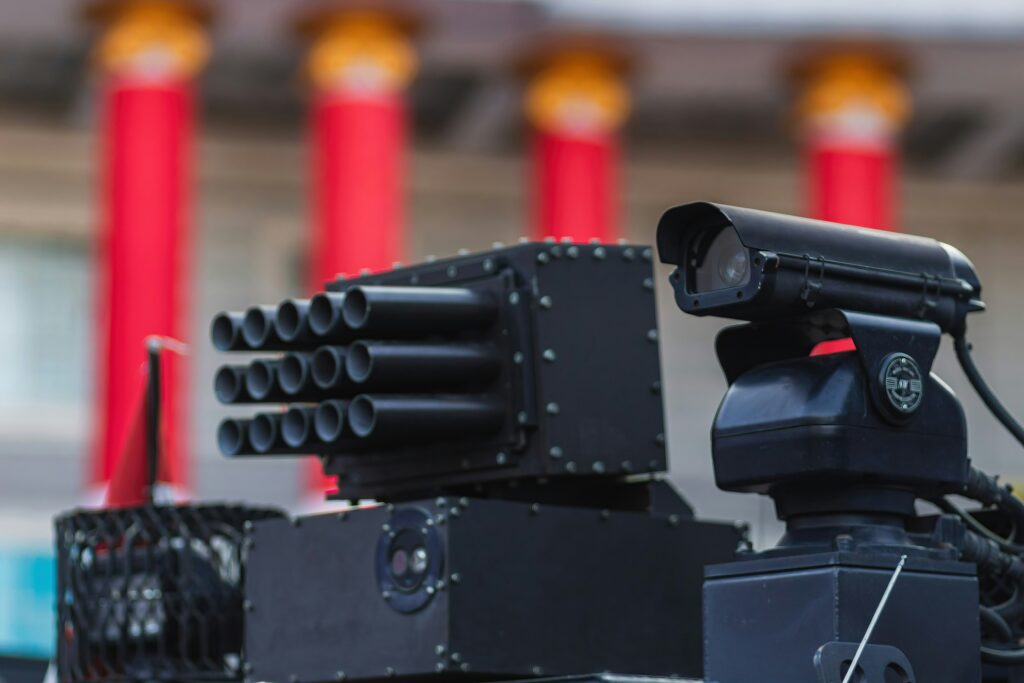
Security sensors in Yogyakarta, Indonesia. Credit: Krisna Azie, Unsplash Robotics and artificial intelligence are deeply intertwined technologies. Where the former serves as the “body,” the latter provides the “brain,” with organizations continuing to develop the technology from traditionally rigid machinery into smart, adaptive agents designed to enhance productivity and operational efficiency. In particular, the evolving sector of physical security can benefit from the
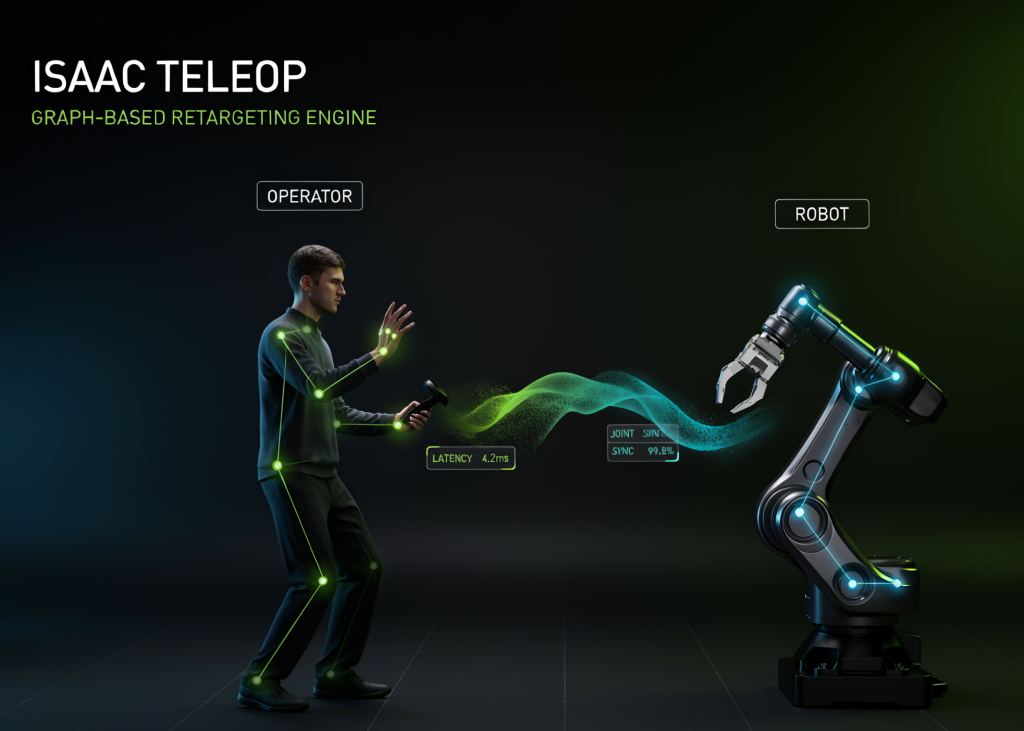
Inside NVIDIA’s IsaacTeleop: From Hand and Controller Tracking to Robot Actions with the Graph-Based Retargeting Engine
In this tutorial, we work through the retargeting engine at the core of NVIDIA IsaacTeleop, the framework that turns XR hand tracking and motion-controller input into commands for simulated and real robots. Rather than plugging in a headset, we build every input ourselves in NumPy, so each step runs on a plain Colab CPU and prints what it computes. We start with the type system every node speaks, generate synthetic hand and controller data, write our own retargeter with live-tunable parameters,