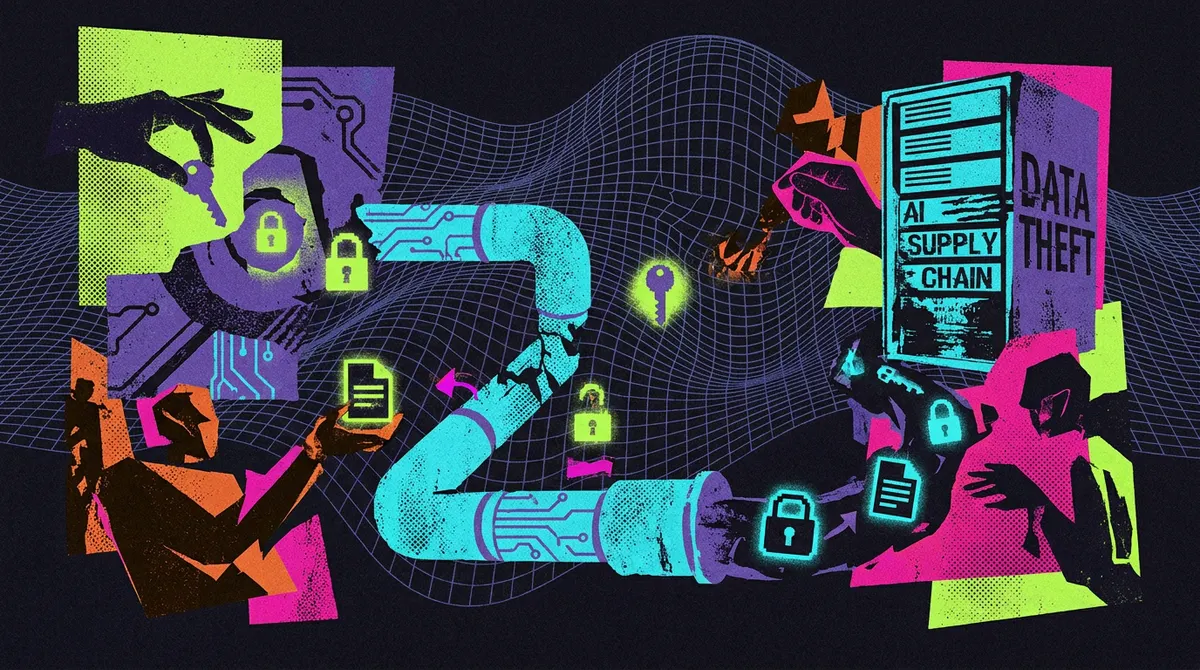
Security researchers show how cheap AI inference providers steal keys and snoop on users
Security researchers at Dragos used two million fake AI requests to uncover serious vulnerabilities in the AI supply chain, finding at least three compromised providers, hundreds of stolen AWS keys, and marketplace resellers who were simply reading customer requests. OpenRouter responded by removing three providers and 125 endpoints. The article Security researchers show how cheap AI inference providers steal keys and snoop on users appeared first on The Decoder.
Security researchers tested AI inference providers with fake credentials and discovered that multiple providers were allowing attackers to steal user data undetected for months. The attackers harvested credentials and keys, with some testing stolen access within hours, while intermediary services that route requests between users and AI models emerged as a major vulnerability since each routing step can read entire requests and responses. Privacy protections like "Zero Data Retention" were frequently ignored by providers, and requests containing sensitive information sometimes ended up with actors in other countries without users' knowledge. The research highlights that when users do not control how their AI requests are routed, the cheapest provider will make that decision instead, creating security and privacy risks along the supply chain.
One short email a day with the stories that matter. Free. Unsubscribe with one click.
Want to go deeper than the news? Explore live, cohort-based AI courses taught by practitioners.
Browse AI courses on Maven
Nvidia reverses course and brings Jensen Huang back as CEO
The stunning reversal was supported by senior officials in the U.S. government.
Also reported by The Verge, Ars Technica, Wired AI and The Robot Report
US spies tracked Nvidia scandal figure's ties to Chinese intelligence for over a year
US intelligence agencies tracked contacts between Alice Huang and China's Ministry of State Security for over a year, the New York Times reports. The surveillance ran parallel to her secret affair with then-Nvidia CEO Jensen Huang. Federal investigators are now looking into whether a network of companies in Southeast Asia was used to smuggle AI chips into China in violation of US export controls. Jensen Huang is scheduled to testify before the US House of Representatives on December 1.

States Sue SpaceX Over Grok Deepfakes
The attorneys general of Oregon and Virginia are suing several of Elon Musk’s companies, alleging they implemented weak safeguards against sexualized imagery of real people, including children.
The unfolding Jensen Huang scandal: a timeline
Jensen Huang has resigned from Nvidia following an affair, which could have ramifications for national security as the U.S. and China race to develop the most advanced AI infrastructure.
Also reported by Wired AI

Trump threatens ‘tremendous tax’ for moving AI data centers outside the US
President Donald Trump promised to put a "tremendous tax" on companies that build data centers outside of the US, even as states and cities around the country are placing restrictions on new applications to build them. "We're not going to allow our companies to build data centers outside of our country," Trump said at a press conference Friday following his summit with China President Xi Jinping and Russia President Vladimir Putin. "They allowed that to happen with chips and ev

OpenAI’s chief scientist has thoughts on how to limit AI development
To establish a speed limit on AI development, you need to agree on how to measure speed.