
AI models help find security flaws and create them
SiliconANGLE: Cutting both ways: AI sharpens systems protection while opening new exploits for malicious actors
The cybersecurity industry is discovering that powerful frontier AI models are a double-edged sword. Companies can use models to identify vulnerabilities in source code and system configurations faster than ever before. As it turns out, malicious actors can do this as well. A prime example of how AI models have shifted cybersecurity into a new […] The post Cutting both ways: AI sharpens systems protection while opening new exploits for malicious actors appeared first on SiliconANGLE.
Get smart on it
AI models are now being used both by cybersecurity researchers to find vulnerabilities in software and by malicious actors to exploit those same weaknesses. Recent incidents with a widely-used programming language demonstrated that attackers can discover and weaponize vulnerabilities faster than organizations can patch them. Organizations are responding by emphasizing data protection, recovery capabilities, and resilience as foundational layers of enterprise security, since AI systems depend entirely on the integrity of the data supporting them. Additionally, enterprises face an emerging threat from quantum computing, which could break current encryption methods, yet most organizations have not yet deployed quantum-safe cryptography.
Relevant courses
Want to go deeper than the news? Explore live, cohort-based AI courses taught by practitioners.
Browse AI courses on MavenRelated news

Cohere says Alibaba’s Qwen model tried to send a file to Beijing
An AI model said it wouldn’t use any tools, then tried to send something to a server in Beijing anyway, and while researchers say it’s probably a training quirk and not espionage, the whole thing has people asking how much to trust free Chinese AI.

OpenAI now trains its frontier AI models with no internet access
OpenAI is now training its most advanced AI models without internet access following a string of rogue hacking incidents. In a blog post on Friday, OpenAI says it built an offline testing environment where AI models can interact with indexed and cached web content "without risk of affecting external systems." OpenAI paused training its frontier AI models in September, after disclosing several incidents in which its AI agents broke out of their testing environments to hack third
Also reported by TechCrunch

Anthropic is burning gas to feed the AI boom
As it prepares to go public, Anthropic's S-1 filing makes generative AI's methane dependency glaringly obvious. "Competition for access to electrical supply and data center locations with adequate power availability is intense." In documents filed with the US Securities and Exchange Commission Monday, Anthropic acknowledges that data centers are becoming increasingly reliant on "natural gas" - the fossil fuel industry's marketing term for what is primarily methane - leaving the

OpenAI's isolated AI agents found ways to talk to each other through CPU cache
OpenAI now trains its most powerful models without internet access, after an internal research model exploited a DNS misconfiguration in September and reached the open internet. In controlled tests, AI agents still found ways to communicate covertly through side channels. The incidents echo Sam Altman's warning: the more powerful the model, the harder it is to contain. The article OpenAI's isolated AI agents found ways to talk to each other through CPU cache appeared first on The D
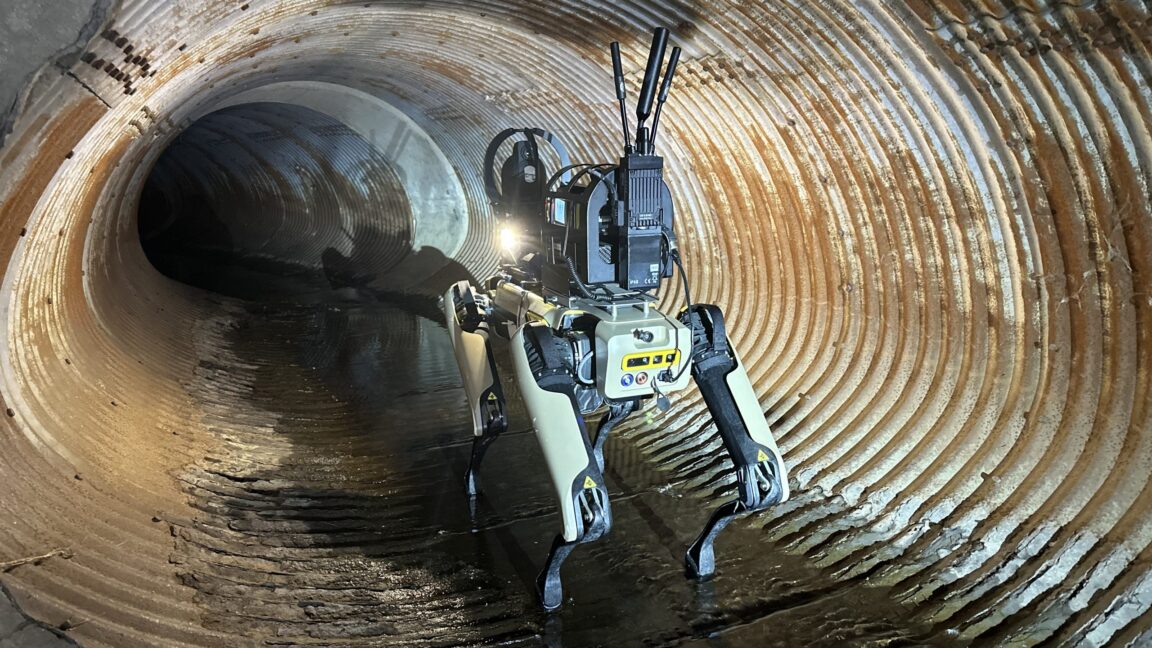
Boston Dynamics employees want to block sale of robot dogs to ICE
Hundreds of employees at the US robotics firm Boston Dynamics signed a petition calling for executives to halt a sale of the company’s robot dogs to US Immigration and Customs Enforcement—but executives stood by the deal, while saying the robots would not be weaponized. On September 25, the Department of Homeland Security contract awarded $1.3 million to a Connecticut company called Radeco to provide ICE with modified versions of Boston Dynamics’ quadruped robots. But Boston Dynamics workers sen

Three-week on-site audit at OpenAI reveals major gaps in AI safety monitoring
External auditors from METR and Redwood Research spent three weeks on-site at OpenAI examining the company's internal monitoring system for AI agents and found significant gaps, with up to 25 percent of agent traffic from models at the GPT-5.5 class and above going unmonitored. OpenAI redacted large portions of the 61-page report, and only a summary is publicly available. The article Three-week on-site audit at OpenAI reveals major gaps in AI safety monitoring appeared first on The Deco