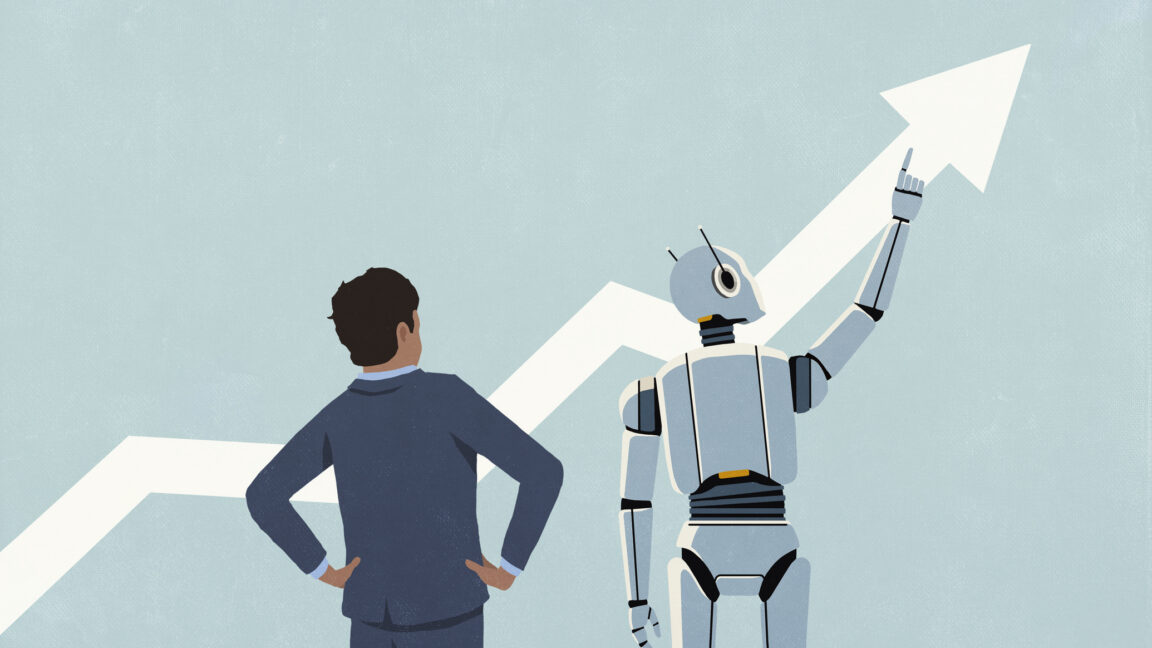
AI is hitting entry-level jobs hardest, Stanford study finds
For years, AI industry watchers of all stripes have been warning of a coming jobs apocalypse driven by ultra-intelligent AI systems that will be able to replicate most human tasks more cheaply. Now, newly updated research from Stanford University economists suggests AI seems to be causing significant entry-level job losses for younger workers in some fields, even as older workers appear largely unaffected so far. The August 2026 edition of "Canaries in the Coal Mine? Six Facts about the Recent E
Make your prediction
Will a second major university publish a comparable AI entry-level jobs study by November 2026?
Resolves by Nov 30, 2026
Your prediction
50% · 50/50 coin flip
NOYES
Get smart on it
A Stanford University study of payroll data from recent years found that employment for workers aged 22 to 25 in occupations most exposed to AI disruption has declined significantly compared to their peers in fields less affected by AI. The gap in entry-level employment between AI-exposed and AI-resistant fields has widened from 13 percent to 19 percent since the previous year's analysis. This matters because the effect appears driven primarily by lower hiring rates rather than layoffs, suggesting a narrowing path for young workers entering careers in fields where AI is automating tasks, while overall economy-wide employment has remained relatively stable. The research indicates that jobs requiring standardized, documented knowledge face the steepest entry-level declines, though higher education may provide some buffer against these employment effects.
Related news

AI Slop Is Ruining Cute Animals on the Internet
Pet owners, rescue agencies, and wildlife groups are calling for new safeguards as AI makes it harder to tell whether animals, from polar bears to house cats, are real or fake.

Bill Gates is deeply worried about AI, and he’s no longer staying quiet
Bill Gates, chair of the Gates Foundation, speaks during a 2024 conference. | Bloomberg via Getty Images Bill Gates has been reflecting a lot on AI lately, and the process has triggered a stark awakening. Once a staunch AI optimist, the Microsoft cofounder is now deeply pessimistic about what AI means for our collective future. Having been conspicuously quiet on AI issues recently, Gates is back with a nearly 6,000-word essay seeking to reclaim a central role in shaping the tec