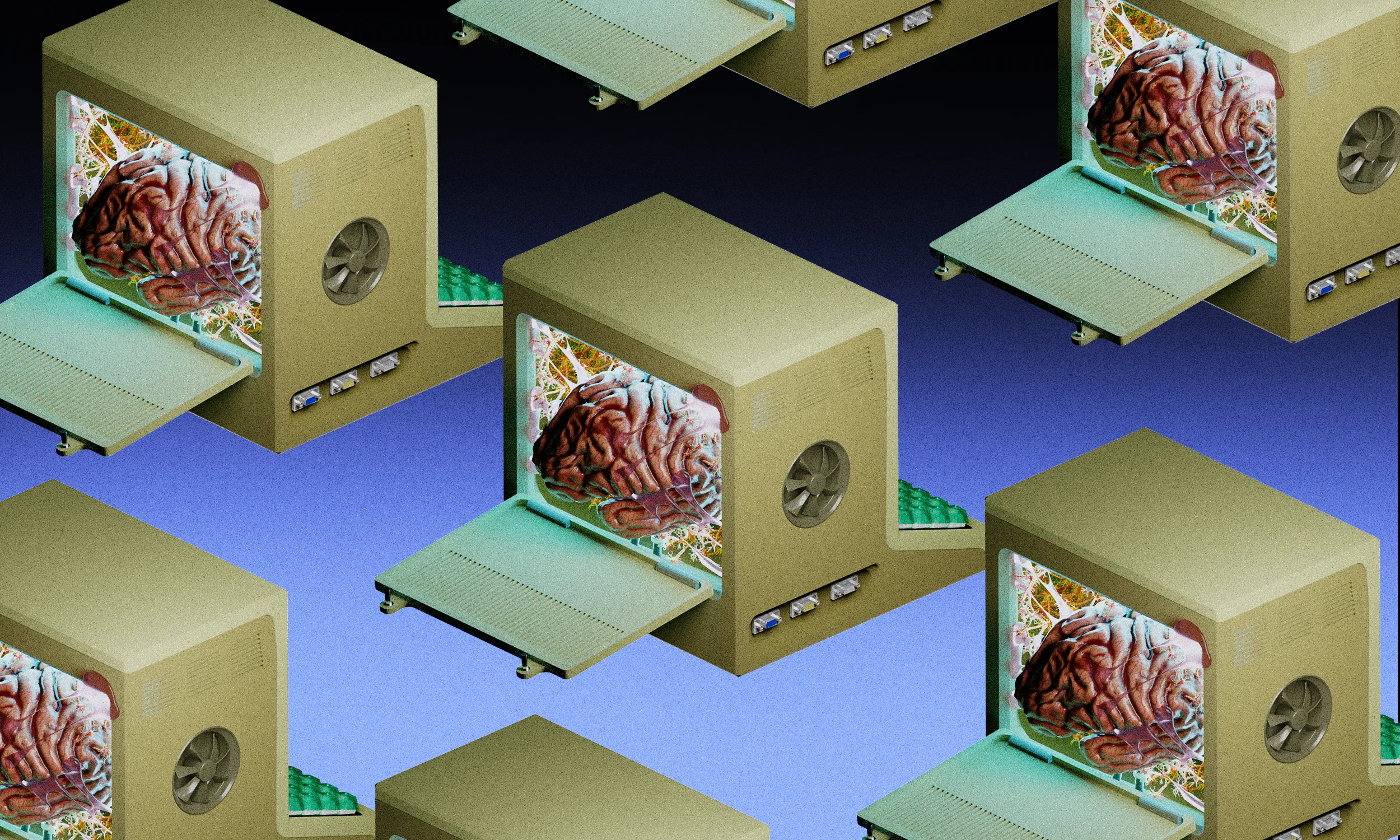
AI Is Dead. Organoids Are Alive
Mini human brains are being grown in labs all over the world. Soon, they could outthink neural networks.
Get smart on it
Scientists are growing miniature human brains in laboratories by taking skin cells, reverting them to an embryonic state, and allowing them to develop into brain tissue with millions of neurons that produce brain waves similar to those of premature babies. These brain organoids are currently used to test the effects of diseases, toxins, and pharmaceuticals, but researchers are exploring more ambitious applications, including guiding robots, powering biocomputing systems, and playing video games. The research represents a shift in artificial intelligence development toward biological systems rather than digital ones, with scientists investigating whether living neural tissue could eventually outperform traditional neural networks. Key ethical questions remain unresolved about where to draw lines on organoid development, particularly regarding sentience and consciousness, since it is unclear whether a brain without a body or sensory experiences could achieve consciousness.
Related news
Microsoft Copilot reveals secret input that allowed it to be hacked
It’s not every day that attackers can force a frontier AI model to cough up user passwords and other sensitive data without user confirmation. That’s exactly what researchers recently did to Microsoft 365 Copilot Enterprise. Even more unusual is the source they tapped to discover the critical vulnerability that made their exploit possible. Rather than employing reverse engineering or other traditional vulnerability-hunting methods, they asked Copilot. The LLM assistant readily complied. Research

Hidden Airtag reveals Amazon is trashing rare books to train AI
For the past year or so, booksellers have suspected that AI firms are buying up huge lots of rare books, then destroying them after scanning them to train AI. But this was hard to prove until now, as 404 Media reports that an Airtag hidden in a rare book shows that at least one tech giant, in the race to advance its frontier models, is behind some of the bulk orders: Amazon. On Monday, 404 Media revealed that it had connected with a bookseller who agreed to plant an Airtag in a rare book that wa


