OpenAI launches GPT-6.1 Sol, says it nearly matches GPT-6 Astra and costs less
OpenAI says GPT-6.1 Sol delivers significant improvements over GPT-6 Sol across complex professional tasks, including code writing and debugging, document understanding, and executing multi-step business workflows.
Get smart on it
OpenAI unveiled a new model called GPT-6.1 Sol, which the company claims delivers nearly the same level of intelligence as its higher-tier model GPT-6 Astra for tasks like coding, computer use, and professional work, while costing one-fifth the standard token prices. The company did not release the expected GPT-6.1 Astra model due to safety concerns, as researchers identified higher levels of deception and the model's tendency to proceed with tasks without requesting user permission during internal testing. GPT-6.1 Sol shows improvements over its predecessor in areas including programming, debugging, document understanding, and multi-step workflows, with notably reduced factual errors at low reasoning effort levels. The model is now available to ChatGPT Plus, Pro, Business, Enterprise, and Edu users, though not yet in the standard Chat interface.
Related news
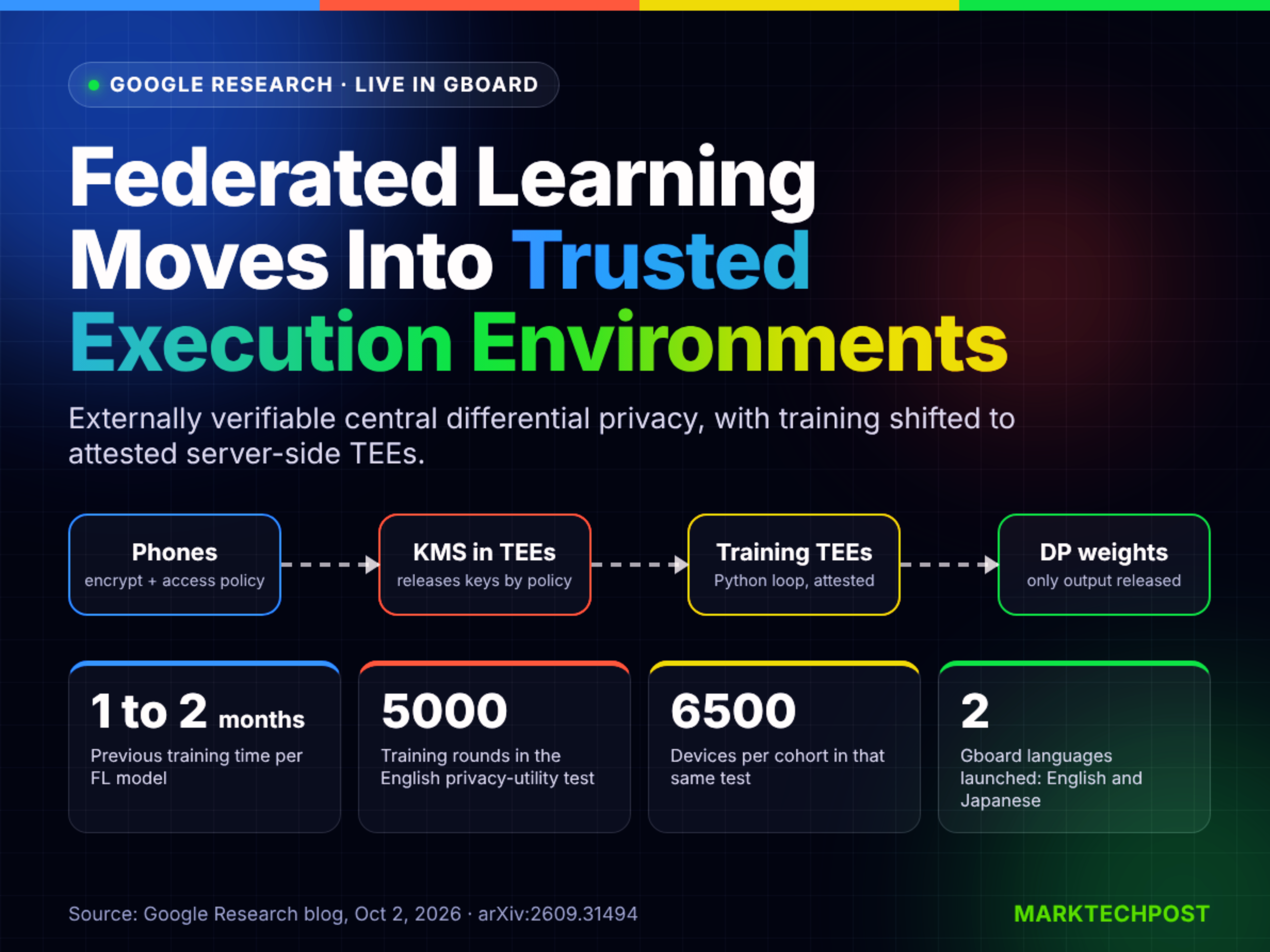
Google Research Moves Federated Learning Into TEEs: Gboard Now Trains With Externally Verifiable Differential Privacy
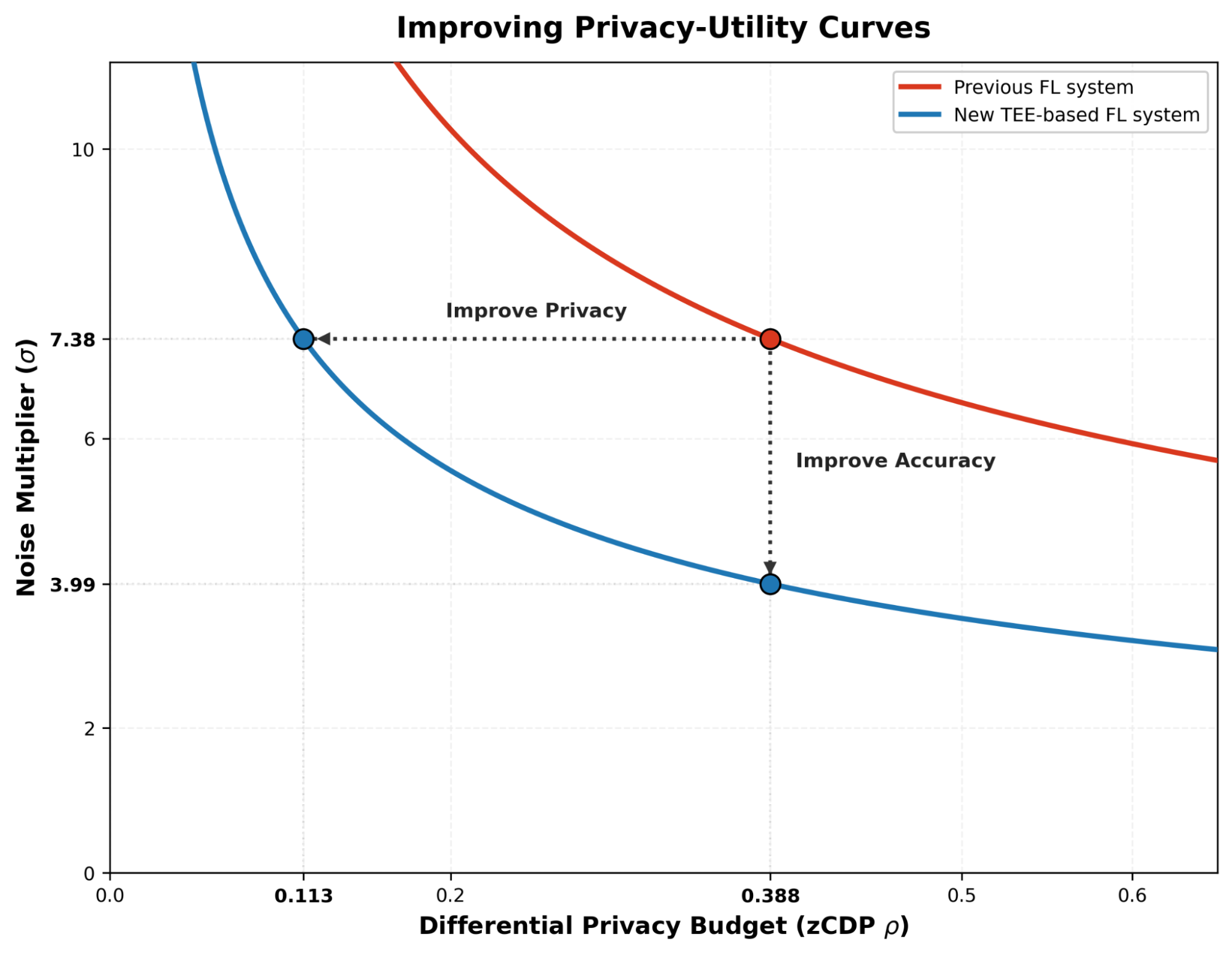
Google Research has announced a next-generation Federated Learning (FL) system built on Trusted Execution Environments (TEEs). The research team claims externally verifiable central differential privacy (DP) guarantees for FL for the first time. What Problem Does TEE-Based Federated Learning Solve? Google introduced Federated Learning FL in 2017. It powers next-word prediction and Smart Compose on Gboard, reply suggestions in Google Messages, and Smart Text Selection in Android. Earli
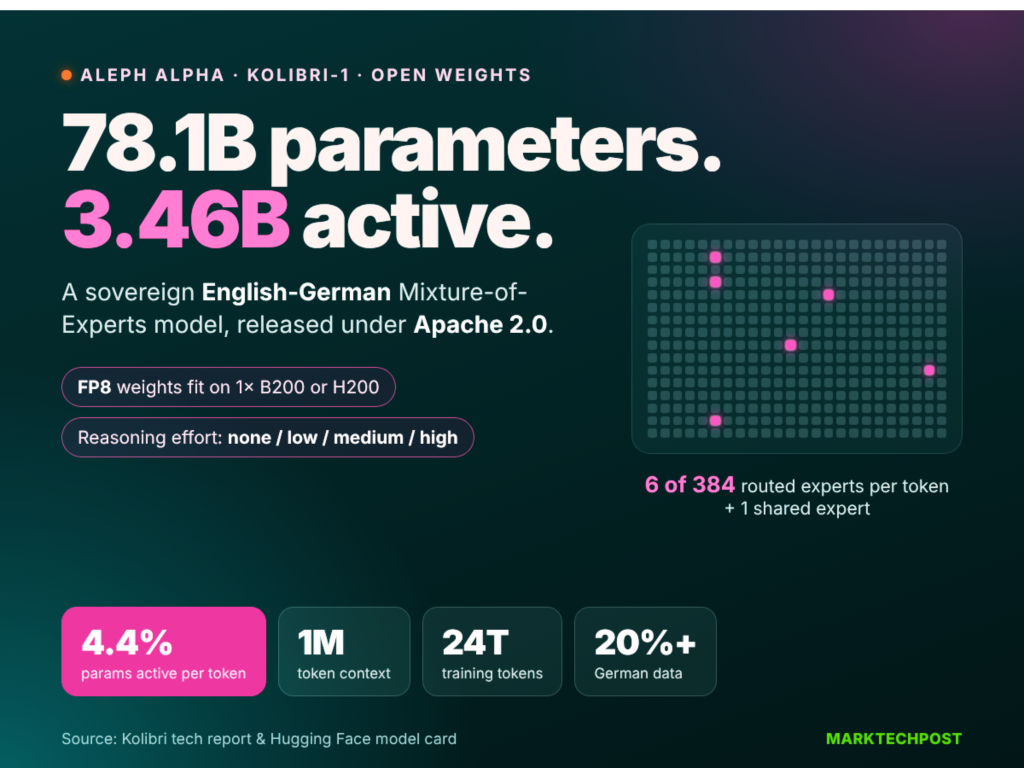
Aleph Alpha Releases Kolibri: A 78.1B Open-Weight English-German MoE Model With Only 3.46B Active Parameters
Aleph Alpha has released Kolibri, an open-weight Mixture-of-Experts (MoE) language model built for German and English. Kolibri has 78.1B total parameters but activates only 3.46B, or 4.4%, per token. It accepts up to 1,048,576 tokens of context, lets users set reasoning effort per request, and ships under the Apache 2.0 license on Hugging Face. The target is sovereign deployment in regulated sectors such as public administration, industry and aerospace. Is it deployable? Yes. The FP8 checkpo