Open-sourcing AstaBrief, the fast report-generation model in Asta
Making enterprise reporting tools openly available could democratize access to automation that typically requires expensive proprietary software licenses.
Get smart on it
A model called AstaBrief has been released as open-source software to help researchers generate scientific reports faster by turning research questions and literature excerpts into cited documents. The model was built to match the quality of proprietary models while reducing generation time significantly, completing reports about 3.5 times faster than a proprietary alternative. AstaBrief was trained on real research queries from scientists rather than synthetic data, reflecting how researchers actually use AI systems with substantial context and multiple constraints. The release includes both the model weights and training data so other researchers and institutions can study, reproduce, and adapt the approach for their own scientific work.
Related news

AWS Strands Labs Releases Strands Decider 2B: An Open Source Decision Model That Picks Options in About 115 ms
AWS Strands Labs releases Strands Decider 2B, an open source decision model. It does not generate text. It reads a state and typed questions, then returns a choice, a yes/no probability, or a score with a calibrated confidence. The model has 1.9 billion parameters and runs locally on a CPU, a consumer GPU, or an Apple silicon Mac. Is it deployable? Yes, for local and self-hosted use. Weights are on Hugging Face under Apache-2.0, and pip install strands-decider gives a CLI and an HTTP server.
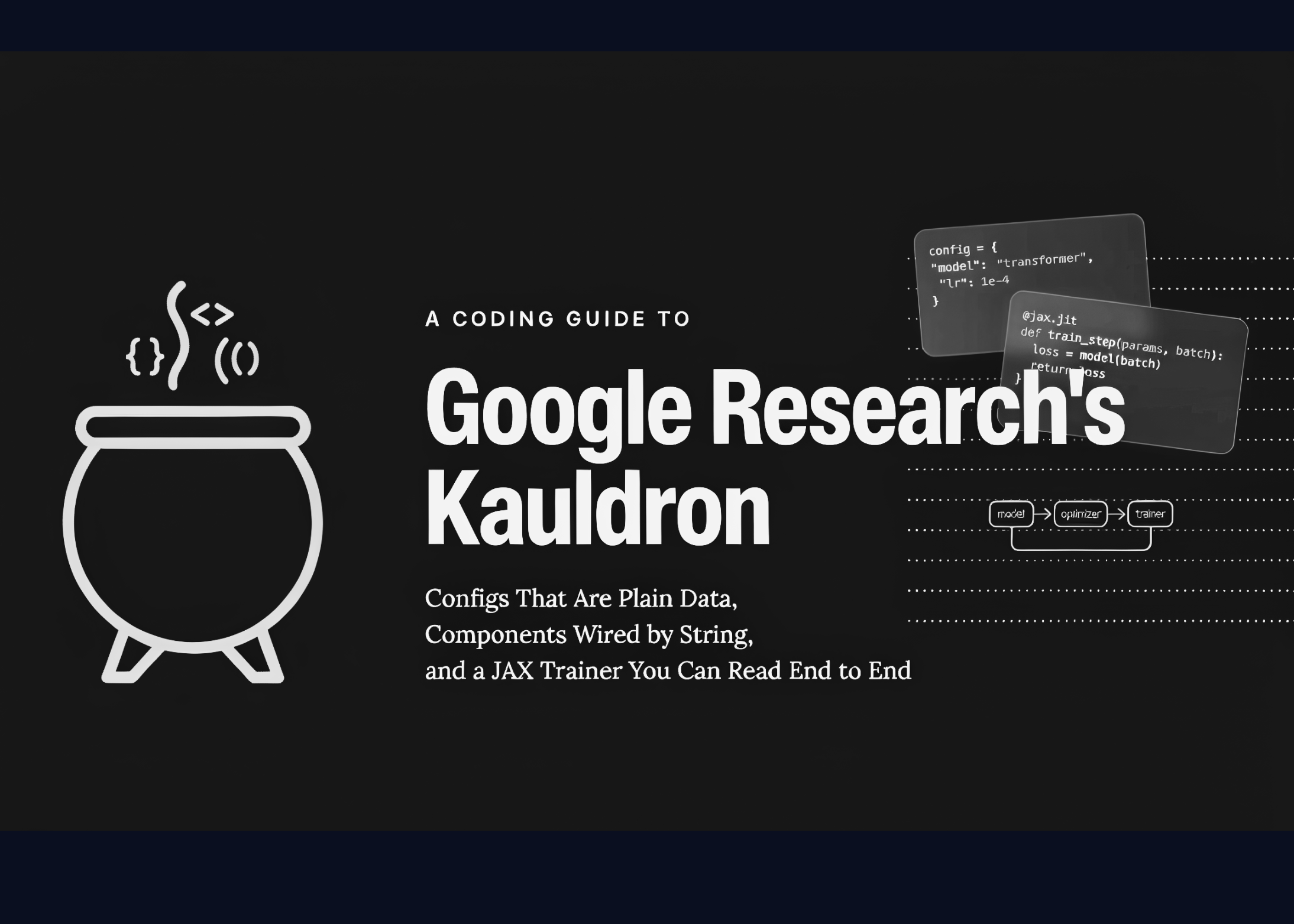
A Coding Guide to Google Research’s Kauldron: Configs That Are Plain Data, Components Wired by String, and a JAX Trainer You Can Read End to End
In this tutorial, we implement Kauldron, the JAX training library from Google Research that describes itself as optimized for research velocity and modularity, and we take those two words literally by testing what they actually buy us. We install it, then spend the first half of the notebook on the three mechanisms that make Kauldron different from a stack of Flax and Optax: konfig, which turns an experiment into a tree of plain dictionaries that round-trip through JSON; kontext, which wires co