NVIDIA Releases Kumo Tabular: Open Tabular Foundation Models That Predict New Rows in a Single Forward Pass
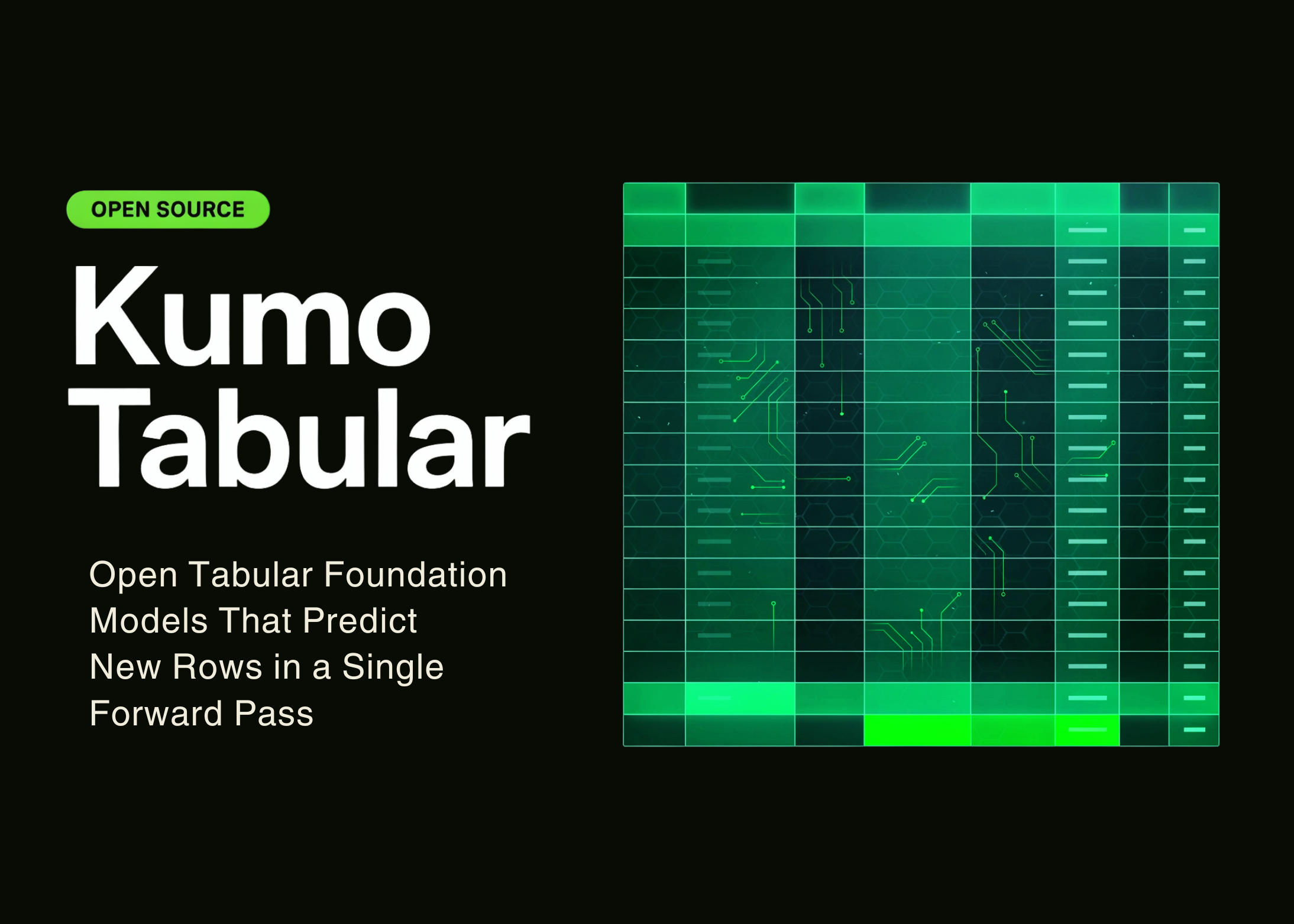
NVIDIA has released Kumo Tabular, a new family of tabular foundation models (TFMs) for classification and regression. If you have followed TabPFN or TabICL, the setup will look familiar. The model takes labeled rows as context and predicts new rows in one forward pass. There is no training, no hyperparameter tuning, and no feature engineering. Kumo Tabular comes in Small, Medium, and Large versions, spanning about 28M to 215M parameters. It runs through NVIDIA’s open-source structured-
Get smart on it
NVIDIA released Kumo Tabular, a family of foundation models designed to predict new rows in tabular data using a single forward pass, without requiring training, hyperparameter tuning, or feature engineering. The models come in three sizes ranging from about 28 million to 215 million parameters and were pretrained entirely on synthetic tables generated from structural causal models that include real-world messiness like missing values and duplicate rows. The weights are licensed under OpenMDW-1.1, which permits commercial use, differentiating it from competing models like TabPFN-3 and LimiX-2 that restrict commercial deployment. The models operate through NVIDIA's open-source structured-data-models library and reportedly rank first on multiple benchmark suites including TabArena, BeyondArena, and TALENT.
Related news
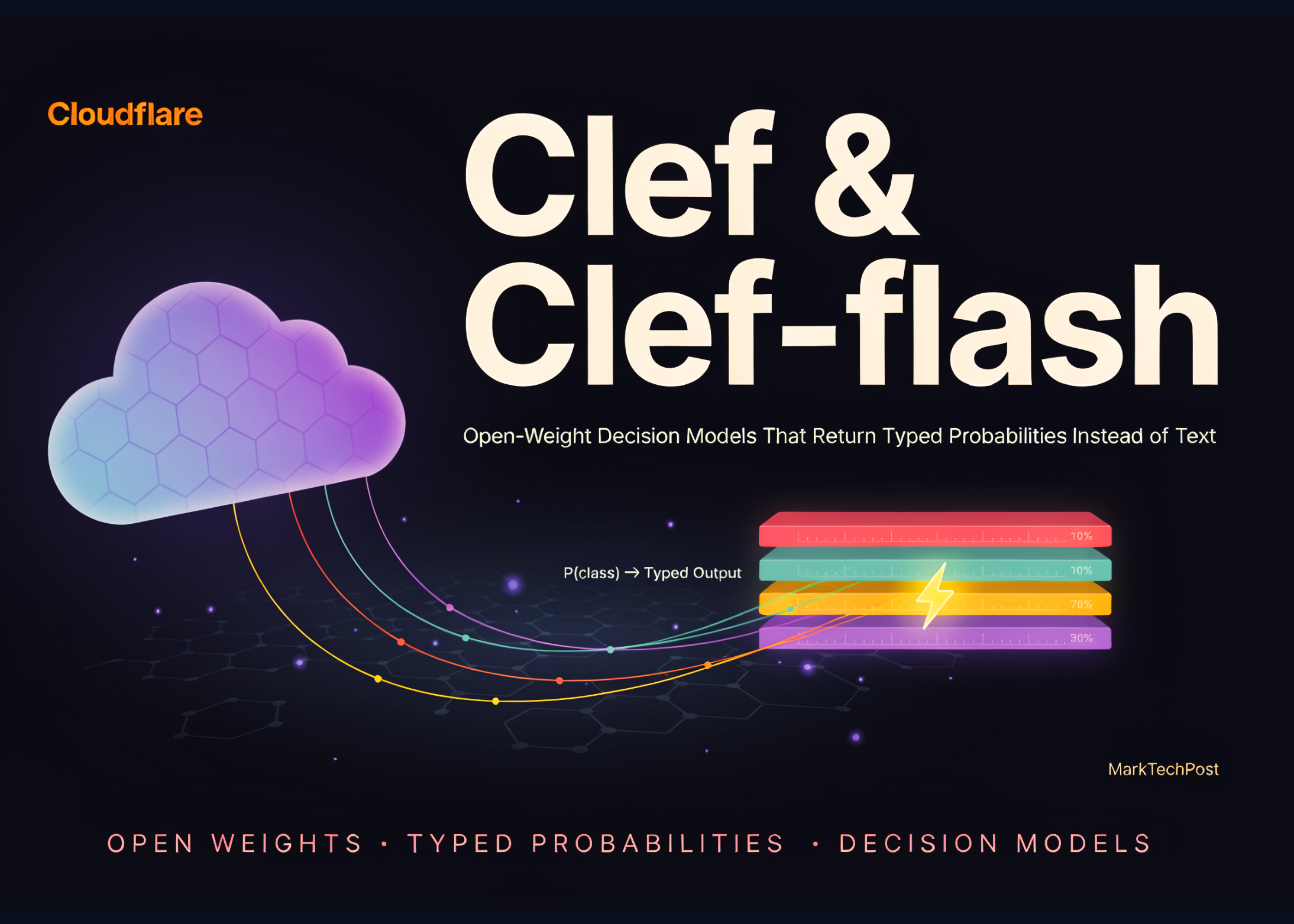
Cloudflare Releases Clef and Clef-flash: Open-Weight Decision Models That Return Typed Probabilities Instead of Text
Cloudflare has released Clef and Clef-flash, the first models trained by its Workers AI team. They are decision models, not chatbots. Each reads an input state and a schema of typed questions. It returns a probability for every allowed answer, with no free-form text. Both are open-weight under Apache 2.0 and compatible with TypeSafe AI’s Jev API. Is it deployable? Yes, Both models run today on Workers AI, and the weights are on Hugging Face for self-hosting. What a Decision Model Do
A Coding Guide to Google Research’s Kauldron: Configs That Are Plain Data, Components Wired by String, and a JAX Trainer You Can Read End to End
In this tutorial, we implement Kauldron, the JAX training library from Google Research that describes itself as optimized for research velocity and modularity, and we take those two words literally by testing what they actually buy us. We install it, then spend the first half of the notebook on the three mechanisms that make Kauldron different from a stack of Flax and Optax: konfig, which turns an experiment into a tree of plain dictionaries that round-trip through JSON; kontext, which wires co