MiniMax Sparse Attention (MSA): a Two-Branch Block-Sparse Attention Trained on a 109B-Parameter MoE With a 3T-Token Budget
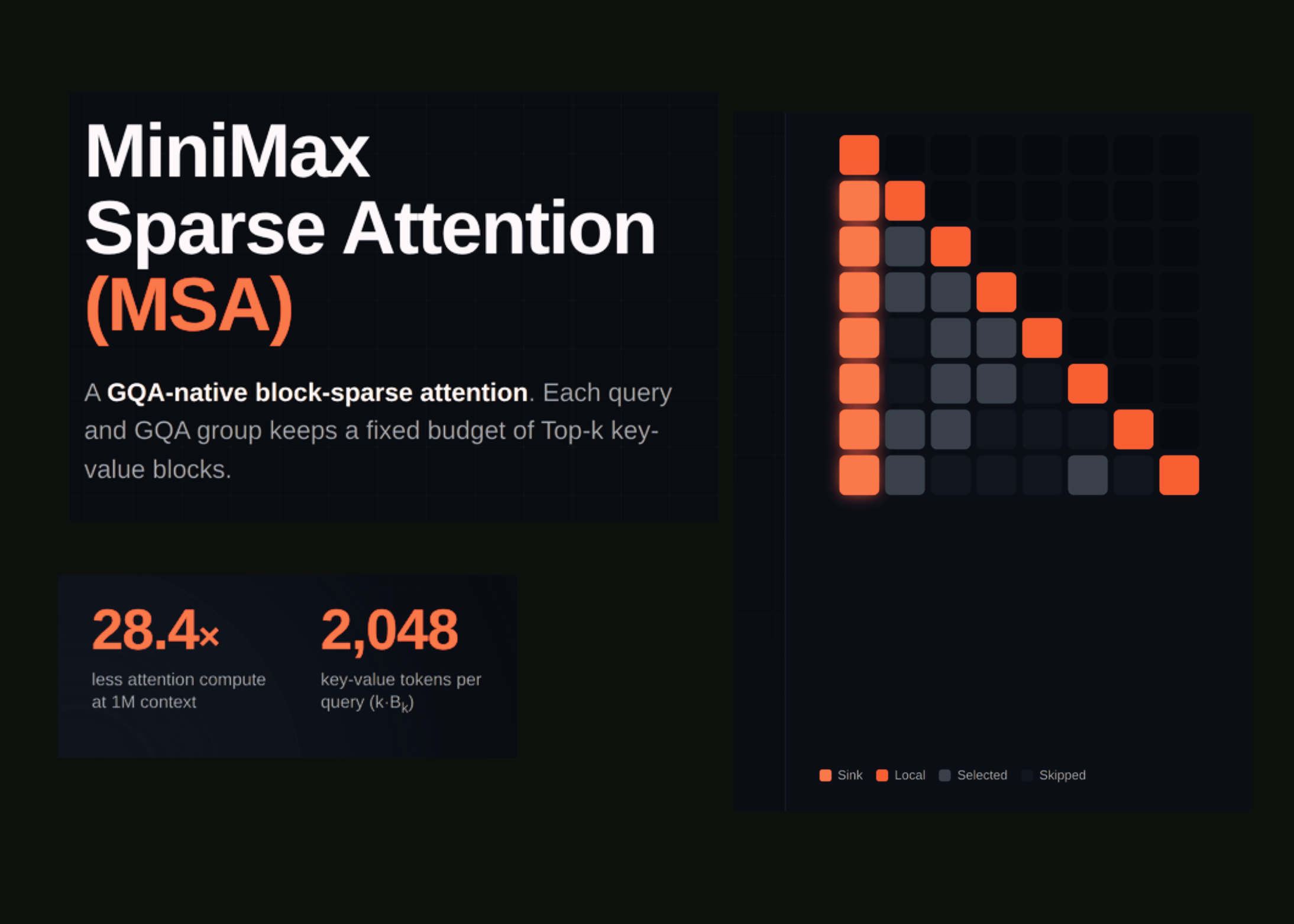
MiniMax released MSA (MiniMax Sparse Attention), a sparse attention method built directly on Grouped Query Attention (GQA). It targets one bottleneck: the quadratic cost of softmax attention at long context. The MiniMax research team tested it inside a 109B-parameter Mixture-of-Experts model trained with native multimodal data. They also open-sourced an inference kernel and shipped a production model, MiniMax-M3. What is MSA (MiniMax Sparse Attention) MSA (MiniMax Sparse Attention) factor
Get smart on it
The lesson for this story is being written.
Related news

Mistral OCR 4 Brings Citation-Ready Structured Output to RAG, Agentic, and Enterprise Search Pipelines
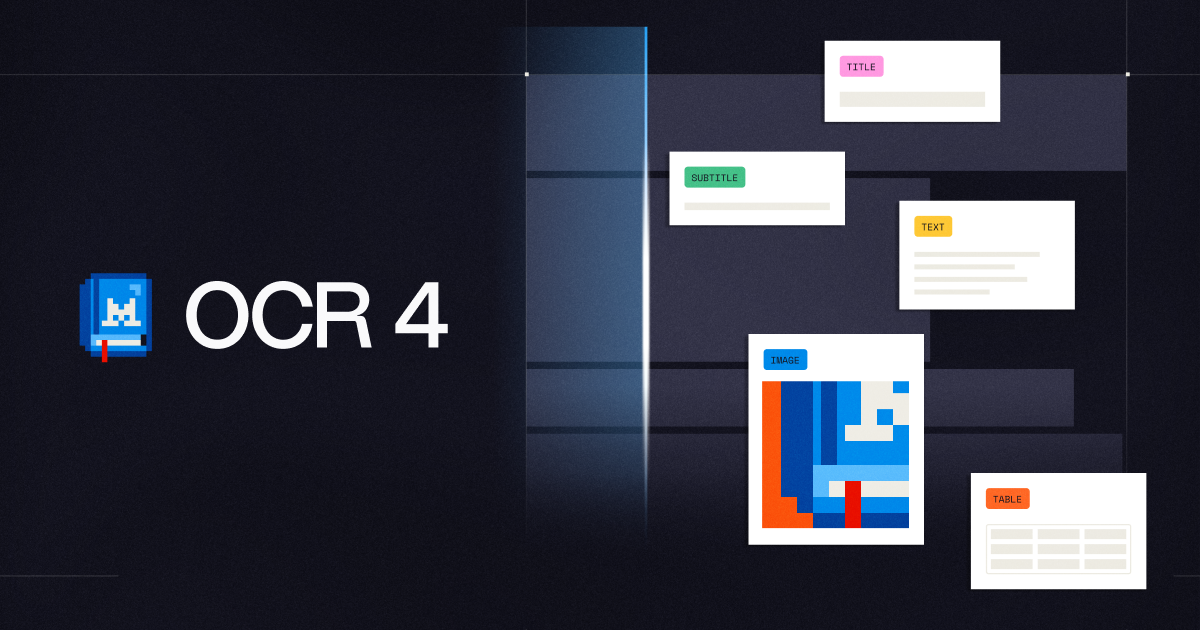
Today, Mistral AI released OCR 4, its latest document-understanding model. This new release adds bounding boxes, block classification, and inline confidence scores alongside extracted text. It supports 170 languages across 10 language groups and runs in a single container for fully self-hosted deployments. OCR 4 also serves as an ingestion component for enterprise search, RAG, and domain-specific retrieval pipelines. TL;DR OCR 4 returns bounding boxes, typed-block labels, and per-word c

Datalab Releases lift: A 9B Open-Weights Vision Model That Extracts Structured JSON From PDFs Using Schemas
Datalab has released lift, a 9B open-weights vision model for structured extraction. You pass it a JSON schema, and it returns a JSON object that matches. The model reads PDFs and images directly, then decodes against your schema. This is Datalab’s first model built purely for extraction. The team already ships open-source OCR tools: chandra, marker, and surya. lift extends that work into schema-driven field extraction. lift scores 90.2% field accuracy on Datalab’s 225-documen