Liquid AI Releases d1: A Decision Model That Returns Calibrated Probabilities With Zero Output Tokens
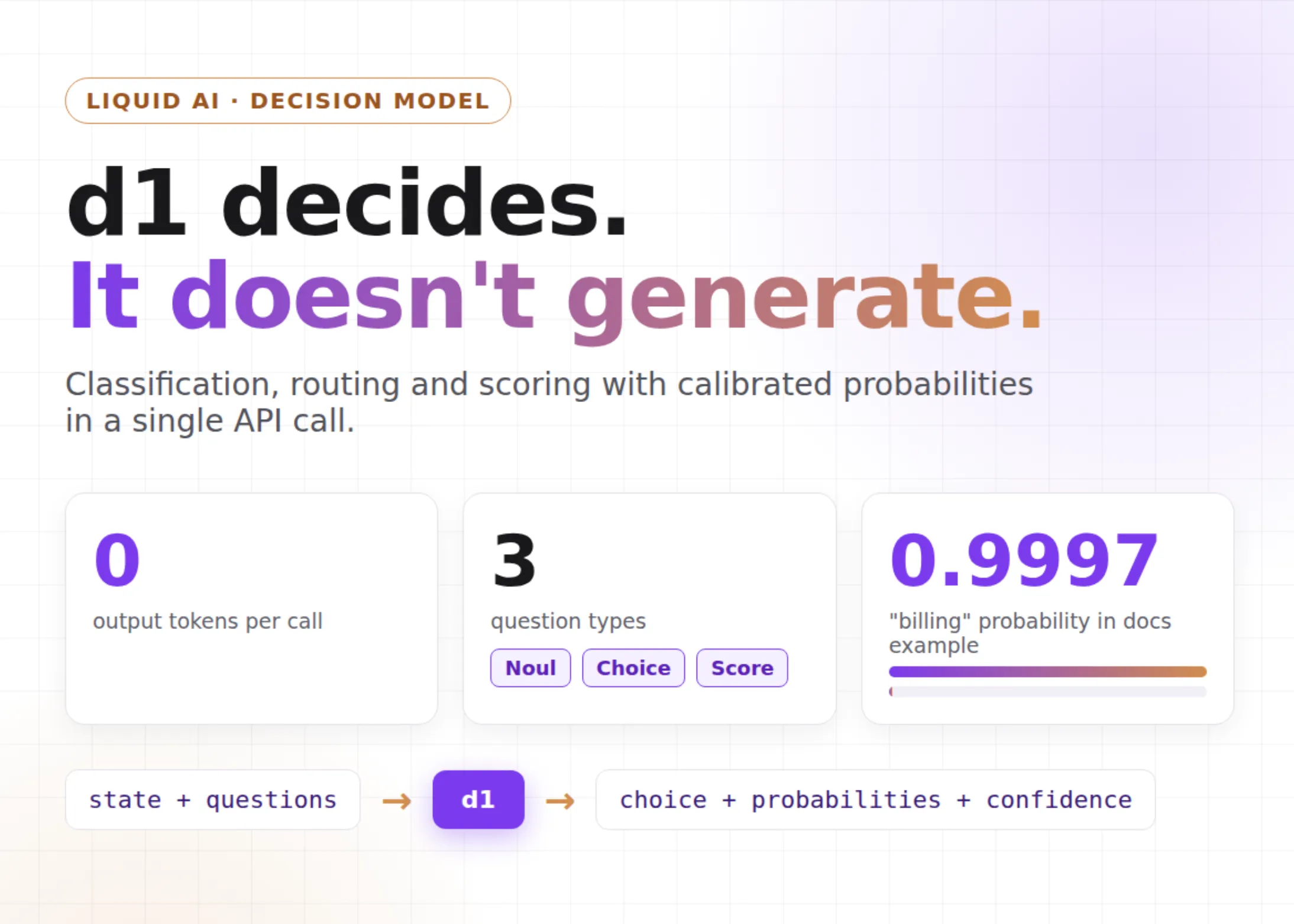
Liquid AI has released d1, a decision model built for structured choices instead of text generation. You give it context and a set of typed questions. It returns calibrated probabilities across a fixed set of outcomes in a single call, with zero generated tokens. The target is the work many teams still send to general LLMs: classification, ticket routing, scoring, moderation, reranking and LLM-as-judge checks. Is it deployable? Yes, today, as a hosted API. d1 runs on the Liquid API under th
Get smart on it
A decision model is a type of AI built for making bounded choices rather than generating text. It takes context and typed questions, then returns calibrated probabilities across predefined outcomes in a single call with zero generated output tokens. This approach differs from general language models because it produces no text output, delivers predictable latency without a decoding loop, eliminates schema errors, and provides usable uncertainty through calibrated probabilities rather than self-reported confidence scores. Decision models are best suited for tasks like classification, routing, moderation, scoring, and reranking, while language models remain better for summarization, drafting, and multi-step reasoning.
Related news
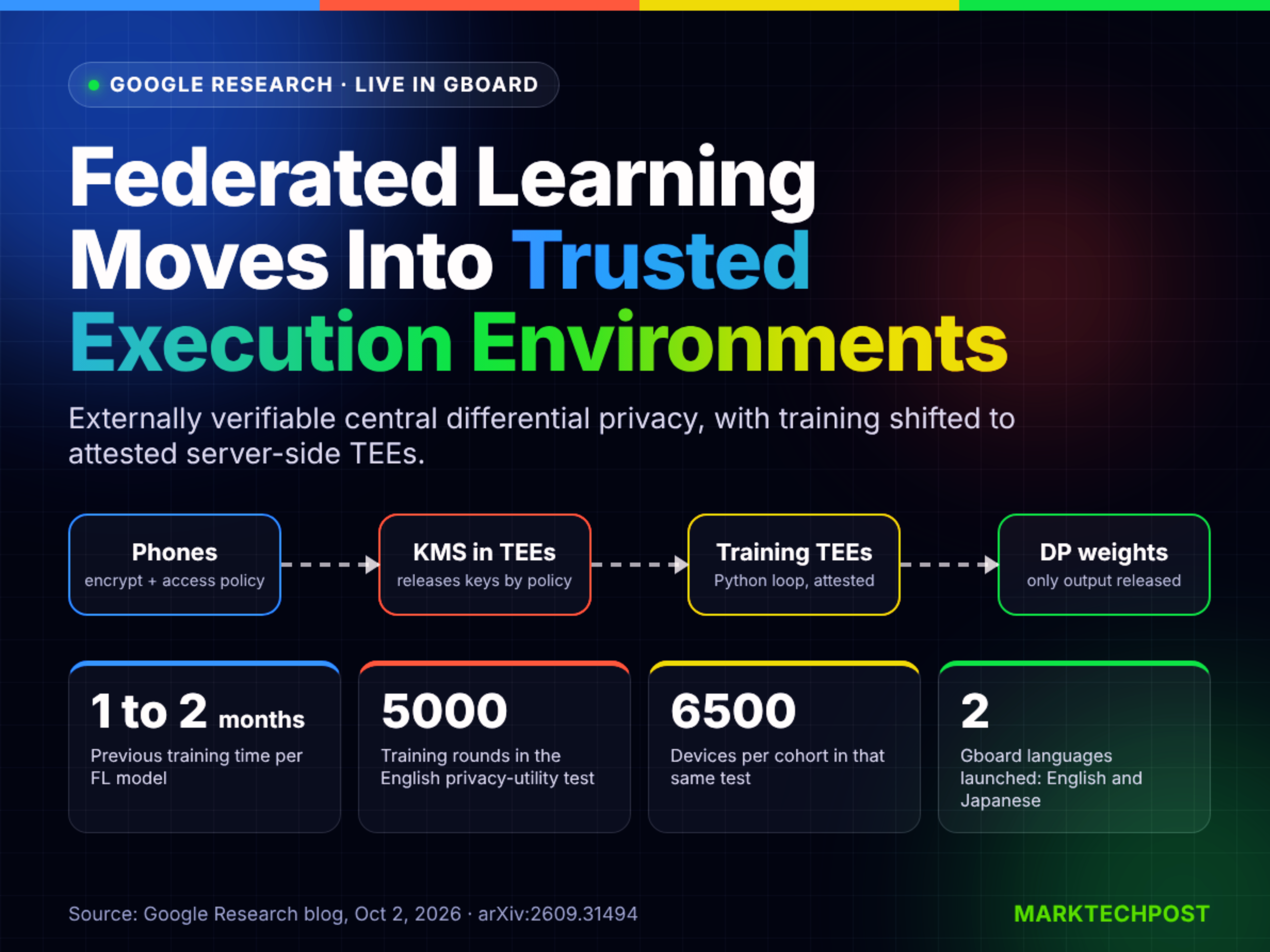
Google Research Moves Federated Learning Into TEEs: Gboard Now Trains With Externally Verifiable Differential Privacy
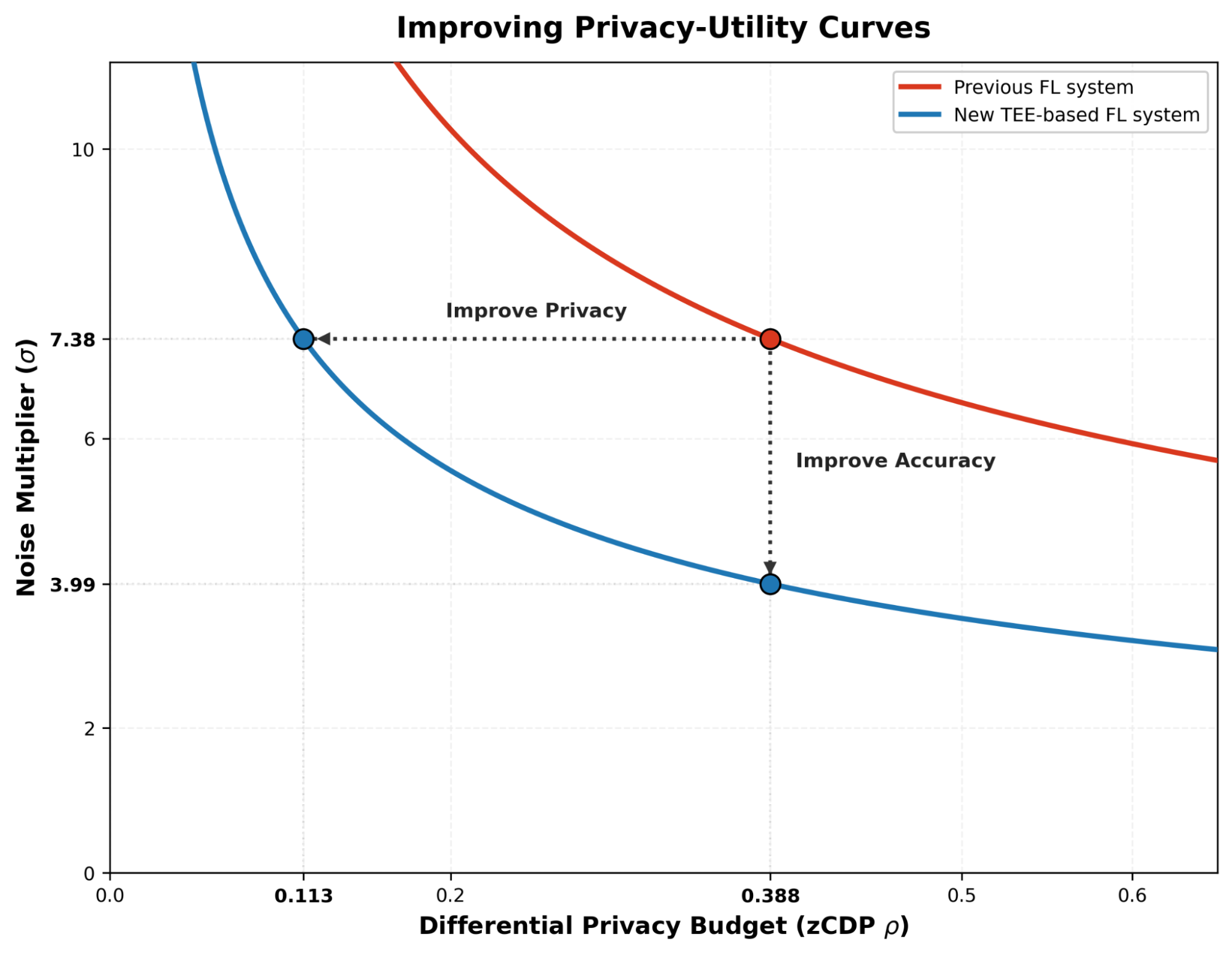
Google Research has announced a next-generation Federated Learning (FL) system built on Trusted Execution Environments (TEEs). The research team claims externally verifiable central differential privacy (DP) guarantees for FL for the first time. What Problem Does TEE-Based Federated Learning Solve? Google introduced Federated Learning FL in 2017. It powers next-word prediction and Smart Compose on Gboard, reply suggestions in Google Messages, and Smart Text Selection in Android. Earli
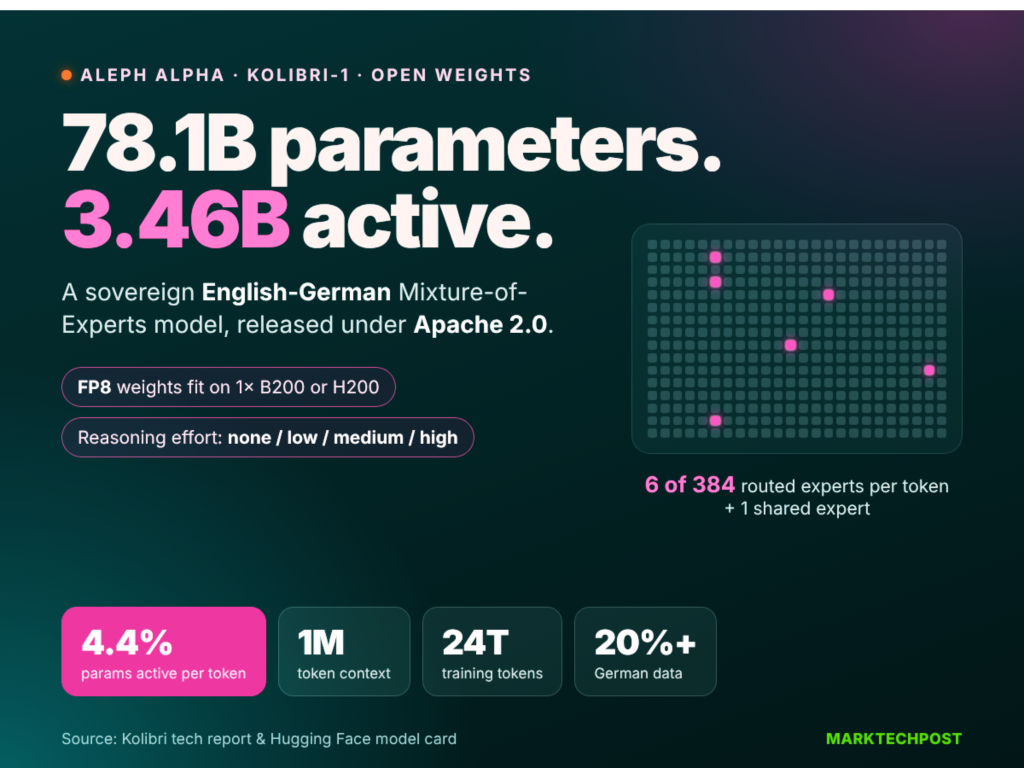
Aleph Alpha Releases Kolibri: A 78.1B Open-Weight English-German MoE Model With Only 3.46B Active Parameters
Aleph Alpha has released Kolibri, an open-weight Mixture-of-Experts (MoE) language model built for German and English. Kolibri has 78.1B total parameters but activates only 3.46B, or 4.4%, per token. It accepts up to 1,048,576 tokens of context, lets users set reasoning effort per request, and ships under the Apache 2.0 license on Hugging Face. The target is sovereign deployment in regulated sectors such as public administration, industry and aerospace. Is it deployable? Yes. The FP8 checkpo