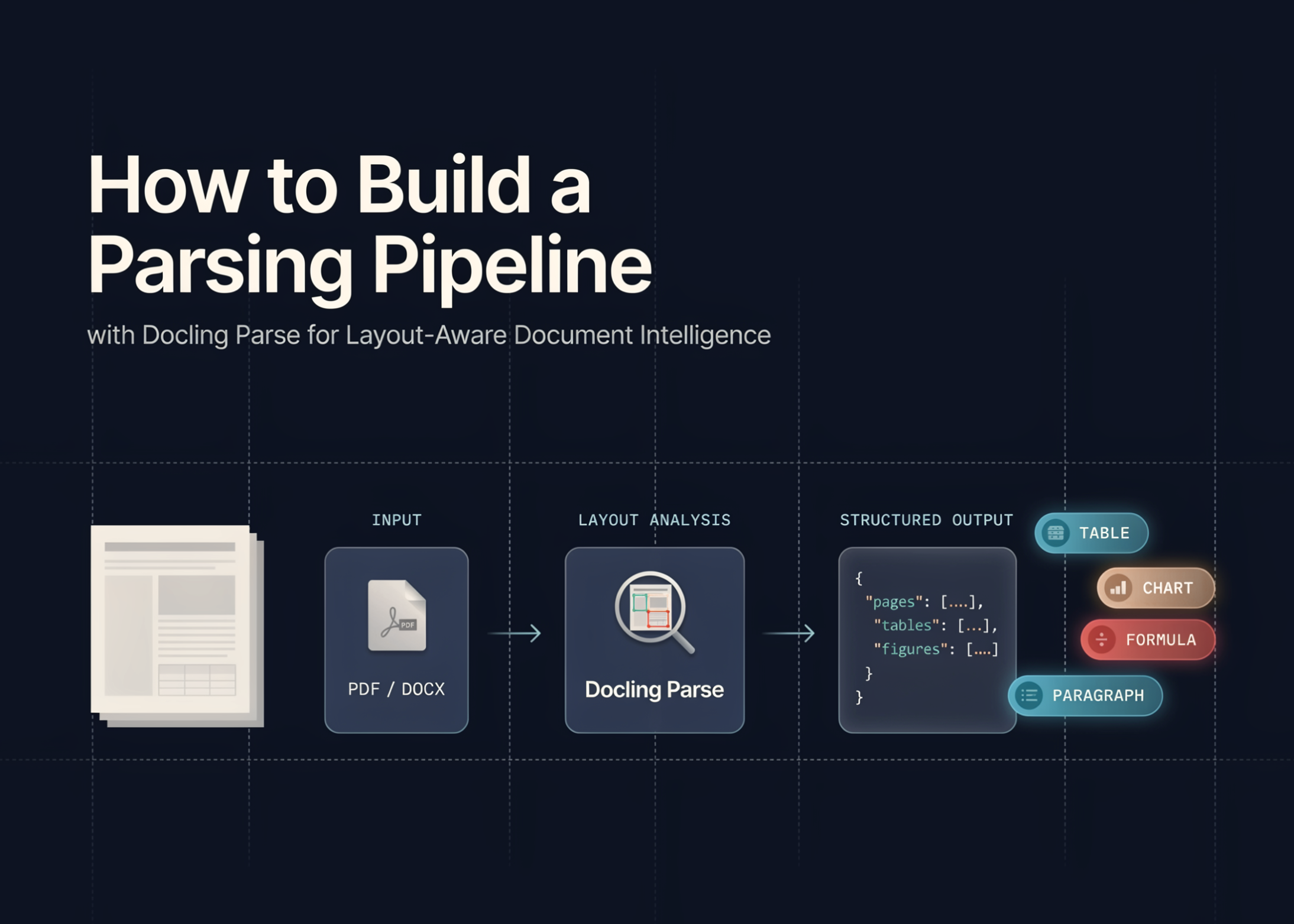
How to Build a Parsing Pipeline with Docling Parse for Layout-Aware Document Intelligence
In this tutorial, we build a workflow for using Docling Parse to analyze PDF documents at a detailed structural level. We start by preparing a stable Python environment, handling common Colab dependency issues, and generating a custom multi-page PDF with text, columns, table-like content, vector shapes, and an embedded image. We then use Docling Parse to extract words, characters, and lines with page-level coordinates, render visual overlays, and save the results into structured JSON and CSV fi
Get smart on it
The lesson for this story is being written.
Related news

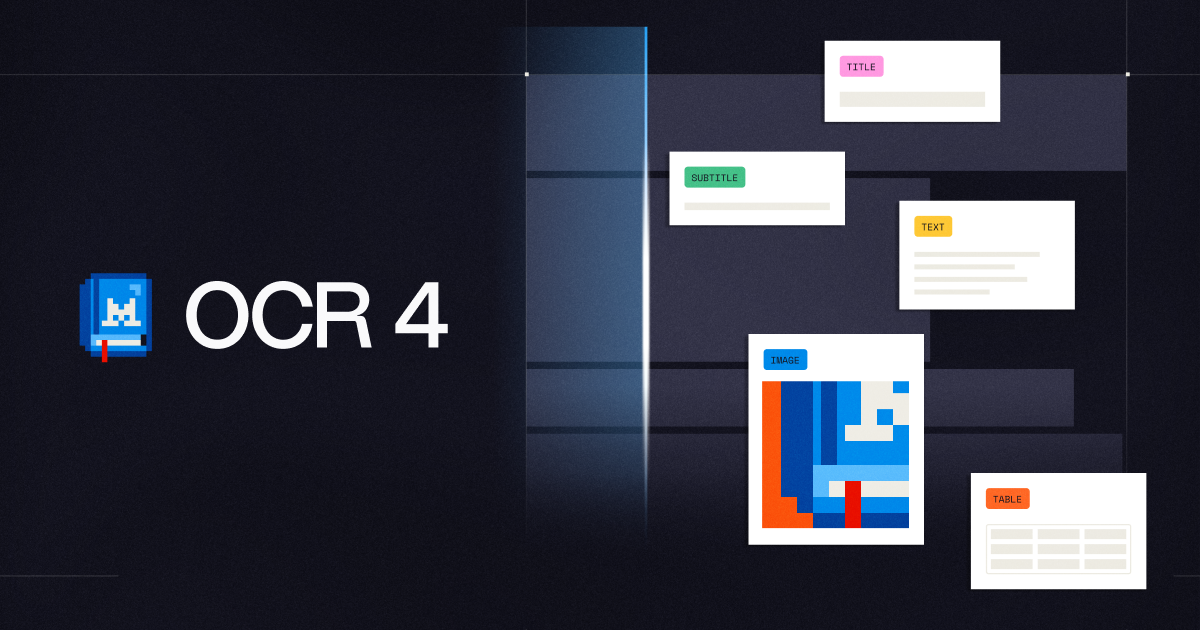
Mistral OCR 4 Brings Citation-Ready Structured Output to RAG, Agentic, and Enterprise Search Pipelines
Today, Mistral AI released OCR 4, its latest document-understanding model. This new release adds bounding boxes, block classification, and inline confidence scores alongside extracted text. It supports 170 languages across 10 language groups and runs in a single container for fully self-hosted deployments. OCR 4 also serves as an ingestion component for enterprise search, RAG, and domain-specific retrieval pipelines. TL;DR OCR 4 returns bounding boxes, typed-block labels, and per-word c

Datalab Releases lift: A 9B Open-Weights Vision Model That Extracts Structured JSON From PDFs Using Schemas
Datalab has released lift, a 9B open-weights vision model for structured extraction. You pass it a JSON schema, and it returns a JSON object that matches. The model reads PDFs and images directly, then decodes against your schema. This is Datalab’s first model built purely for extraction. The team already ships open-source OCR tools: chandra, marker, and surya. lift extends that work into schema-driven field extraction. lift scores 90.2% field accuracy on Datalab’s 225-documen