Google Research Moves Federated Learning Into TEEs: Gboard Now Trains With Externally Verifiable Differential Privacy
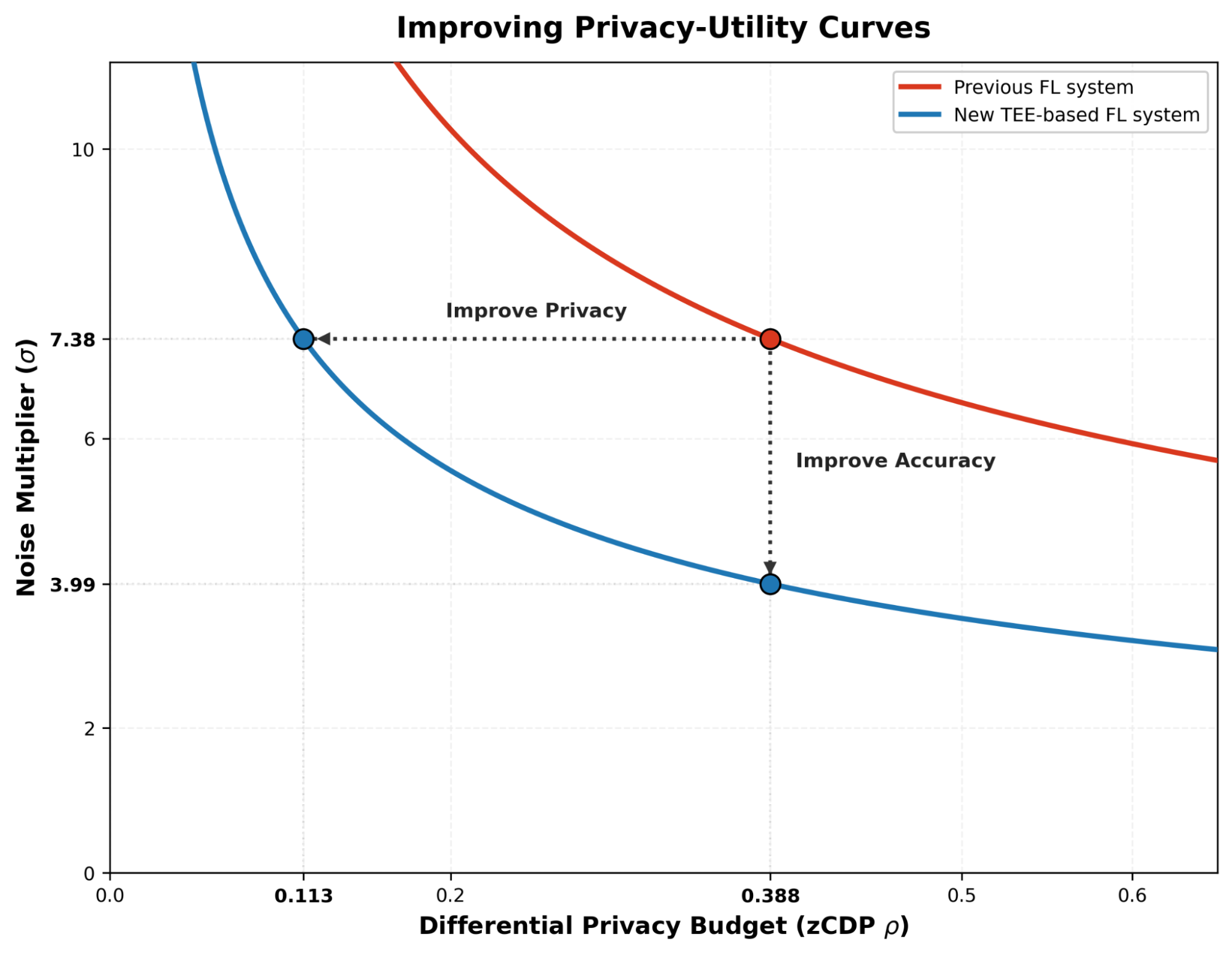
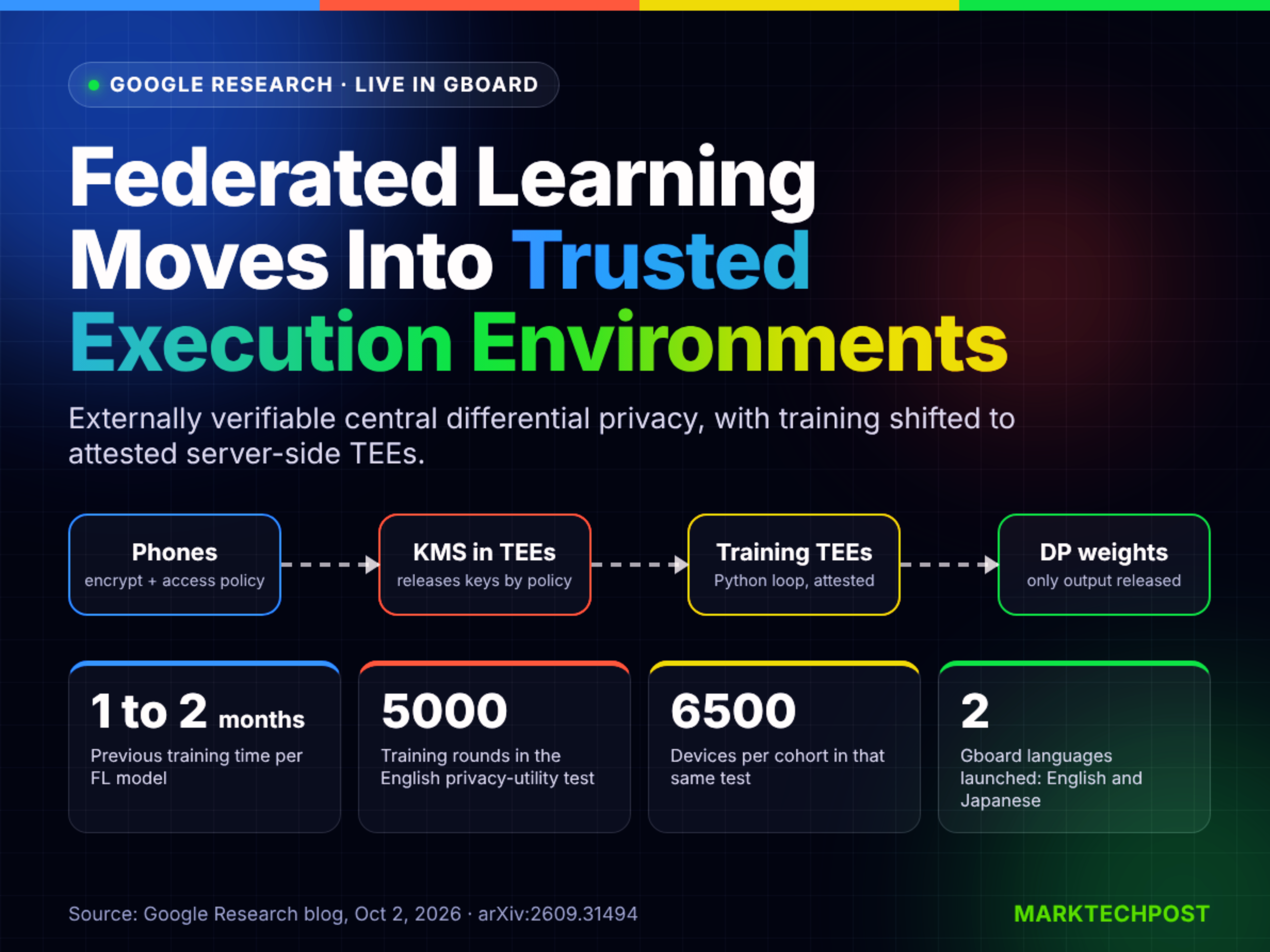
Google Research has announced a next-generation Federated Learning (FL) system built on Trusted Execution Environments (TEEs). The research team claims externally verifiable central differential privacy (DP) guarantees for FL for the first time. What Problem Does TEE-Based Federated Learning Solve? Google introduced Federated Learning FL in 2017. It powers next-word prediction and Smart Compose on Gboard, reply suggestions in Google Messages, and Smart Text Selection in Android. Earli
Get smart on it
Federated Learning is a system that trains AI models using data from many devices while keeping that data private. A trust gap existed in earlier versions because outside parties could not verify that device data was never logged or inspected by the server. The new system moves model training computations to Trusted Execution Environments, which are special secure areas on servers, and publishes access policies to a public transparency log so external auditors can verify what the server is allowed to do. This makes privacy guarantees externally verifiable for the first time, and it has enabled faster training of next-word prediction models for one application.
Related news
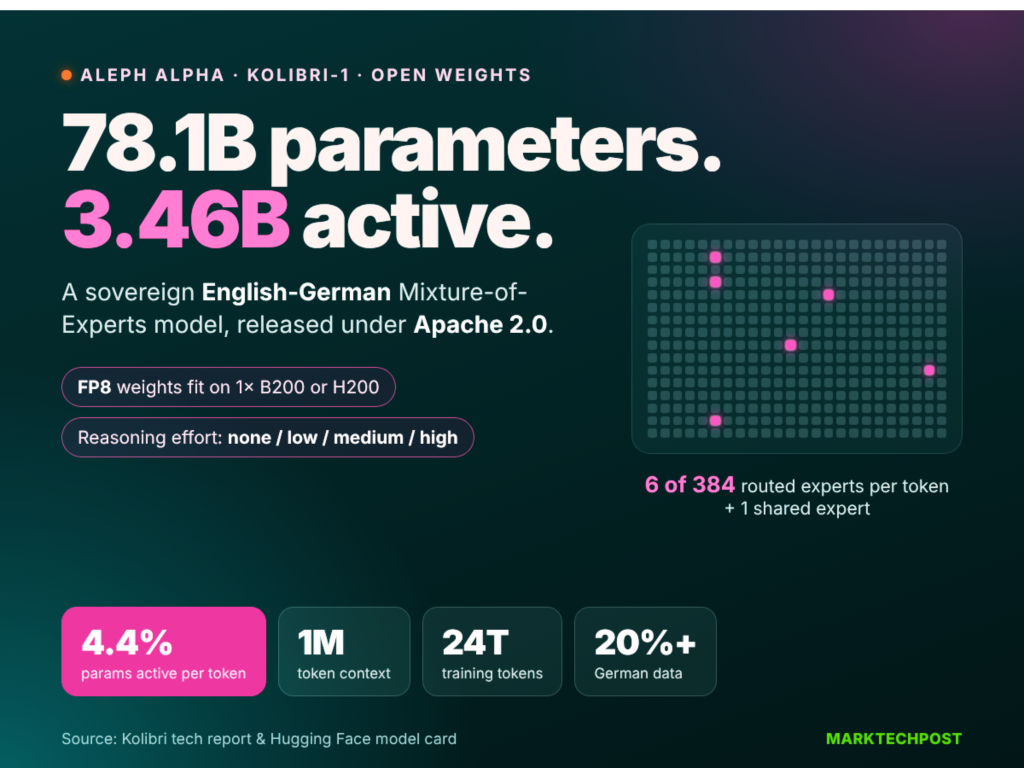
Aleph Alpha Releases Kolibri: A 78.1B Open-Weight English-German MoE Model With Only 3.46B Active Parameters
Aleph Alpha has released Kolibri, an open-weight Mixture-of-Experts (MoE) language model built for German and English. Kolibri has 78.1B total parameters but activates only 3.46B, or 4.4%, per token. It accepts up to 1,048,576 tokens of context, lets users set reasoning effort per request, and ships under the Apache 2.0 license on Hugging Face. The target is sovereign deployment in regulated sectors such as public administration, industry and aerospace. Is it deployable? Yes. The FP8 checkpo

Decision AI Models Explained: TypeSafe Jev vs Fastino GLiDE, GLiNER2.5-Decide and Open-Source Competitors
What are Decision AI Models? Decision AI models are a new class of model that returns a decision, not a paragraph. You send text with typed questions. The model returns choices, scores or yes/no probabilities your code can branch on directly. The category went mainstream when TypeSafe AI launched Jev after 2 years in stealth. TypeSafe calls it a ‘System One model,’ after Daniel Kahneman’s fast, intuitive System 1 thinking. Within 3 weeks, Fastino Labs shipped 2 rival