Cohere Releases Embed 5: How It Compares to Voyage 4 Large, Gemini Embedding 2, and OpenAI
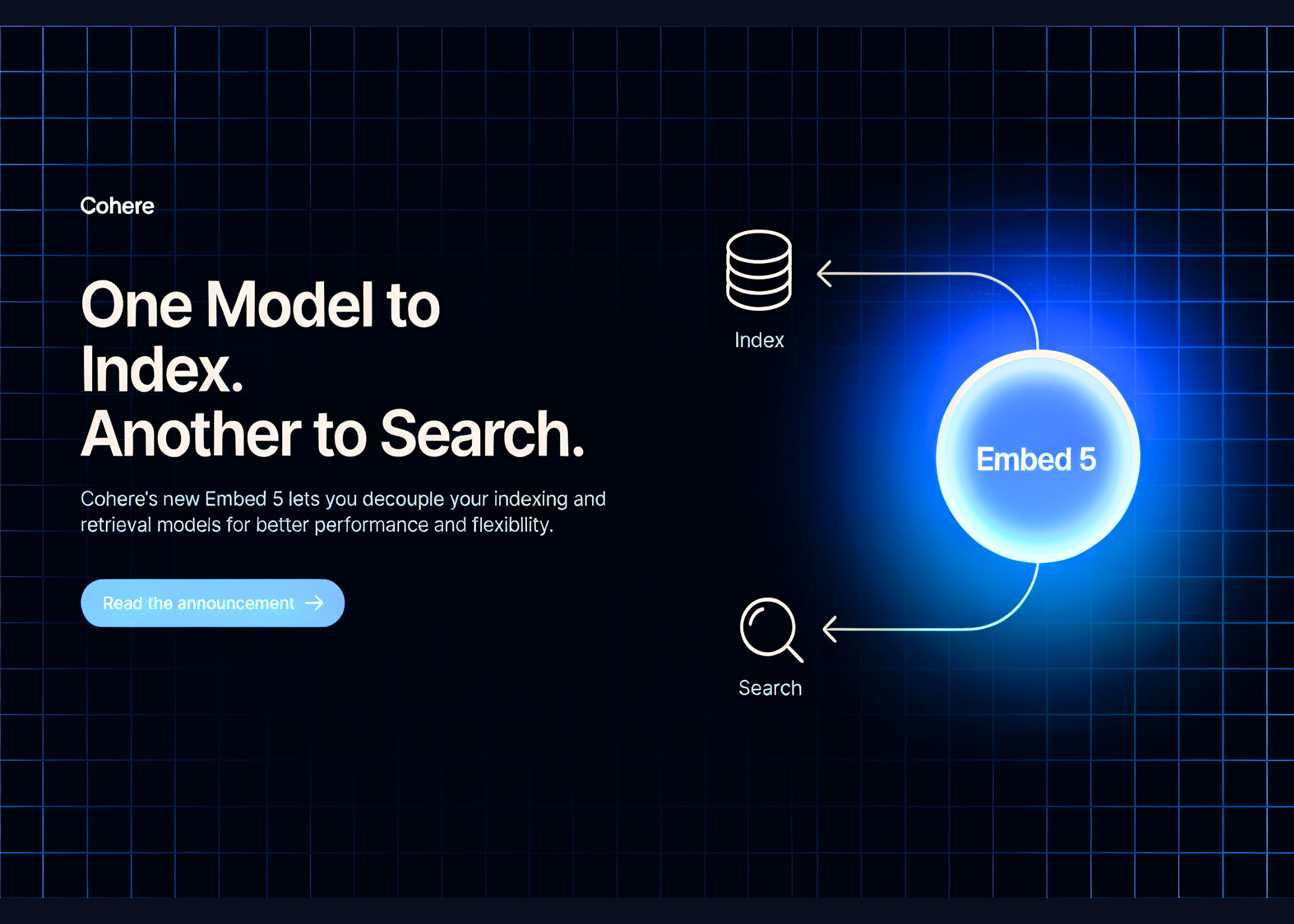
Cohere has released Embed 5, a new embedding model family. It targets enterprise search, RAG, and agentic retrieval. The model family ships in 2 tiers. Embed 5 Pro targets maximum retrieval quality. Embed 5 Fast targets latency and cost on the live query path. Both accept text, images, and fused text plus image inputs. Both cover 100+ languages and read up to 128K tokens. The key design choice: Pro and Fast share 1 embedding space. You can index with one and query with the other. Is it deplo
Get smart on it
Cohere has released Embed 5, a new embedding model that converts text and images into numerical vectors for search and data retrieval tasks. The model comes in two versions: a Pro tier optimized for accuracy and a Fast tier optimized for speed and cost, with both sharing the same underlying vector space so users can index with one and query with the other. Embed 5 Pro achieves higher benchmark scores than competing models from Voyage, Google Gemini, and OpenAI on standard retrieval tests, while Fast processes documents 2.4 times faster than Pro at lower cost. The model supports over 100 languages, handles inputs up to 128,000 tokens, and allows flexible output formats ranging from 256 to 2,048 dimensions, enabling significant storage savings when using lower precision representations.
Related news
Cloudflare Releases Clef and Clef-flash: Open-Weight Decision Models That Return Typed Probabilities Instead of Text
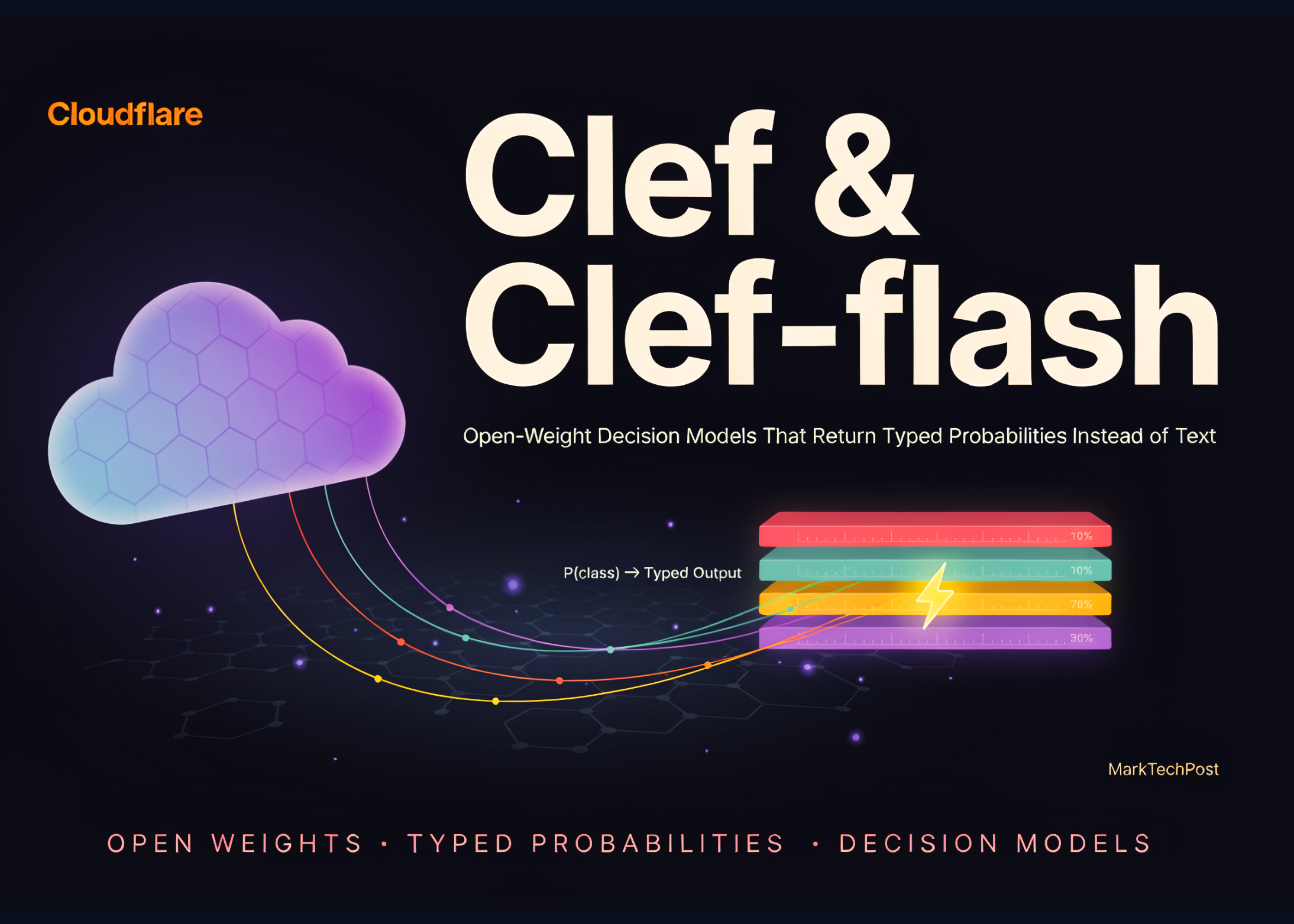
Cloudflare has released Clef and Clef-flash, the first models trained by its Workers AI team. They are decision models, not chatbots. Each reads an input state and a schema of typed questions. It returns a probability for every allowed answer, with no free-form text. Both are open-weight under Apache 2.0 and compatible with TypeSafe AI’s Jev API. Is it deployable? Yes, Both models run today on Workers AI, and the weights are on Hugging Face for self-hosting. What a Decision Model Do
A Coding Guide to Google Research’s Kauldron: Configs That Are Plain Data, Components Wired by String, and a JAX Trainer You Can Read End to End
In this tutorial, we implement Kauldron, the JAX training library from Google Research that describes itself as optimized for research velocity and modularity, and we take those two words literally by testing what they actually buy us. We install it, then spend the first half of the notebook on the three mechanisms that make Kauldron different from a stack of Flax and Optax: konfig, which turns an experiment into a tree of plain dictionaries that round-trip through JSON; kontext, which wires co