Aikido Security Releases Altar-1: An Open-Weight Security Model Pruned From GLM-5.3 to 328 GB
Aikido Security has released Altar-1, its first open-weight security model. It is a compressed version of Z.AI’s GLM-5.3, built to run inside infrastructure the customer controls. Altar-1 powers Aikido Machine, the company’s autonomous pentesting appliance for on-prem and air-gapped networks. Is it deployable? Yes, the weights are public on Hugging Face and run with vLLM on a single node of 4x NVIDIA H200 GPUs. The Problem: Security Context Cannot Leave the Network Closed
Get smart on it
Aikido Security released Altar-1, a compressed security model derived from a larger model by removing unused components and reducing precision. The model was built to address a core problem: organizations under data-residency rules or operating air-gapped networks cannot send sensitive code and security findings to external AI services, yet existing open models are too large to run locally. Altar-1 achieves a 78 percent size reduction through two compression techniques: converting weights to lower precision and removing expert components that contributed least to performance, allowing it to run on a single node of four high-end GPUs. In vulnerability detection tests, the compressed model retained 92 percent of the original model's coverage while losing about 5 percentage points of recall.
Related news
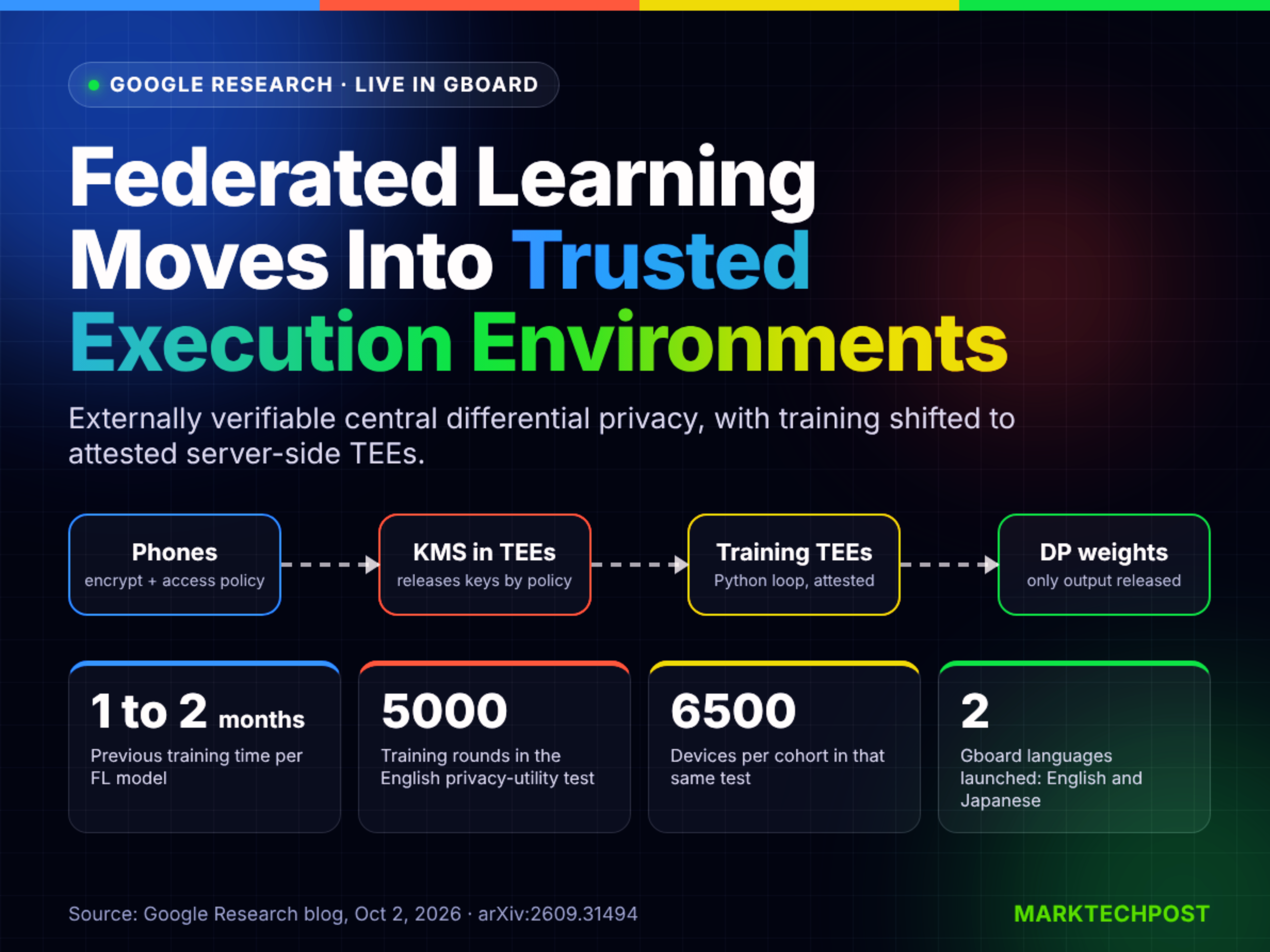
Google Research Moves Federated Learning Into TEEs: Gboard Now Trains With Externally Verifiable Differential Privacy
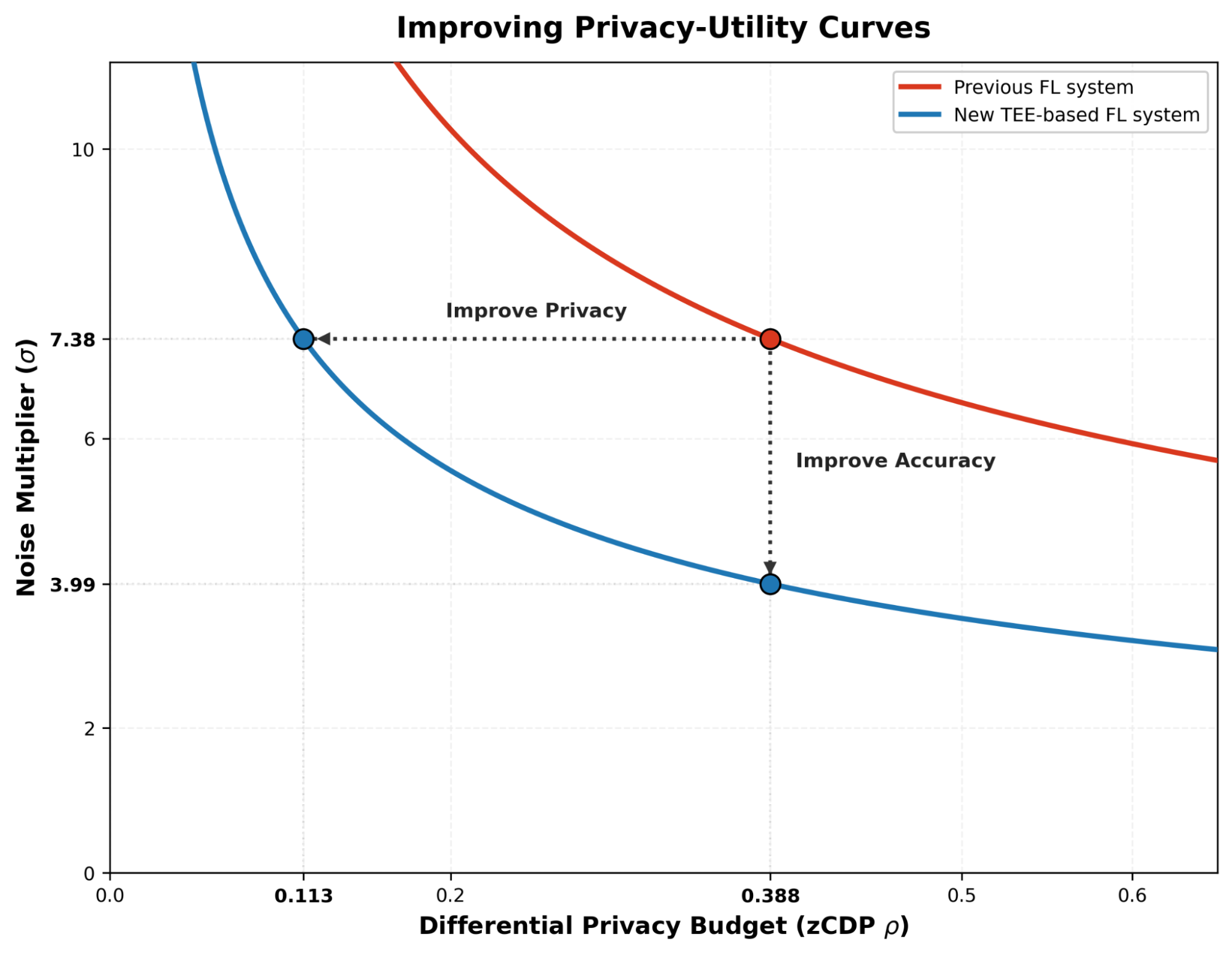
Google Research has announced a next-generation Federated Learning (FL) system built on Trusted Execution Environments (TEEs). The research team claims externally verifiable central differential privacy (DP) guarantees for FL for the first time. What Problem Does TEE-Based Federated Learning Solve? Google introduced Federated Learning FL in 2017. It powers next-word prediction and Smart Compose on Gboard, reply suggestions in Google Messages, and Smart Text Selection in Android. Earli
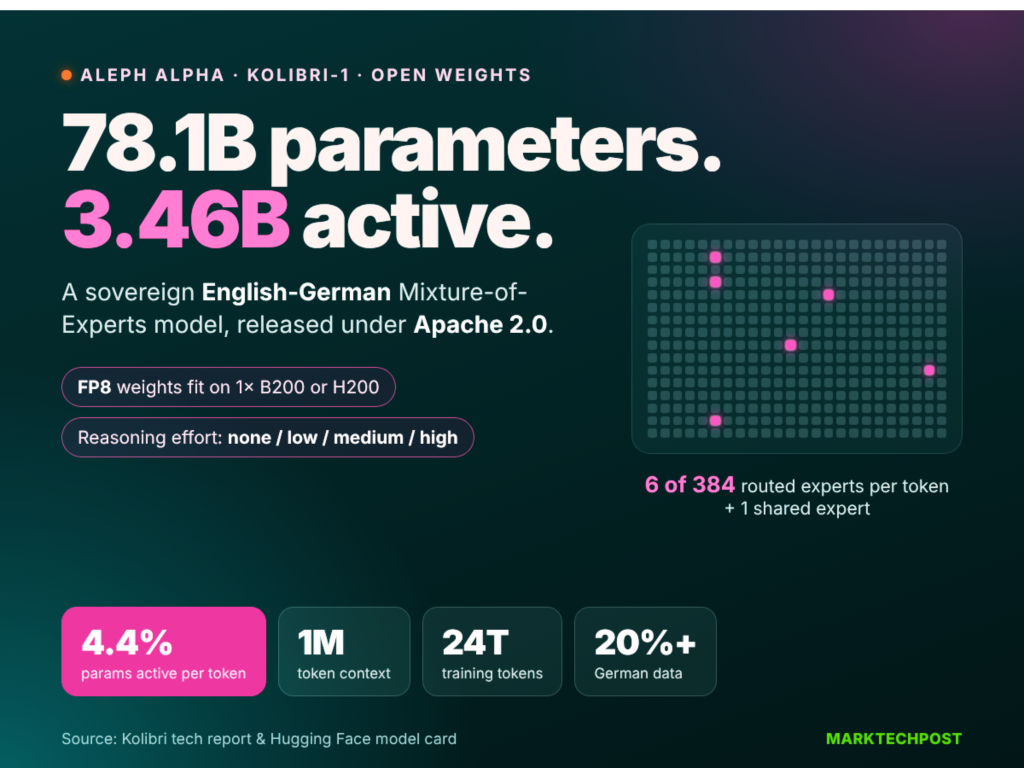
Aleph Alpha Releases Kolibri: A 78.1B Open-Weight English-German MoE Model With Only 3.46B Active Parameters
Aleph Alpha has released Kolibri, an open-weight Mixture-of-Experts (MoE) language model built for German and English. Kolibri has 78.1B total parameters but activates only 3.46B, or 4.4%, per token. It accepts up to 1,048,576 tokens of context, lets users set reasoning effort per request, and ships under the Apache 2.0 license on Hugging Face. The target is sovereign deployment in regulated sectors such as public administration, industry and aerospace. Is it deployable? Yes. The FP8 checkpo