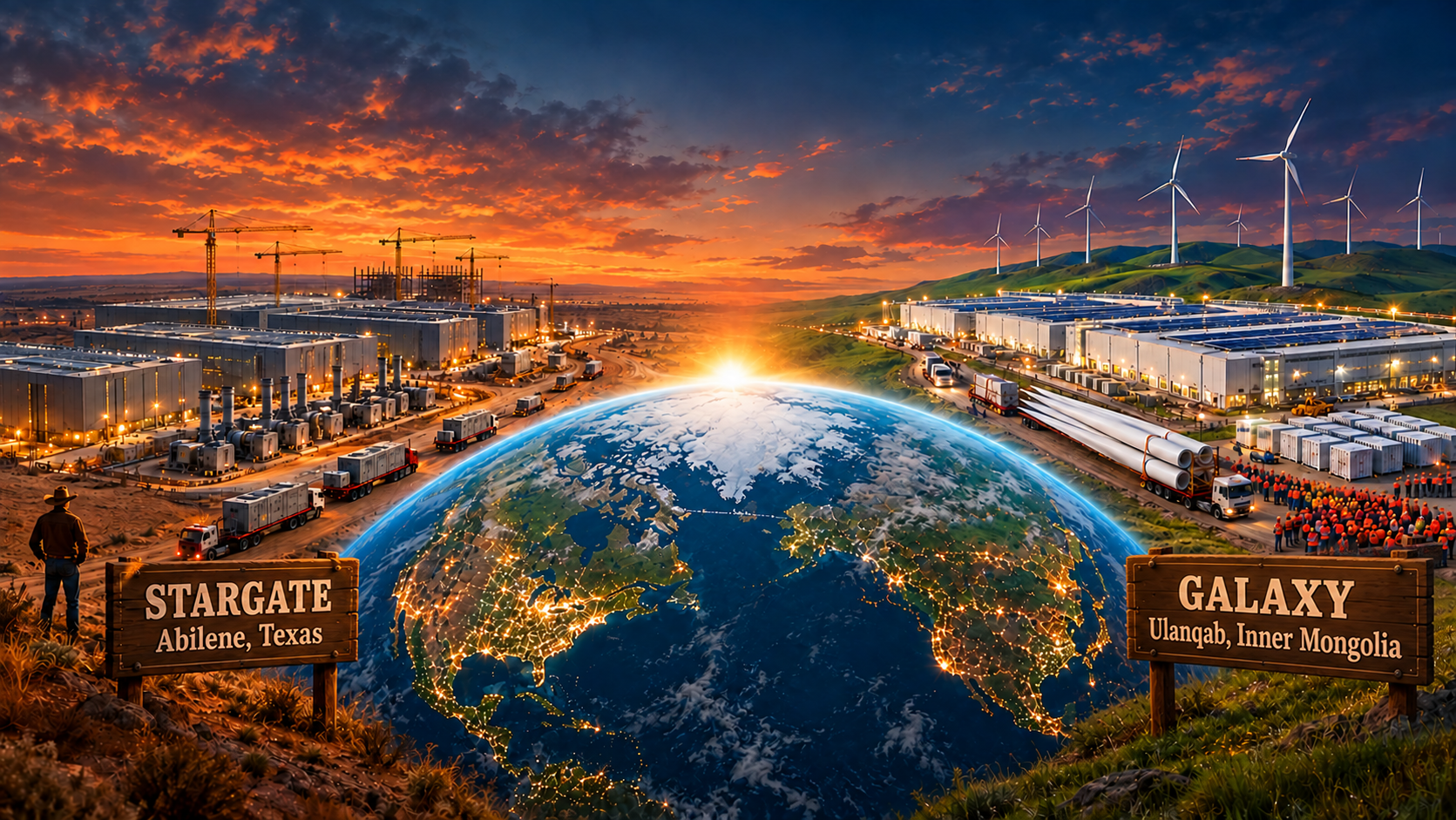
China's Galaxy datacenter rivals US Stargate scale
SemiAnalysis: We Visited China’s Stargate in Inner Mongolia
Stargate Abilene has become the symbol of America’s AI buildout. It is a gigawatt-scale campus on the Texas plains built for OpenAI. China has campuses on a similar scale, though few people outside the country have had a look inside. In September, we visited one, and we found the speed, scale, ultra low cost, and deep vertical integration astonishing.During the trip, we toured Inner Mongolia, China’s fastest-growing AI datacenter region. It's the “West Texas” of China, bu
Get smart on it
A Chinese datacenter campus in Inner Mongolia called Galaxy is being built to a scale comparable to America's Stargate facility in Texas, with planned capacity of up to 800MW. The first phase of 120MW was completed within a year at a fraction of US construction costs, using innovative approaches including direct DC power conversion with solid-state transformers, cooling systems without central chillers, and deep vertical integration where the owner company manufactures many components on-site. This matters because China's datacenter development demonstrates construction speeds, cost efficiency, and technical approaches that differ significantly from US practices, while Inner Mongolia is becoming the country's fastest-growing AI datacenter region with over 25GW of announced projects and no local opposition to development. The broader context is that industrial companies with expertise in energy, construction, or electrical equipment are pivoting into AI infrastructure across China, where datacenter projects create new demand for equipment they already produce.
Relevant courses
Want to go deeper than the news? Explore live, cohort-based AI courses taught by practitioners.
Browse AI courses on MavenRelated news

Elon Is Doing It Again: SpaceX Will Be The World’s Biggest AI Cloud
We wrote at length about how SpaceX’s plans for 10GW in 2027 was feasible, paving the way for +300b+ ARR. We received a lot of pushback from folks calling it impossible. Now, just two months later, we’re already seeing 3.6GW under construction across multiple sites, both existing and new. SpaceX has even revised its estimate up to ~13GW in 2027. This would be the largest amount of datacenter capacity ever built by any one company in that timeframe, roughly equivalent to all of Google

Data centers lost the midterms
Data center developers are poised to face a more restrictive building environment after voters across the country voted in candidates who favor moratoriums and ballot measures that put more obstacles on their expansion, delivering a stinging blow to a central pillar of the AI industry. Of voters polled by NBC News on Election Day, 76 percent said they opposed data centers in their communities. Dozens of local communities voted directly to restrict development through ballot mea
Also reported by Wired AI and TechCrunch

Crusoe sells troubled Wyoming data center project to Google
The deal highlights the challenges of developing massive AI data centers.
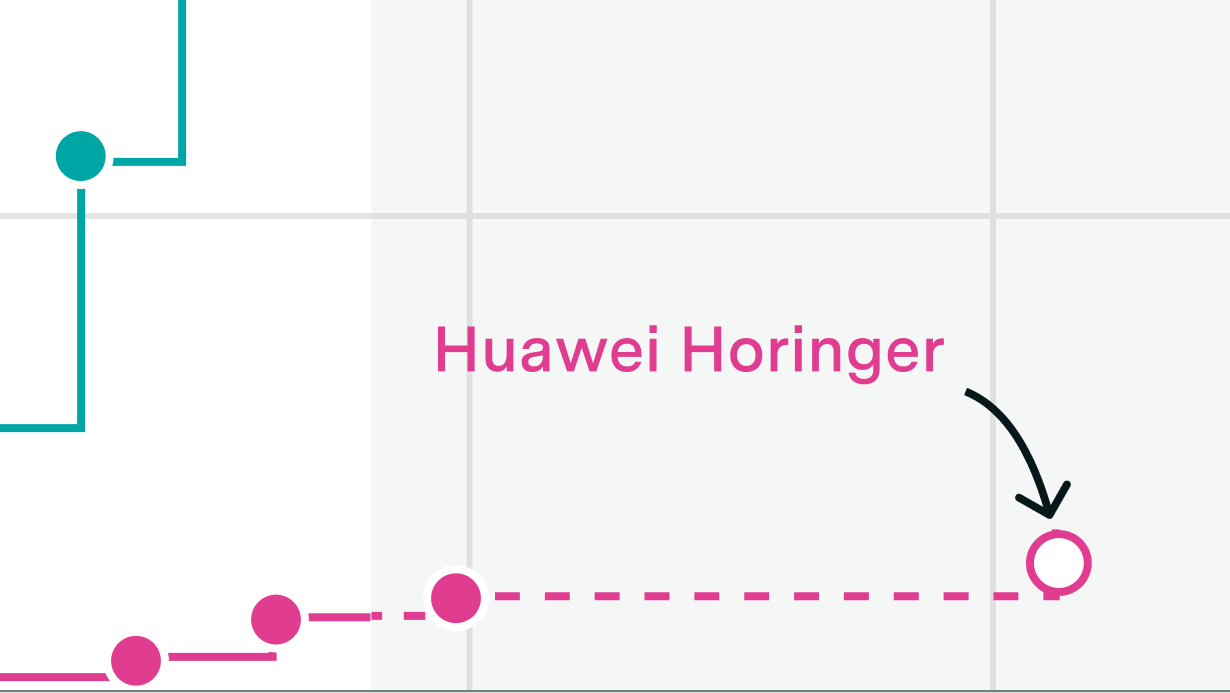
What Huawei’s Horinger data center reveals about China’s compute gap
Huawei’s AI data center in Horinger, Inner Mongolia, uses Ascend chips and has an estimated AI computing capacity that is just 7% that of the world’s largest AI data center, SpaceX’s Colossus 2 in Tennessee.

Protesters break into Microsoft data center site in Amsterdam
Members of the action group Geef Tegengas put a banner on a crane during a protest. | Image: Getty Images Protesters have broken into a construction site of a new Microsoft data center in Amsterdam this morning. Members of the Geef Tegengas group helped organize the protest against the construction of three 85-meter data center towers in the outskirts of Amsterdam. Reuters reports that around 100 people made it into the construction site, with some scaling a crane to place a "fu
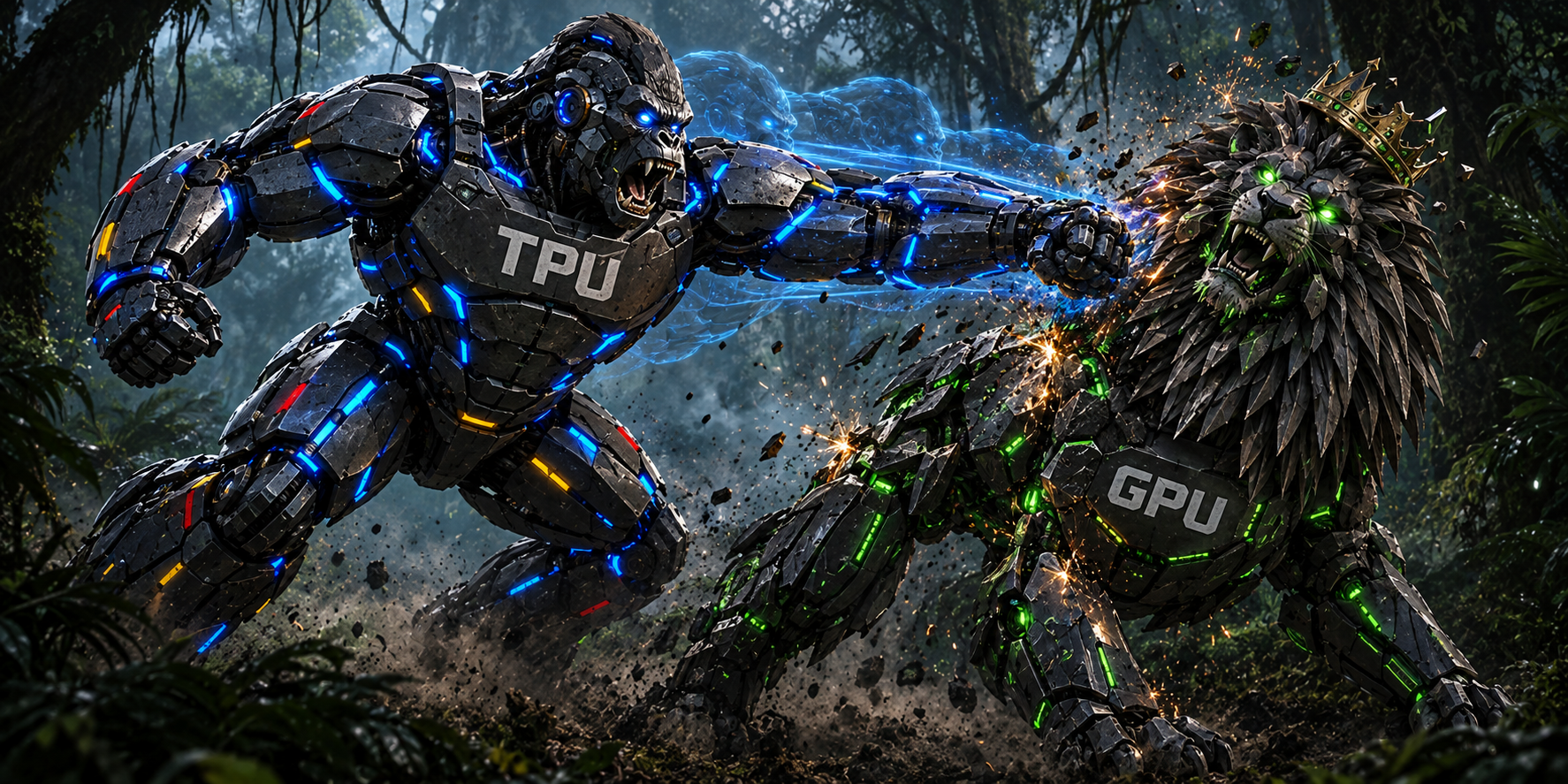
The Iron(wood) Throne: Google's TPU Stakes Its Claim on Inference
In November 2025, we published a newsletter saying that Google is selling TPUs to external customers. Since then, we have been proven right over and over again with Oracle, OpenAI, Anthropic, and Meta all becoming customers of TPUs just as our Accelerator Model reported.Hardware demand is only half the story, as NVIDIA’s moat has historically been its software and large developer ecosystem. This is where TPU is also making headway, partnering with upstream maintainers across the entire ec