
AI data center power demand strains US grid
Data Center Knowledge: The Power Challenge Behind Hyperscale AI Expansion
The number of new AI data center projects being announced continues to far outpace the number delayed by local opposition.
Get smart on it
Hyperscale AI data center developers are massively increasing infrastructure investment, with combined spending from major tech companies expected to exceed $700 billion this year compared to $64 billion in 2018. This expansion is straining the power grid, as electricity demand from data centers is projected to rise from 35 GW in 2024 to 125 GW by 2030, while grid planners' forecasts for needed additional capacity have climbed nearly sevenfold in recent years. Although community opposition has grown, with over 500 data center moratoria recorded across 42 states and $130 billion in projects rejected in early 2026, the momentum of new project announcements continues to outpace delays. To meet power demands faster than utilities can deliver, developers are increasingly building or contracting for their own power generation, turning to natural gas as the fastest route to reliable power, while also investing in nuclear energy, battery storage, and renewables.
Relevant courses
Want to go deeper than the news? Explore live, cohort-based AI courses taught by practitioners.
Browse AI courses on MavenRelated news

Meta plans up to $95 billion in stock sales to fund its AI buildout
Meta plans to sell new stock to raise money for its AI infrastructure buildout. The article Meta plans up to $95 billion in stock sales to fund its AI buildout appeared first on The Decoder.

SpaceX locks in $40B GPU financing deal with Apollo
SpaceX has locked in a binding commitment for roughly $40 billion in financing to pay for AI chips and related data center equipment, the company disclosed in a regulatory filing Monday. In a statement, SpaceX called it the “largest committed GPU financing” ever.

Data center backlash is uniting America
If there's one issue that seems to activate all kinds of voters in 2026, it's data centers. The rapid buildout of these massive server storage facilities - and the infrastructure construction and expenses that come with them - has sparked local opposition in communities across the country and become a major issue in many congressional and gubernatorial campaigns. At the same time, tech money has been pouring into many of these races. Leading the Future, a super PAC backed by ve

Wall Street's fastest traders are building data centers and backing chip startups to stay ahead in AI
High-frequency traders like Jane Street and Hudson River Trading are now racing each other for AI computing power. The article Wall Street's fastest traders are building data centers and backing chip startups to stay ahead in AI appeared first on The Decoder.

Google Cloud Launches Agent Compute Engine: A MicroVM per AI Agent
Google Cloud has announced Agent Compute Engine, a compute service built specifically for AI agents. Google Agent Compute Engine gives each agent its own hardware-isolated microVM. The sandbox holds zero credentials. The service already powers Gemini as an agent for work tasks. Google unveiled it this week at AGNTCon + MCPCon. Customer preview is targeted for the coming months. The pitch: VM-grade isolation with container-like speed and density. TL;DR Unit: One hardware-isolated microVM
Also reported by The Decoder
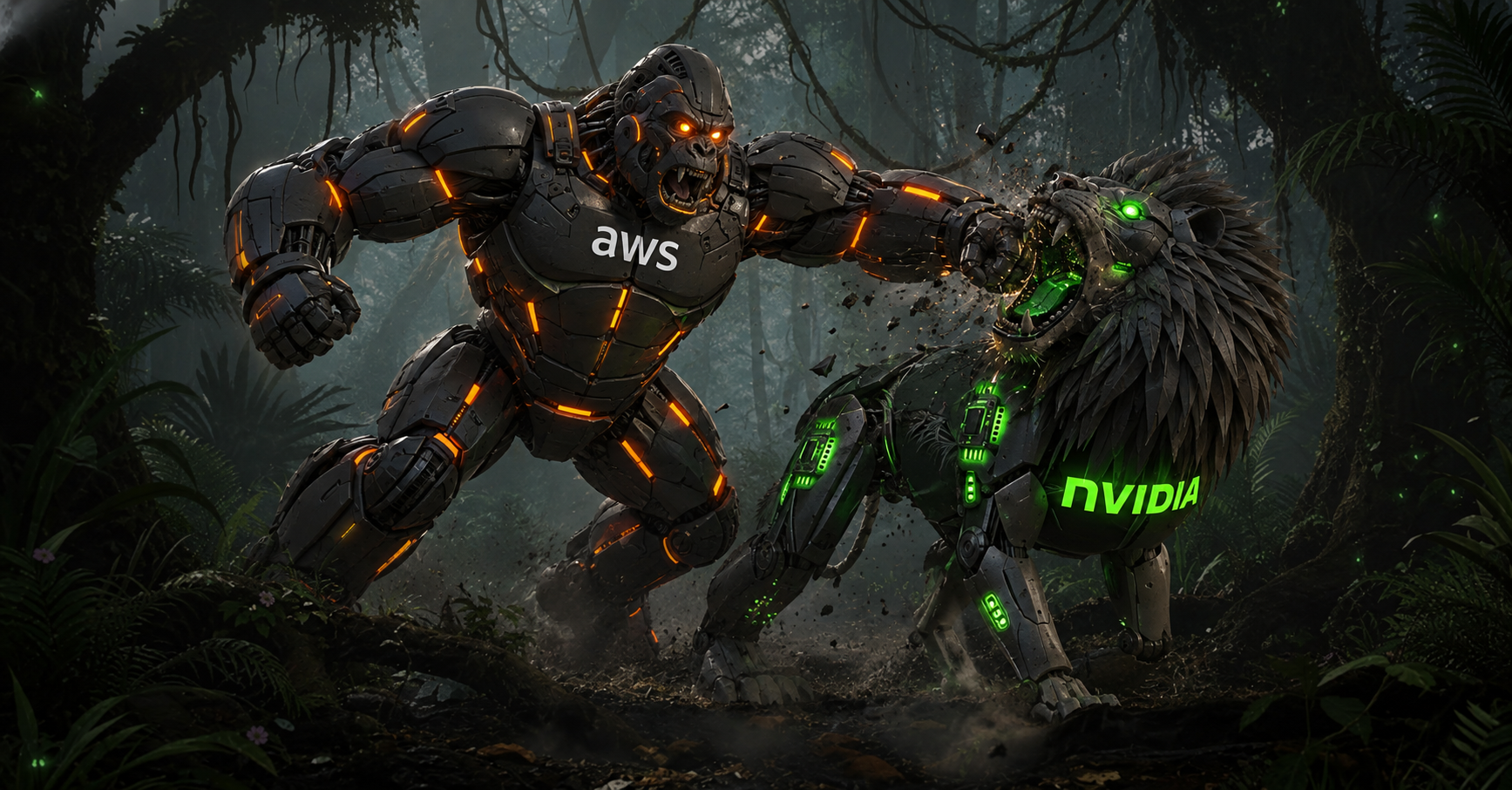
Amazon’s Trainium Takes a Strike at the Training King
Trainium has already proven itself in the realm of inference. Anthropic is running production inference and RL rollouts on Trainium2 and Trainium3. Historically, Trainium has been great for inference but not the best fit for research training. In inference, the model architecture changes at a much slower pace compared to training, where researchers iterate on many different experiments and ablations of model architecture and need a stack that covers a broad API surface. In the past, that is wher