NVIDIA Announces DGX Spark 64GB: A 1-PetaFLOP Grace Blackwell Desktop for Local AI Agents, Fine-Tuning, and Inference
NVIDIA announced a new 64GB configuration of DGX Spark — from Acer, ASUS, Dell, Gigabyte, HP and MSI — its GB10-powered desktop AI system. It gives developers a way to start with one system for local models and agents, then cluster two 64GB units for 128GB of memory across the cluster and more compute when workloads grow. The direct message is: Run open models and always-on agents on your own desk, then cluster DGX Spark system as the work grows – instead of on a metered API. The ti
Get smart on it
NVIDIA announced a new desktop AI system with 64GB of memory designed to run open-source AI models and agents locally instead of through cloud services. The system combines a GPU with 5th-generation Tensor Cores and a 20-core CPU, delivering up to 1 petaFLOP of computing power for AI tasks. This matters because AI agents consume tokens continuously through tool use and multi-step planning, which costs money on cloud APIs but has no per-token fee on owned hardware. The system can run open models in the 30-35 billion parameter range, and two units can be clustered together to double memory and computing capacity as workloads grow.
Related news

Five Ways to Assess Your AI Infrastructure Readiness
AI success hinges on infrastructure. Use this five-part framework to evaluate power, cooling, security, cost strategy, and scalability.
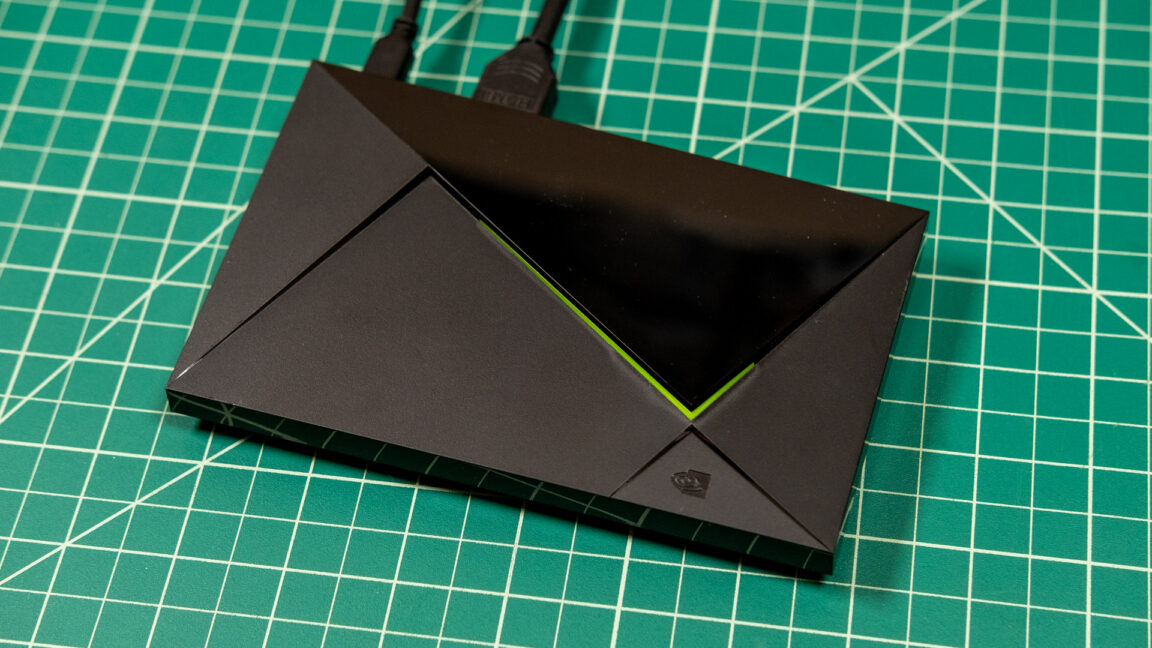
The 7-year-old Nvidia Shield TV is now $100 more expensive thanks to AI
The era of generative AI has upended technology supply chains, and there is one ironclad rule in 2026: If it has memory or storage, it's getting more expensive. Even devices with years-old tech inside are still apparently subject to that unwritten rule. Nvidia has just announced that the Shield TV Pro is getting $100 more expensive, effective immediately. The most recent version of the Shield streaming box debuted in 2019, running Android TV with AI upscaling and hardware decoding for almost any


