
Five Ways to Assess Your AI Infrastructure Readiness
AI success hinges on infrastructure. Use this five-part framework to evaluate power, cooling, security, cost strategy, and scalability.
A framework identifies five key areas organizations should evaluate before deploying AI systems: foundational infrastructure design, power and cooling capacity, security measures, cost strategy alignment, and scalability planning. The assessment matters because infrastructure limitations such as insufficient power, cooling shortfalls, and security gaps can cause AI initiatives to stall, become difficult to scale, or expose sensitive data to risk. Organizations must evaluate their existing facilities honestly against what their AI workloads will demand, as getting this assessment wrong means the difference between an AI investment that succeeds and one that fails to deliver results.
- NVIDIA Announces Rubin HPC, A New GPU to Accelerate Agents for Science, Engineering and Analytics · NVIDIA Blog
- NVIDIA DGX Spark Developer Kit Turns a Desk Into a Supercomputing Lab · NVIDIA Blog
- US data centers now burn more electricity than a midsized country · The Verge
- All of today’s AI news, biggest first →
One short email a day with the stories that matter. Free. Unsubscribe with one click.
Want to go deeper than the news? Explore live, cohort-based AI courses taught by practitioners.
Browse AI courses on Maven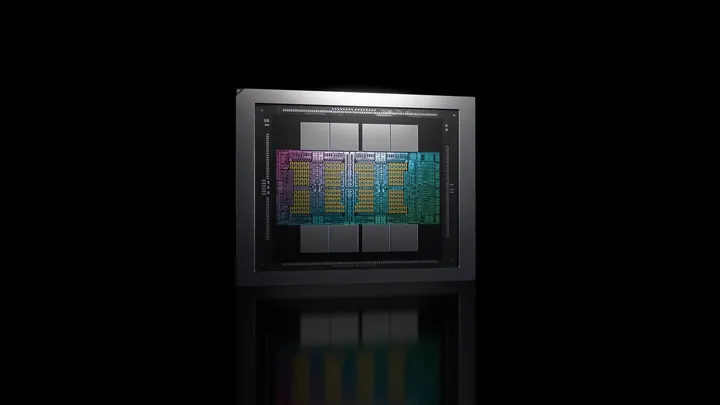
NVIDIA Announces Rubin HPC, A New GPU to Accelerate Agents for Science, Engineering and Analytics
Announced today at SC26, NVIDIA Rubin HPC is a new GPU in the NVIDIA Vera Rubin platform designed to accelerate simulation and data processing for science, engineering and analytics workflows. As agents help scientists and engineers explore more candidate materials, molecules and designs, they rely on simulations to test those ideas and guide their next steps. Rubin HPC will accelerate those simulations, shortening the path from exploration to scientific discovery and industrial design. The Rub
Also reported by SiliconANGLE

NVIDIA DGX Spark Developer Kit Turns a Desk Into a Supercomputing Lab
At SC26, an annual supercomputing conference taking place this week in Chicago, NVIDIA is introducing the DGX Spark HPC Developer Kit for researchers, academics and developers. The kit is a four-node cluster of NVIDIA DGX Spark systems, each connected directly to its two neighbors in a ring, with an NVIDIA HPC SDK installation playbook coming soon. Researchers get a place at their desk to run multi-node scientific workloads, AI models and agents, instead of waiting for time on a shared GPU clust

US data centers now burn more electricity than a midsized country
Fossil fuels are still the biggest source of electricity for hyperscale data centers in the US, a new paper published in the journal Nature Sustainability shows. They likely burn through more electricity collectively than many countries do, resulting in a serious amount of greenhouse gas emissions. The study homes in on hyperscale facilities - the massive structures spanning millions of square feet that developers are racing to build in large part to support generative AI. Rese
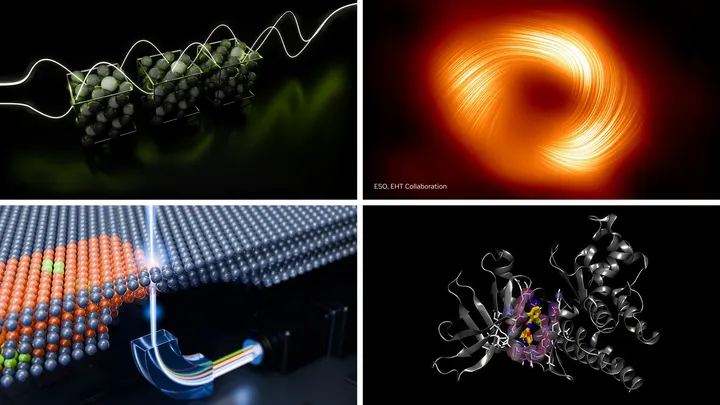
NVIDIA CUDA-X Libraries Give Agents the Tools to Accelerate Scientific Discovery
With expanded NVIDIA CUDA-X libraries, including cuPhoton, cuPotential and cuSpa, researchers can sift through vast amounts of data to accelerate research, from astrophysics and materials science to single-cell biology. The speedups are helping scientists analyze larger datasets and model more complex systems. The new libraries give AI agents the tools to help researchers make discoveries faster than ever. Read All NVIDIA Announcements From SC26 Bringing Black Holes Into Focus Seei
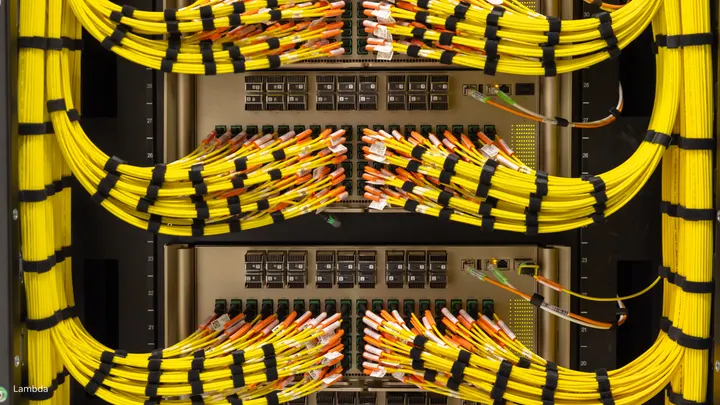
Lambda Boosts AI Factory Resiliency and Efficiency With NVIDIA Photonics
To train an AI model, thousands of GPUs have to work together, requiring a network that’s fast, efficient and resilient. Lambda is tackling the network piece of the puzzle with NVIDIA Photonics co-packaged optics (CPO) switches. The cloud provider is using the switches to connect NVIDIA GB300 NVL72 racks with more than 10,000 GPUs, delivering lower power, higher resiliency and longer mean time between interruptions (MTBI) to an AI factory at scale. “Networking has to keep pace with the demands

Ars Live: What drone attacks on data centers mean for modern life in the cloud
Drone and missile strikes have inflicted unprecedented damage on data centers in Eastern Europe and the Middle East this year, disrupting cloud services for millions of people and permanently deleting some Amazon Web Services customer data. This trend represents a new concern for Big Tech companies—but also for governments and everyone else who depends on common digital services in modern life. To explore what this all means for modern society’s reliance on cloud resilience, I will be hosting a