With most information hidden, the game Stratego had stumped AI, until now
Deep Blue took down Garry Kasparov at chess in 1997, AlphaGo beat Lee Sedol at Go in 2016, and poker bots have been beating professionals for years. But one classic game called Stratego held out. Even DeepMind, with its exceptional budget, couldn't build a machine that reliably beat the best human players. Now, a team of researchers from Carnegie Mellon, MIT, New York University, and Stanford University has done it. Their AI, called Ataraxos, beat Pim Niemeijer, arguably the best Stratego player
Researchers have created an AI system that beats the best human players at Stratego, a board game where most piece identities remain hidden until pieces clash in battle. The breakthrough matters because Stratego had resisted AI solutions despite successes in chess, Go, and poker, due to its combination of massive hidden information spread across thousands of moves and the strategic need to bluff effectively. The key innovation was adding a second neural network that guesses opponent positions based on their movements, allowing the AI to sample plausible scenarios rather than evaluating all possible arrangements. The system was trained efficiently on consumer-grade hardware for a fraction of the cost of previous attempts, suggesting the techniques could apply to real-world problems involving incomplete information and strategic opponents.
- MLCommons Releases MLPerf Training v6.1 Results, Spotlighting Recent Advances in AI Training · MLCommons
- Anthropic says AI is eroding Nvidia's CUDA lead, cutting an AMD chip switch from months to three days · The Decoder
- Google Deepmind's AlphaProof Code verified Signal's cryptographic core in four weeks instead of years · The Decoder
- All of today’s AI news, biggest first →
One short email a day with the stories that matter. Free. Unsubscribe with one click.
Want to go deeper than the news? Explore live, cohort-based AI courses taught by practitioners.
Browse AI courses on Maven
MLCommons Releases MLPerf Training v6.1 Results, Spotlighting Recent Advances in AI Training
Today, MLCommons® announced new results for the MLPerf® Training v6.1 benchmark suite. The two new benchmarks added in this round, and the submissions received, demonstrate the impact of recent architectural advances in AI training systems and the increasing diversity of the hardware used to train them. “We’ve reached an exciting new threshold for the MLPerf Training benchmark suite, with a higher level of participation in this round, the representation of both established and emerging hardw
Also reported by NVIDIA Blog
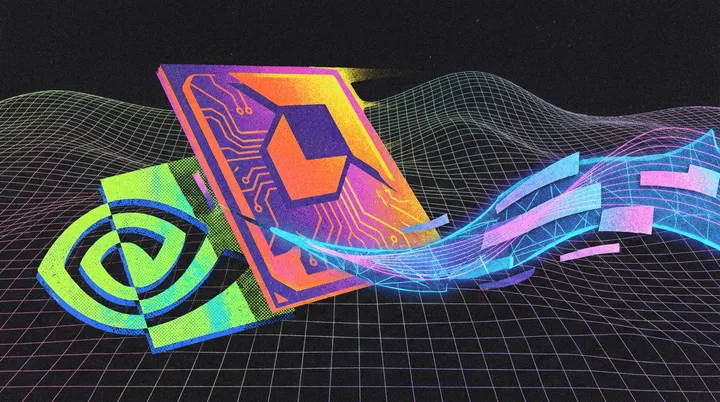
Anthropic says AI is eroding Nvidia's CUDA lead, cutting an AMD chip switch from months to three days
Anthropic claims it used AI itself to breach Nvidia's CUDA moat. The company's in-house model Mythos reportedly ported Claude to AMD GPUs in just three days, with almost no human intervention. Anthropic now runs Claude on four chip families and aims to cut costs and reduce vendor dependencies. The article Anthropic says AI is eroding Nvidia's CUDA lead, cutting an AMD chip switch from months to three days appeared first on The Decoder.

Google Deepmind's AlphaProof Code verified Signal's cryptographic core in four weeks instead of years
Google Deepmind's AlphaProof Code mathematically verified Signal's cryptographic core code in four weeks, a process that typically takes years. AI agents powered by Gemini Carbon wrote more than six million lines of proof code and flagged only about one percent for human review. Deepmind plans to extend the method to critical infrastructure like power grids and medical devices. The article Google Deepmind's AlphaProof Code verified Signal's cryptographic core in four weeks ins

A step toward defining the Standard Model on a lattice
Explore a candidate nonperturbative lattice definition of the Standard Model and how GPT-6 Astra helped turn the idea into a detailed proof.
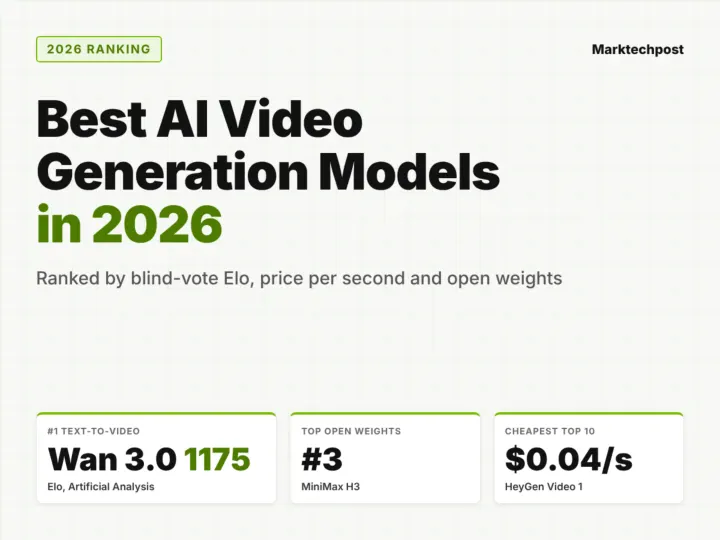
Best AI Video Generation Models in 2026: Elo, Price per Second, Open Weights
The AI video leaderboard looks very different from 12 months ago. Native audio is now table stakes. Clips run 15–30 seconds. And an open-weights model sits in the top 3. This ranking (as of Nov 13, 2026) uses one quality signal: blind human-preference Elo from the Artificial Analysis Video Arena. We pair it with API price per second and the license status of the weights. You can check the deployment options and specs here through our GPULeaderboard.com chrome extension. Methodology Qua
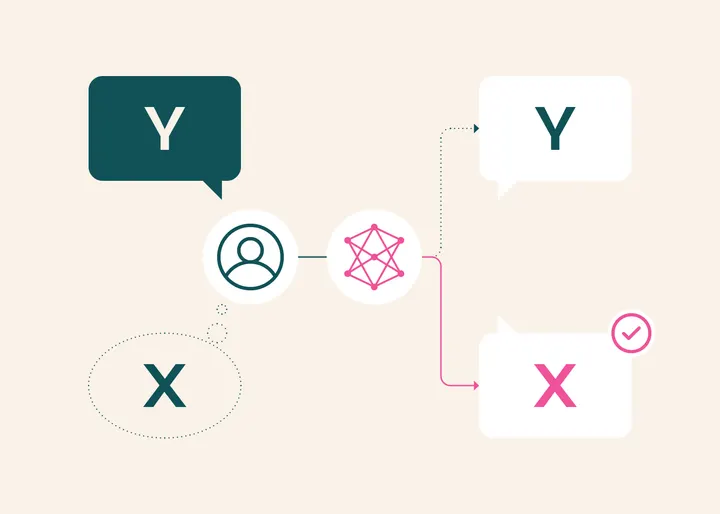
XYBench: Helping with the problem behind the question
Understanding what a question actually asks matters more than raw performance scores for building reliable AI systems.