NVIDIA Researchers Introduce Physis-Lang: Self-Evolving Physical Language That Lifts Cosmos 3 Past Veo 3.1 on Physics Benchmarks
Video world models can render convincing clips that still break physics. Butter spreads like paint. Balls pass through walls. A team from NVIDIA, MIT and the University of Oxford argues the fix can come from language itself, not from extra visual, latent or numerical signals. Their framework, Physis-Lang, treats physical language as a shared, optimizable representation. The same text drives data curation, model training and inference. On the public Physics-IQ Verified leaderboard snapshot da
Get smart on it
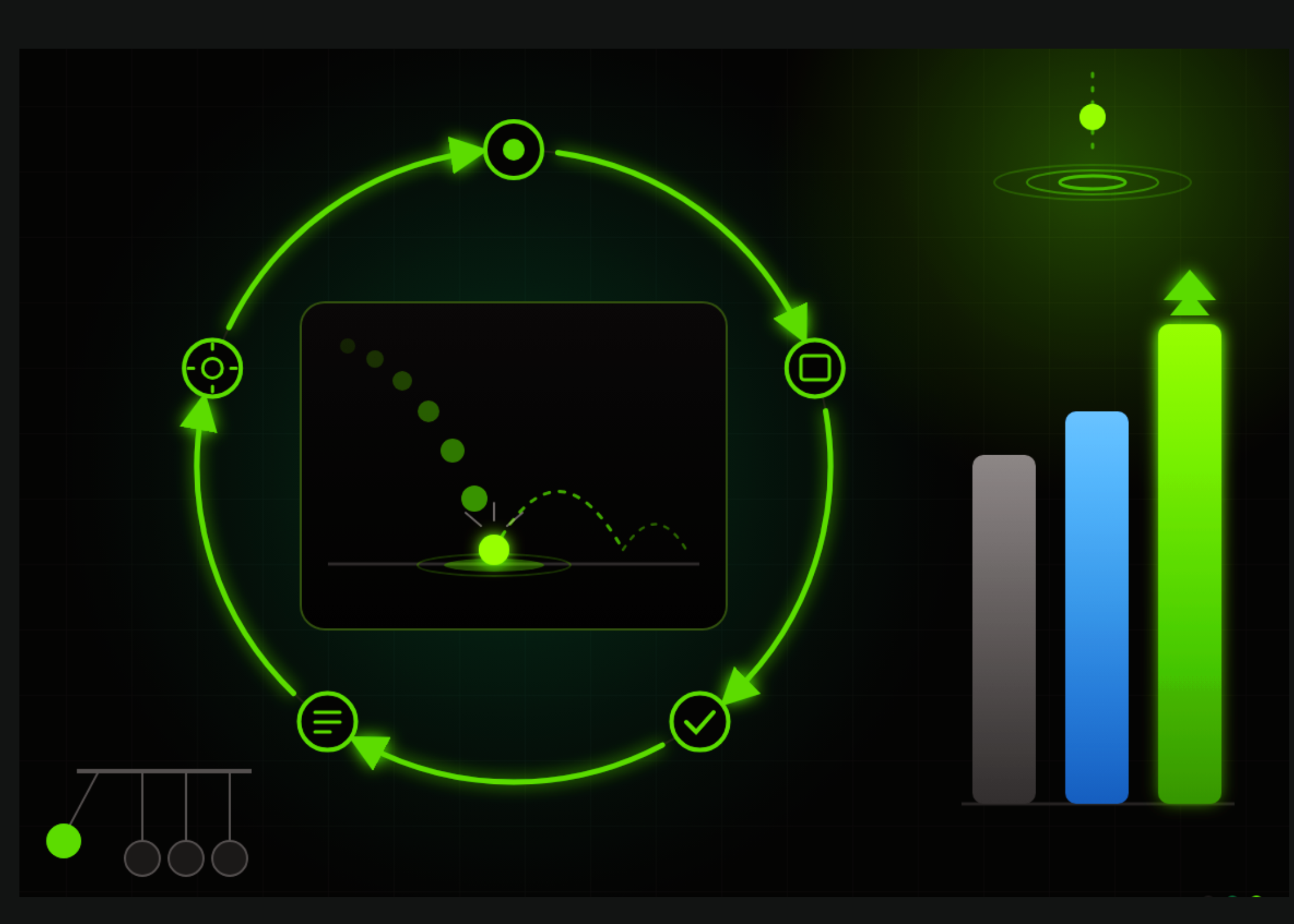
Video generation models can create realistic-looking clips that still violate the laws of physics, such as butter spreading like paint or balls passing through walls. Physis-Lang addresses this by using language-based physics reasoning rather than additional visual or numerical signals, where text descriptions explain not just what happens in a scene but why, including entities, causes, interactions, and governing principles. The framework uses a self-evolving loop where a critic model scores captions on their accuracy and completeness against human-verified physical assertions, with the instruction prompt being refined across iterations while the base captioner remains frozen. When applied to video generation, Physis-Lang achieved top performance on physics benchmarks and outperformed a competing system on most measured tests.
Related news

With most information hidden, the game Stratego had stumped AI, until now
Deep Blue took down Garry Kasparov at chess in 1997, AlphaGo beat Lee Sedol at Go in 2016, and poker bots have been beating professionals for years. But one classic game called Stratego held out. Even DeepMind, with its exceptional budget, couldn't build a machine that reliably beat the best human players. Now, a team of researchers from Carnegie Mellon, MIT, New York University, and Stanford University has done it. Their AI, called Ataraxos, beat Pim Niemeijer, arguably the best Stratego player

Opus 5.5 loves to tell you ‘this matters’ (and other AI writing tells)
Opus 5.5’s biggest tell is the word “dependable,” which pops up 23 times more often than in human samples.