NVIDIA Kumo Tabular Sets a New Accuracy-Efficiency Frontier for Tabular Prediction
The model addresses a long-standing tension between prediction accuracy and computational cost for structured data used across finance, healthcare, and enterprise applications.
Get smart on it
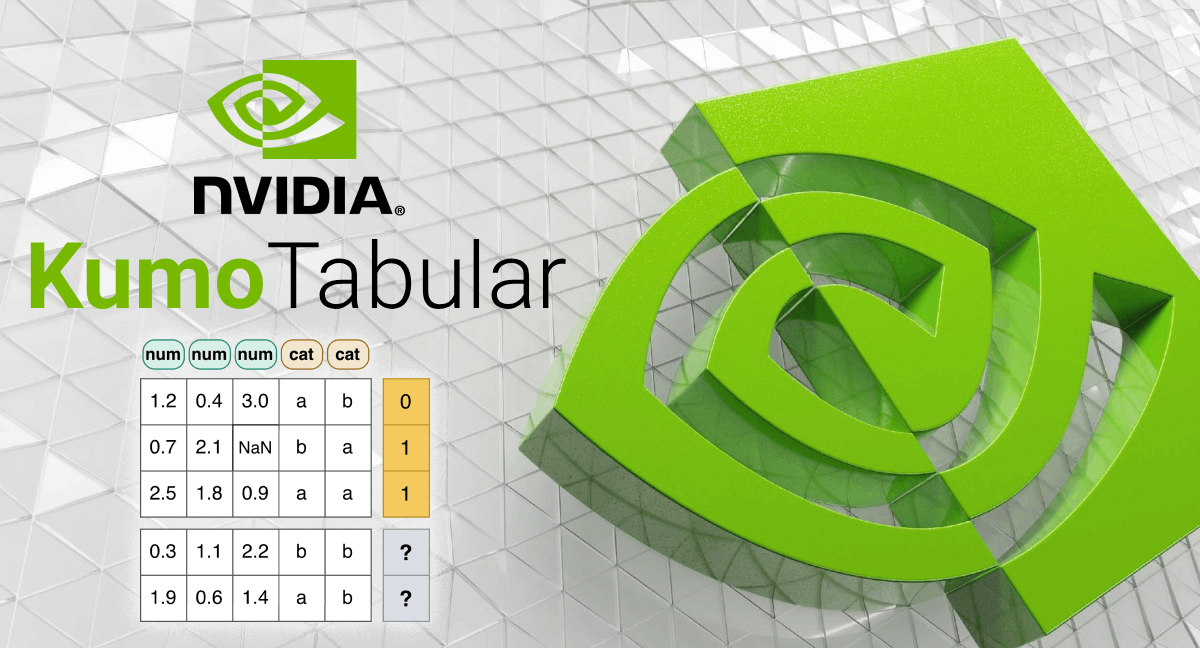
Kumo Tabular is an open foundation model for tabular data that makes predictions on new rows without requiring training, tuning, or feature engineering. Unlike traditional machine learning approaches that require collecting labels and engineering features for each new task, this model uses in-context learning, a method where a pretrained model reads labeled rows as context and directly predicts labels for new rows in a single forward pass. The model was pretrained entirely on artificial tables and comes in three sizes, ranked first on four performance benchmarks for tabular prediction tasks.
Related news

With most information hidden, the game Stratego had stumped AI, until now
Deep Blue took down Garry Kasparov at chess in 1997, AlphaGo beat Lee Sedol at Go in 2016, and poker bots have been beating professionals for years. But one classic game called Stratego held out. Even DeepMind, with its exceptional budget, couldn't build a machine that reliably beat the best human players. Now, a team of researchers from Carnegie Mellon, MIT, New York University, and Stanford University has done it. Their AI, called Ataraxos, beat Pim Niemeijer, arguably the best Stratego player

Opus 5.5 loves to tell you ‘this matters’ (and other AI writing tells)
Opus 5.5’s biggest tell is the word “dependable,” which pops up 23 times more often than in human samples.