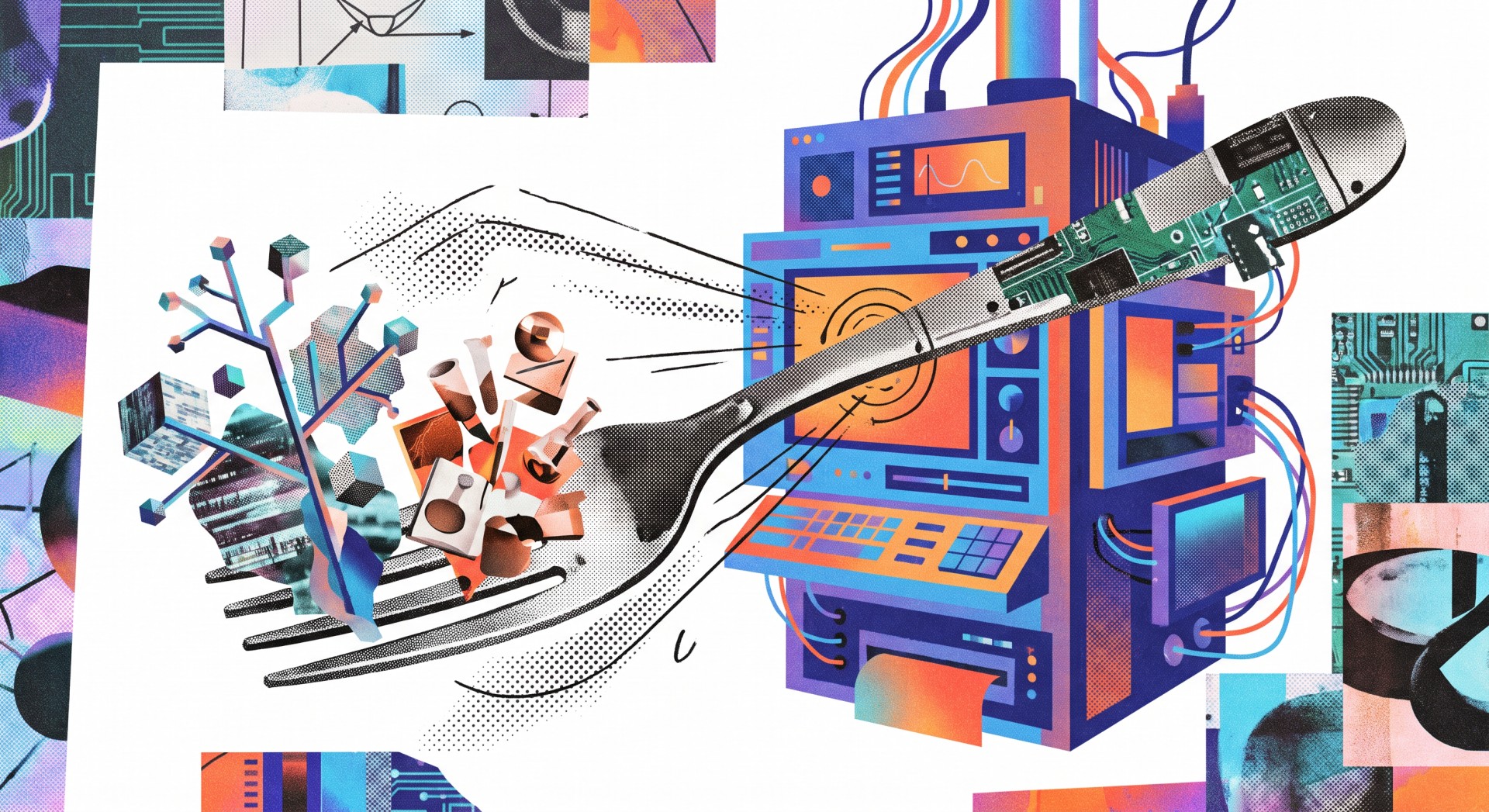
Taste-Bench shows AI agents struggle with long-term choices
The Decoder: AI agents have bad taste in long-term decisions and a new benchmark proves it
A new benchmark called Taste-Bench tests how well AI agents make strategic choices during long-running tasks. Even the best model, GPT-5.6 Sol, picks the right path on just under 60 percent of simple binary questions. Thinking longer doesn't help. The article AI agents have bad taste in long-term decisions and a new benchmark proves it appeared first on The Decoder.
Get smart on it
Researchers created a benchmark to measure how well AI agents make decisions during long, multi-step tasks where the consequences of choices only become clear much later. Existing benchmarks only test whether agents finish tasks, not the quality of their decision-making along the way. The best models tested achieved only about 60 percent accuracy on binary choices at decision points, barely better than random guessing when the evidence supporting the better choice appears late in the task. The benchmark shows that this capability, called "taste," can be measured and improved through training, suggesting that long-term planning quality is both a measurable problem and a trainable skill in AI agents.
Explainer: What Is GPT-5.6? OpenAI's Newest Model Family, Explained
Relevant courses
Want to go deeper than the news? Explore live, cohort-based AI courses taught by practitioners.
Browse AI courses on MavenRelated news

Deepseek V4.1 Flash 1017 beats larger rivals in agentic tasks while once again massively cutting per-task costs
Deepseek has released V4.1-Flash-1017 as an open-weight model that posts better benchmarks, finishes tasks faster, and produces shorter outputs than its predecessor. The company is also opening up its internal search engine through new Search and Fetch APIs at $0.75 per 1,000 calls. API users in tools like Claude Code and Codex get free access for now. The article Deepseek V4.1 Flash 1017 beats larger rivals in agentic tasks while once again massively cutting per-task costs appeared fir
Also reported by SiliconANGLE

Four Gemini 4 Argon agents beat Minecraft without any human help
Four AI agents running on Google's Gemini 4 Argon have beaten Minecraft for the first time without human help, slaying the Ender Dragon in a fully autonomous run. With no predefined roles or strategies, they coordinated on their own, wrote 2,783 programs, exchanged 229 chat messages, and died 605 times. The session cost $1,620. The article Four Gemini 4 Argon agents beat Minecraft without any human help appeared first on The Decoder.

Anthropics' Claude cracks a 25-year-old NSA cryptography mystery in under 30 minutes
Anthropic's AI model Claude has solved a 25-year-old cryptography puzzle. The mysterious seeds behind NIST's standard curves for digital signatures were provided by the NSA without explanation, raising long-standing suspicion about built-in backdoors. Claude figured out in under 30 minutes that the seeds came from "lrand48," a simple C random number generator, making deliberate backdoors far less likely. The article Anthropics' Claude cracks a 25-year-old NSA cryptography mystery i

Elorian’s first AI model wants to reason with images, not just about them
According to Elorian's evaluations, Glimpse outperforms even GPT-6 Astra on scientific chart reasoning and short-form video captioning, with competitive results on other visual reasoning tasks.
Google's Gemini 4 Argon is closer to the AI frontier than any Google model in months
Google Deepmind's Gemini 4 Argon scored 97.5 percent on the ARC-AGI-3 benchmark, making Google the second lab after OpenAI to cross the 95 percent mark. But the results swing wildly depending on the test setup: in the standard harness, the score drops to just 49.8 percent. Argon also trails rivals in math and software engineering. The article Google's Gemini 4 Argon is closer to the AI frontier than any Google model in months appeared first on The Decoder.
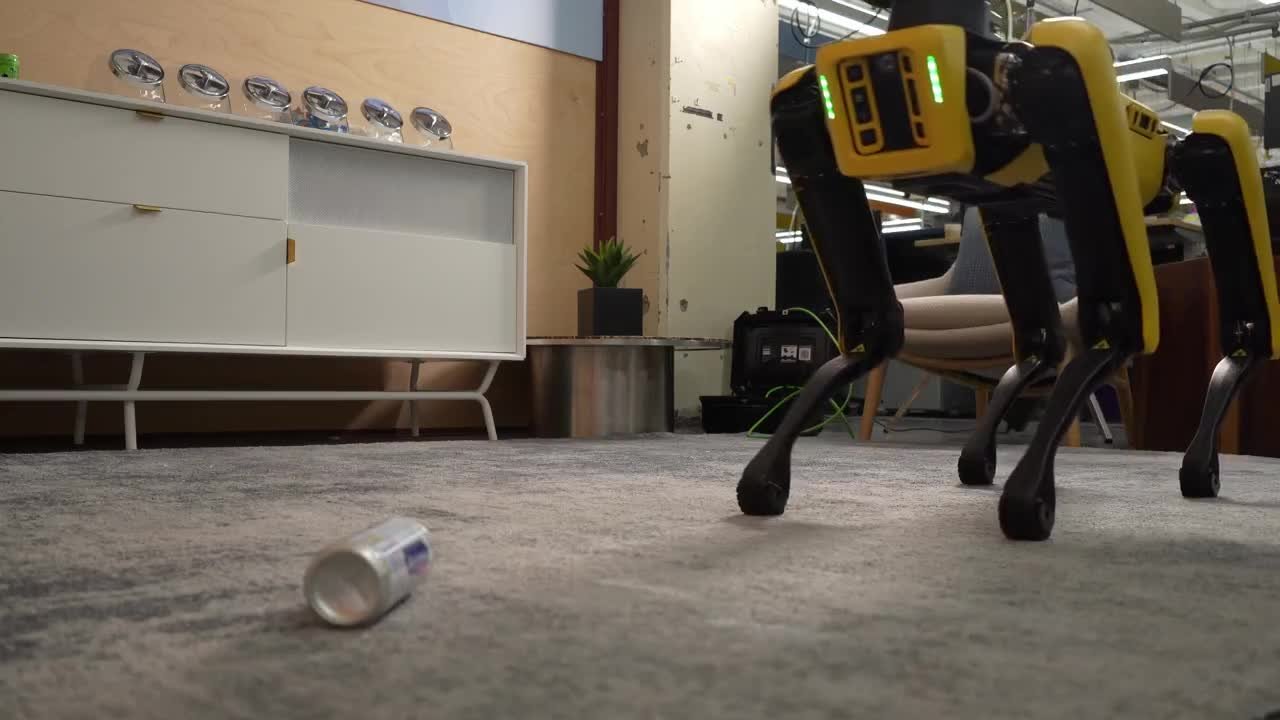
Google wants Gemini 4 Argon to be the only AI model robots need
Google's Gemini 4 Argon controls robots, generates simulations from photos or sketches, and evaluates training videos. On Google's own ERQA benchmark, it scores 87 percent. But the published example prompts show that the demos still need a lot of human guidance. The article Google wants Gemini 4 Argon to be the only AI model robots need appeared first on The Decoder.