
Enterprises shift AI focus from insights to autonomous action
SiliconANGLE: What to watch for as enterprises move from AI experimentation to autonomous operations
For the past three years, the enterprise artificial intelligence conversation has focused on what models can say. The next three years will be about what systems are allowed to do. That’s a harder problem that better models alone won’t solve. On Wednesday, Oct. 28, I’ll be in Boston for the Bloomberg Tech Event: Building the […] The post What to watch for as enterprises move from AI experimentation to autonomous operations appeared first on SiliconANGLE.
Get smart on it
Enterprises are shifting from using AI to generate insights toward allowing AI systems to take autonomous action, which requires fundamentally different safeguards and operational approaches. The key challenge ahead is not whether AI models can work better, but whether organizations can safely trust AI agents to make decisions and take actions without human approval at each step. This matters because autonomous AI systems managing infrastructure decisions at machine speed require new ways to measure success, new security models designed for nonhuman identities, and modernized network infrastructure. The transition depends less on technological capability than on solving organizational, data, and trust problems, with security leaders and operators ultimately deciding how quickly autonomous operations can proceed.
Relevant courses
Want to go deeper than the news? Explore live, cohort-based AI courses taught by practitioners.
Browse AI courses on MavenRelated news
OpenAI's latest AI models are coming to Google Cloud and Antigravity
Google would certainly prefer that everyone used its Gemini models with Google Cloud services, but soon, you'll have more options. OpenAI and Google have come to an arrangement that will see the former's frontier models arrive in Google Cloud services. Perhaps more importantly, GPT models will soon appear in Antigravity, Google's agent-powered coding tool. For enterprise customers and AI enthusiasts, OpenAI's latest model will appear in Google's "Model Garden" in the coming weeks, adding to its
Also reported by The Decoder and SiliconANGLE

Apple releases iOS and macOS 27.2 with new Siri AI features, new Music logo
Today, Apple rolled out the 27.2 updates for its operating systems, including iOS, macOS, watchOS, tvOS, visionOS, and so on. Let's start with iOS 27.2. This update is heavily focused on Siri AI. It adds a memory feature to Siri, so it can "recall your past conversations" and reference them when chatting with you. It also expands what data sources Siri can access when giving responses to include voicemails, Messages attachments, and more.Read full article Comments

Anthropic says one AI agent beats many subagents now that models can handle complexity alone
Anthropic says companies should evaluate whether they can consolidate sub-agents into a single agent that loads context on demand. In one architecture comparison, the single-agent setup ran about twice as fast. Anthropic has published a migration kit on GitHub to help teams make the transition. The article Anthropic says one AI agent beats many subagents now that models can handle complexity alone appeared first on The Decoder.

Claude Duet app is Anthropic’s bet on agents
Claude Duet is available through waitlist for Pro and Max plan users
Also reported by The Verge and SiliconANGLE
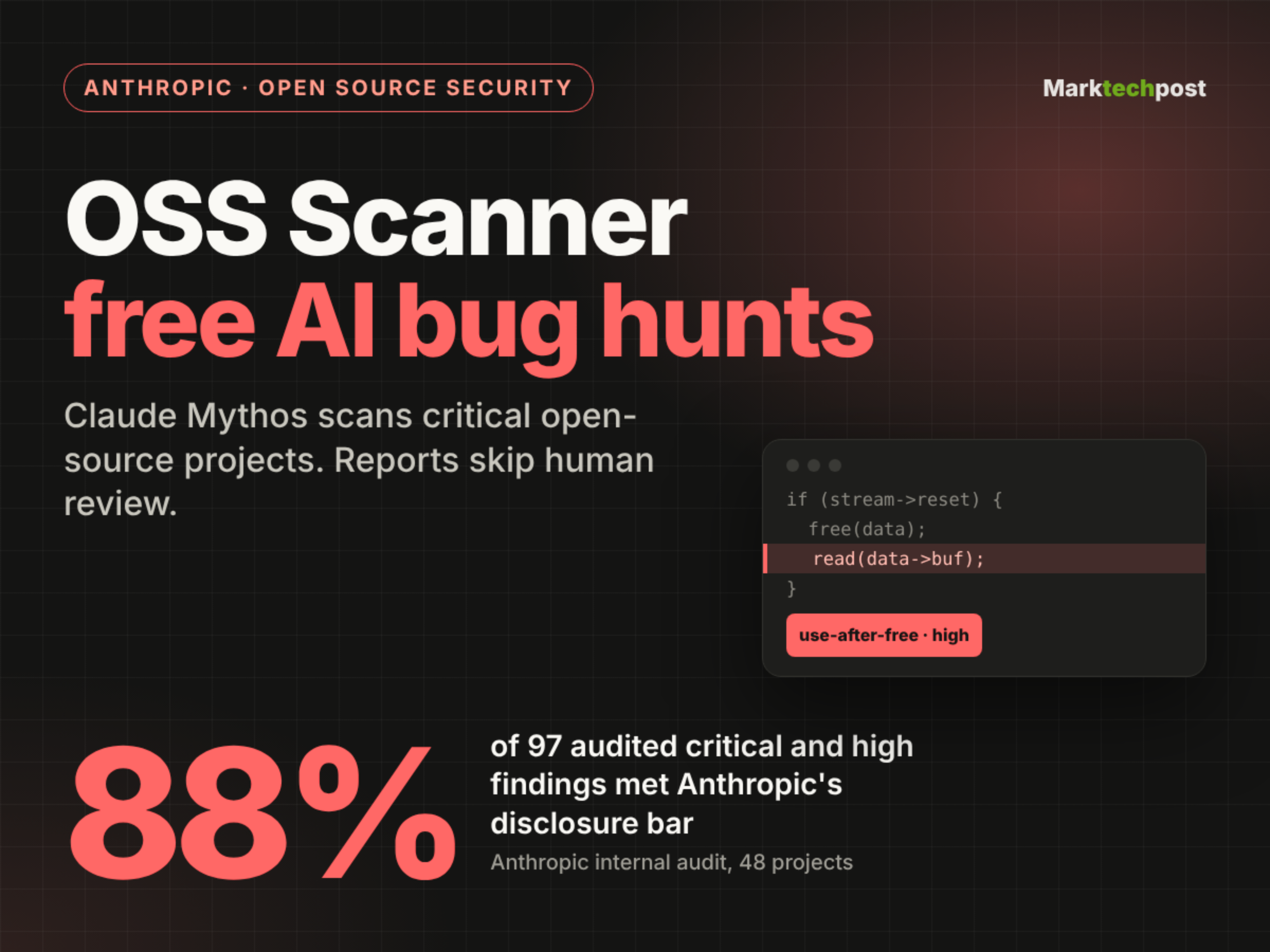
Anthropic Launches OSS Scanner, a Free AI Vulnerability Scanner
Anthropic has launched OSS Scanner, a free, opt-in vulnerability scanner for critical open-source projects. The Anthropic OSS Scanner runs the company’s strongest models, including Claude Mythos, against enrolled codebases. Reports go straight to maintainers without human review. That trade delivers faster findings, but shifts triage work onto project teams. 11 days after the October 8 launch, Anthropic reported 77 critical and 803 high model-rated findings. TL;DR Scale: 114 projec
OpenMobile-2 proves open-source smartphone agents can rival proprietary models
Smartphone agents don't get better by processing more data. They improve by training on as many different apps as possible. The researchers behind OpenMobile-2 built an open training environment with more than 110 applications, including 35 replicas of popular apps. On real Android devices, their model scores highest among open agents, the authors say. The article OpenMobile-2 proves open-source smartphone agents can rival proprietary models appeared first on The Decoder.