
Muse Creates Detailed Profiles of All Your Friends and Family
Millions have downloaded Meta’s AI agent Muse. But getting it to do your bidding comes with privacy costs.
Meta's AI assistant Muse has become widely downloaded and connects to users' personal data including bank accounts, messages, and health information. According to extracted system files, Muse creates detailed profiles of people in a user's life, compiling information about family, friends, and colleagues on an hourly basis, including facts, history, relationship details, and dates that matter like birthdays. Researchers and experts note this raises privacy concerns because the system gathers extensive information about users' relationships and personal contexts, and the tool actively encourages users to share more of their digital lives rather than limiting data collection. Meta states the profiles help Muse provide personalized assistance and that users can edit or disconnect data at any time, though critics argue these AI assistants are designed to collect significantly more information than users might otherwise share with companies.
One short email a day with the stories that matter. Free. Unsubscribe with one click.
Want to go deeper than the news? Explore live, cohort-based AI courses taught by practitioners.
Browse AI courses on Maven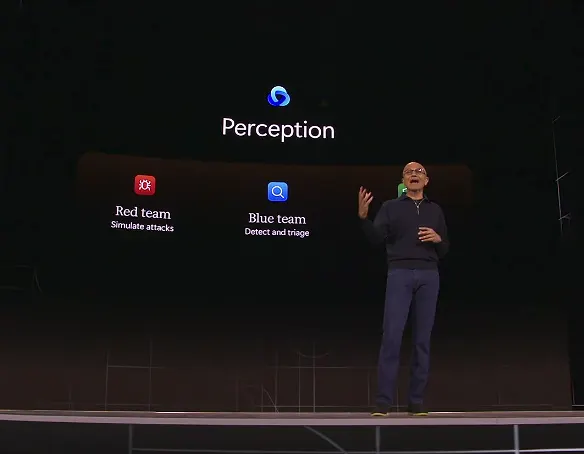
Copilot is "the new OS for work," and now Office runs inside of it
Opening the keynote at its Ignite event, Microsoft CEO Satya Nadella outlined the company's vision for its new "frontier ecosystem," announcing Tuesday the general availability of Word, Excel, and PowerPoint inside Copilot, which he described as "the new OS for work." The announcement is a striking inversion of how we've traditionally used software. Rather than an app like Word being the attraction and Clippy the assistant to help you use it, Microsoft envisions the new Copilot integration
Also reported by SiliconANGLE

Google’s Spark AI agent becomes ‘Tasks’, and now it’s free
You can now switch from the “Chat” toggle to “Tasks.” | Image: Google Google is rebranding its Spark AI agent as "Tasks" and making it free to use. The feature, which is powered by Google's new Gemini 4 Hydrogen AI model, can do things like create meal plans, manage your calendar, and dig through your emails to find recurring expenses you might not need. Users in the US will get access to a few other features, including the ability for the AI agent to call businesses to compare
Also reported by TechCrunch
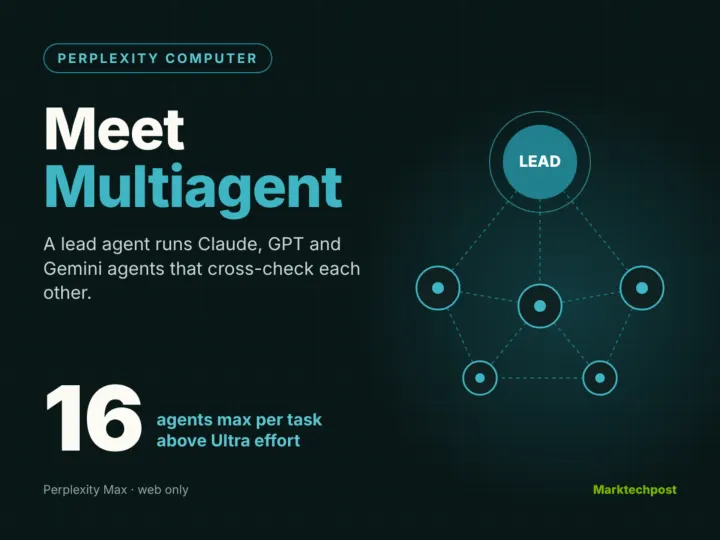
Perplexity Computer Adds Multiagent: Up to 16 AI Agents That Cross-Check Work
Perplexity has added Multiagent to Computer, its agent platform for research and multistep work. Perplexity Computer Multiagent is a new effort level that sits above Ultra. A lead agent runs a team of agents on different frontier models. Those agents work in parallel, share findings directly and check each other’s work. For developers and analysts, the change is structural. Supporting agents no longer report only to a single lead. TL;DR Size: Up to 16 agents per task, plus the lead

Model ML raises $250M to automate investment banking grunt work
The startup says its agents understand the full context of deals that bankers and consultants are working on and can automatically update financial models and presentations when new developments affect their analysis.
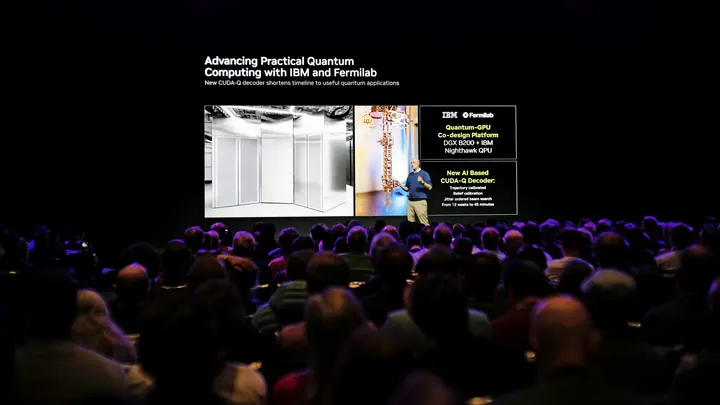
Ian Buck Kicks Off NVIDIA’s Week at SC26 as Science Enters the Age of Agents
NVIDIA’s Ian Buck kicked off the company’s week at SC26 in Chicago on Monday with new tools for AI agents, software that can plan experiments, run code and check results on researchers’ own systems. In NVIDIA’s special address, Buck announced Nemotron for Science, the Rubin HPC GPU and an expanded Vera CPU platform for high-performance computing. He also detailed a new collaboration in quantum computing with IBM and Fermi National Accelerator Laboratory. “The frontier of computing and the new sc

Strengthening NATO and allied cyber defenses with AI
How OpenAI is working with NATO and allied cyber agencies to help trusted defenders find vulnerabilities, test fixes and protect essential systems.