I created an interactive digital avatar of myself, and you can talk to it
After obtaining an interactive avatar and training it to discuss venture fraud, I have mixed feelings about making AI clones of ourselves.
Get smart on it
A journalist had interactive digital avatars created of herself by a video-generation startup, trained to answer questions about a specific article she wrote. The avatars were built using a combination of voice-to-text, language, text-to-voice, and video models, and required photos and a voice recording to create. The experience raises questions about how avatars might be used in journalism and corporate settings, though the journalist notes that trust in journalism may not be something that can be outsourced to AI, and that avatars feel scientifically unsettling to experience.
Related news
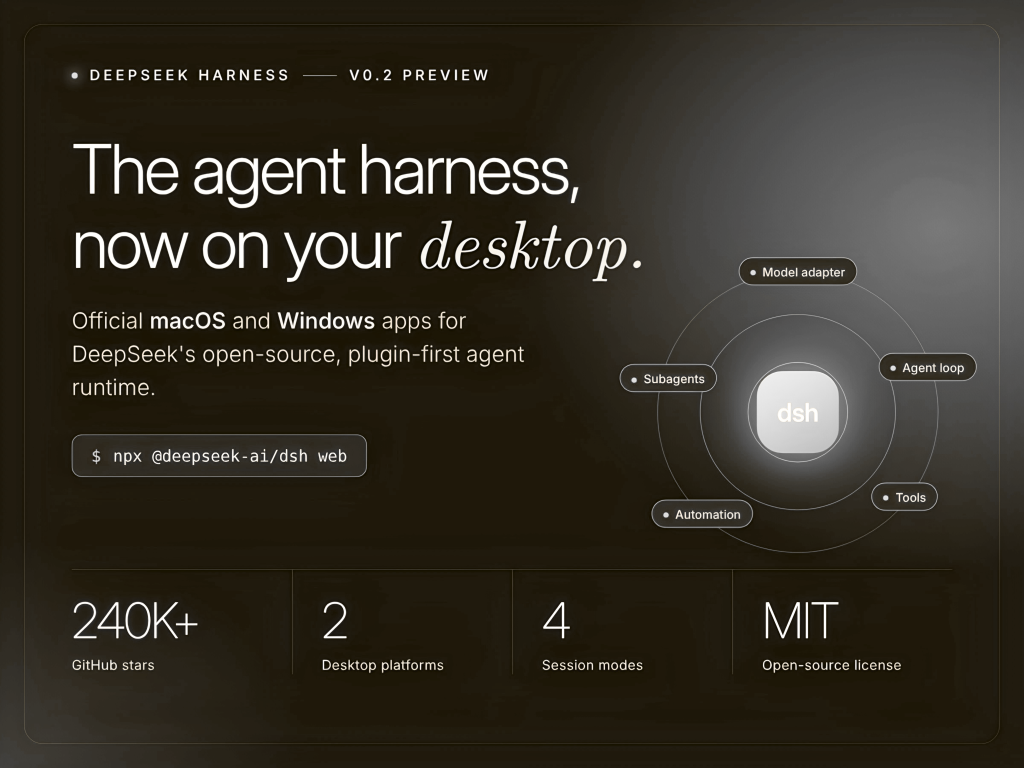
DeepSeek Harness v0.2 Brings Official Desktop Apps to Its Open-Source Agent Harness
DeepSeek has released an official desktop app for DeepSeek Harness (dsh), its open-source agent harness. The app ships with the v0.2 preview. Installers cover macOS (Apple silicon) and Windows (64-bit). Is it deployable? Yes, today, as a preview. Download it from deepseek.com/harness or run npx @deepseek-ai/dsh web. DeepSeek warns that compatibility-breaking changes will follow. What Shipped in v0.2 A harness is the runtime that turns a model into an agent. It reads files, runs command

The Agent Said It Was Done. The Database Disagreed.
When AI systems claim task completion without verification, downstream errors can cascade through dependent processes, exposing gaps in reliability for critical workflows.